Reflections
Why the Helmut Lang exhibition is the best at democratising fashion
By Niclas Kauermann
Twenty years after Helmut Lang left his eponymous brand, the MAK in Vienna stages the first comprehensive retrospective of his work. It was here in Vienna that he began his fashion career in 1977, and it is here in Vienna, almost 50 years later, that the circle closes. The exhibition shows how Lang helped open fashion to a broader public and why institutions must support this work through sustainable education.
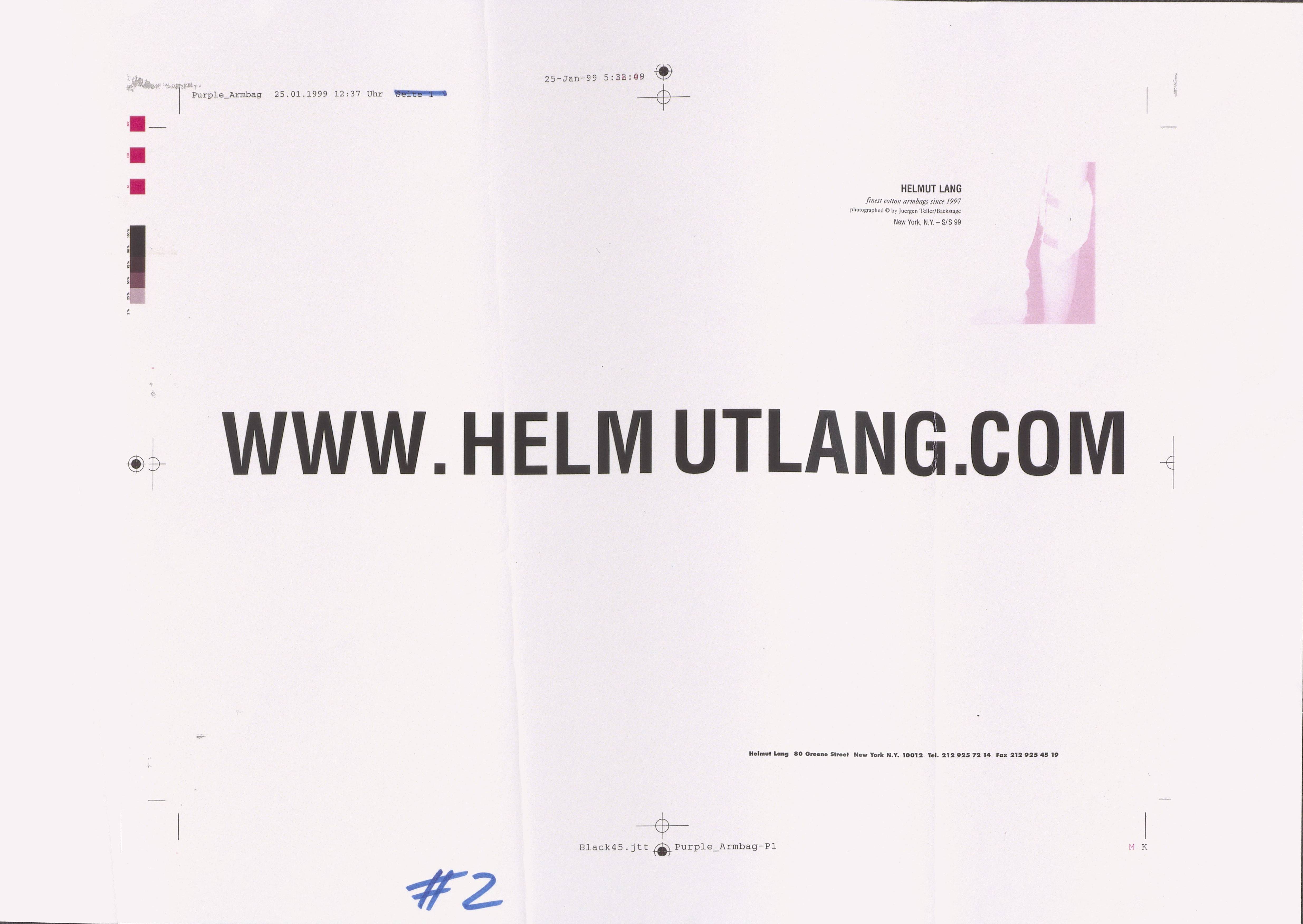
The MAK's new retrospective on the work of Helmut Lang fits perfectly into today's fashion world. At a time when one scandal after another rocks the big luxury fashion houses, critical voices are growing louder. Social media is giving more and more outsiders the opportunity to publicly express their disappointment with the state of the industry. Helmut Lang repeatedly focused his work on opening up the fashion industry to a wider audience, thus laying the foundation for the criticism voiced by outsiders today.
However, the rise of semi-professional fashion criticism through social networks is not without its problems. It can lead to potentially misleading information being accepted uncritically. One example of this is the reporting by TikToker labbeye, whose flawed research on the designer Paul Harnden had a massive impact on his biography on social media. One can sometimes get the impression that the main thing is just to post something about a topic without really having looked into it.
As French philosopher Jean Baudrillard once pointed out, photography is ‘a kind of escape from dealing with reality. It captures reality technically and relieves people of the need to describe and reflect on things themselves.’ It's all about posting cultural goods such as books or museum exhibitions, but no longer about understanding their content.
MAK Exhibition View, 2025 - © kunst-dokumentation.com/MAK
That's why I saw a certain danger in the announced retrospective. What if it's just about laying the groundwork for the perfect social media post? What if it's just about presenting the designer's clothes in an Instagram-friendly way? What if visiting the exhibition will just mean weaving your way through people taking pictures and only being able to see the exhibition through the screen of the person in front of you, who is blocking your view as they search for the ‘perfect shot’? Fortunately, the opposite was the case.
Helmut Lang's permission to hold an exhibition about his work in the fashion industry came with one condition: it should not be a clothing exhibition. As a result, the entire exhibition contains only around two dozen garments. All these garments are attached to the wall instead of being displayed on mannequins. In one display case, the garments even lie on the floor as if they had fallen off the hanger. Clearly, the aim here is not to explain the designer's work solely based on his clothes. Rather, the exhibition attempts to explain Lang's restructuring of the fashion industry through experiential spaces. Visitors are invited to discover the designer's past career - from his shop concepts to the backstage area of his shows - for themselves.
CD-ROM for Helmut Lang Collection Hommes Femmes Séance de Travail Défilé # Hiver 98/99 (1998). - MAK Helmut Lang Archive, LNI 584-5-5. Courtesy of hl-art.
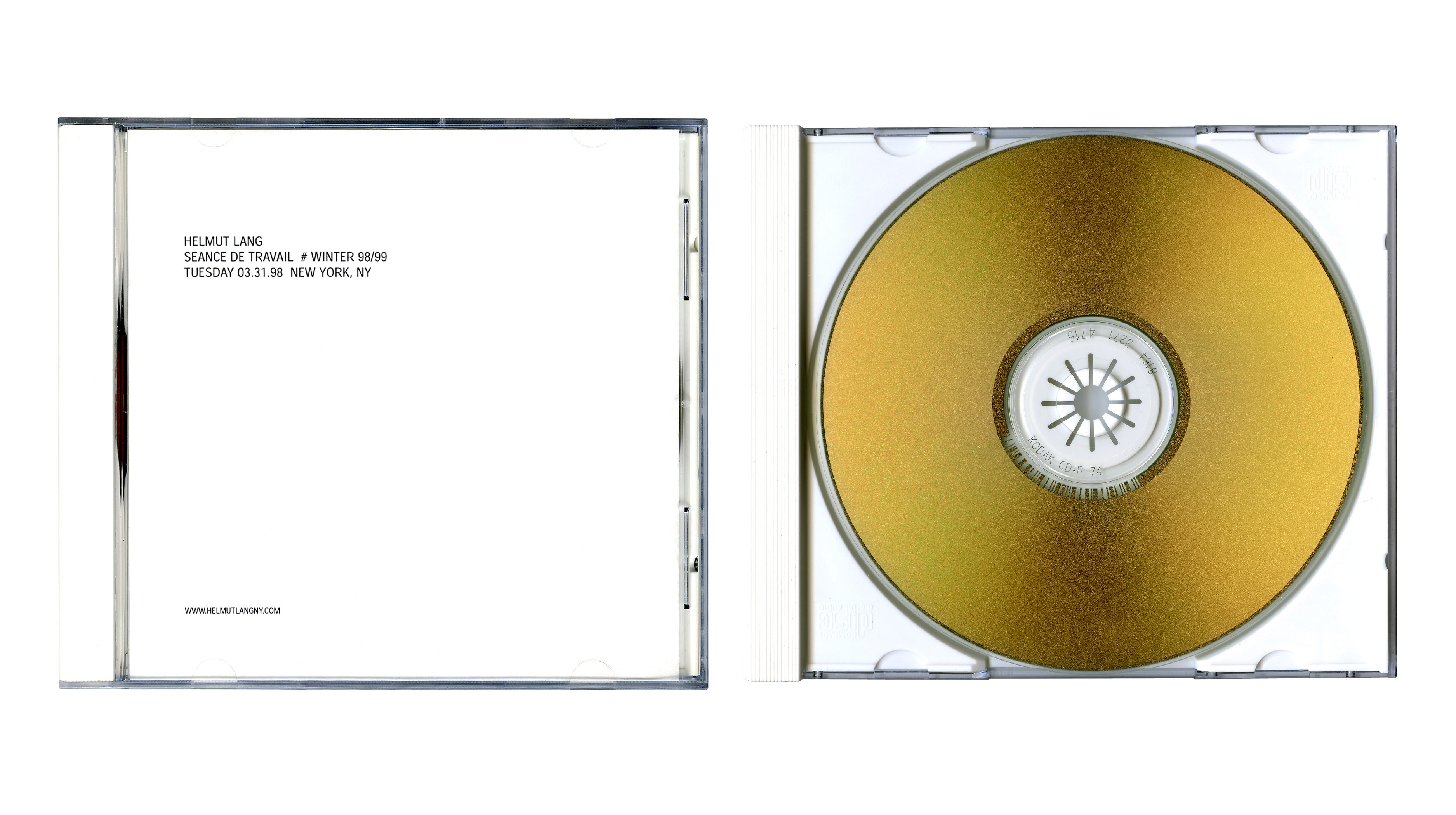
This unconventional perspective is evident right from the first room of the exhibition. It is not his garments or his first show but Helmut Lang's autumn/winter 1998 collection that is shown here on a large screen. This will be the first fashion show to have taken place digitally. Instead of invitation cards, only CDs were sent out to the VIP guests. In addition, the collection was available to everyone on the Helmut Lang website. The designer recognised ‘that the Internet would grow into something much bigger than imaginable’. A medium that would advance the democratisation of knowledge by making information accessible to all. From this point on, fashion shows were no longer reserved only for invited guests but could be seen by everyone.
Helmut Lang's drive for democratisation is explored further in the next room. In a display case, there is an advertising sign from a New York taxi, which is branded with only his logo and his website address. In 1998, he promoted his brand directly in New York city life. With his advertising campaign, he broke with the prevailing understanding of luxury at the time: news about fashion were no longer only accessible to the rich and beautiful, but to everyone walking through the streets of New York.
Helmut Lang, interior of the Helmut Lang flagship store, 80 Greene Street, New York, designed by Helmut Lang and Gluckman Mayner Architects (1997), photography by Paul Warchol (1998).
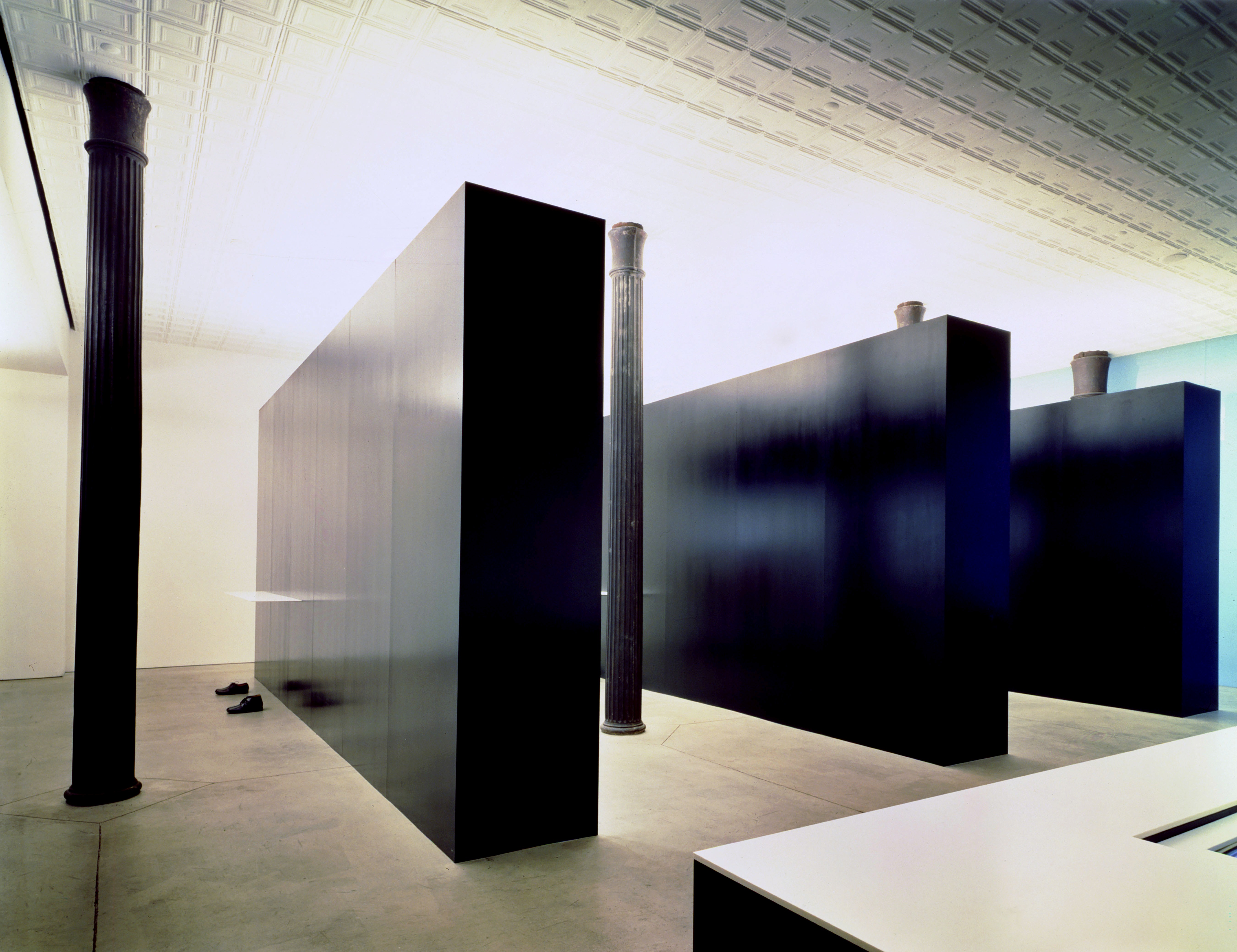
Behind the display case with the taxi sign, several large black containers confront the visitor. What has been recreated here are the flagship stores of Helmut Lang that opened around the world in the 1990s. The containers are open on one side where the garments were displayed, creating a corridor-like display layout. This arrangement compelled consumers to engage with the garments directly, focusing solely on the object in front of them, free from distraction. Instead of clothing, the exhibition displays plans, sketches, and photos of the stores from that time. Similar to the stores themselves, visitors are able to concentrate on the information presented without interruption.
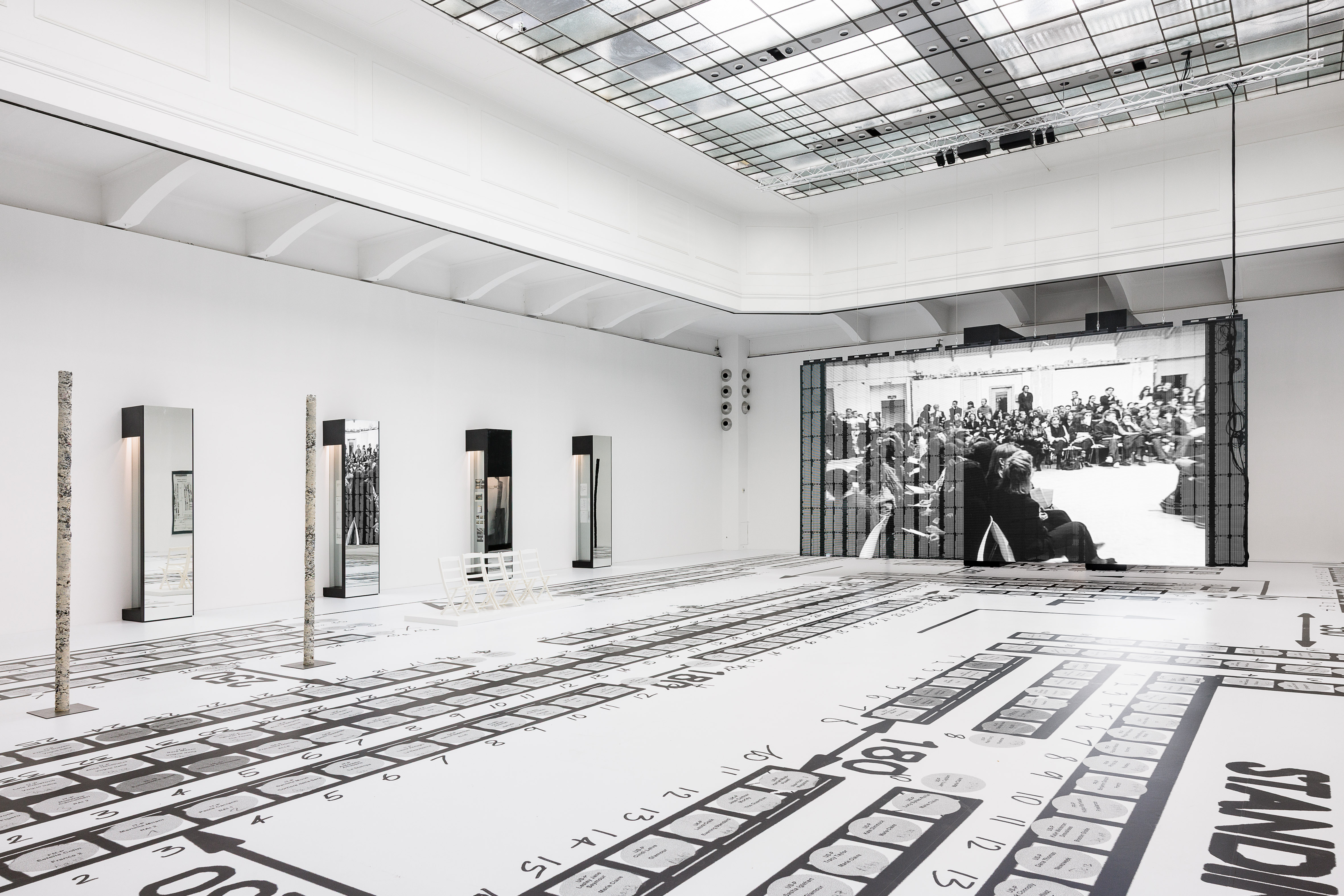
The replica of the designer’s shops is followed by a replica of his runway presentations. In a large white cube, the exhibition gives visitors an insight into how Lang’s presentations were structured in the 1990s. Printed on the floor is the seating plan for one of his shows. Beneath the visitors’ feet are the names of figures such as Carine Roitfeld, Fabien Baron, and Suzy Menkes. In the middle of the room is a large screen showing a series of Lang's shows. What is missing is the clothing. Instead, there are stick-shaped sculptures spread out around the room.
Lang created the artworks entitled ‘Make It Hard’ after leaving the fashion industry, using garments from his personal archive that he shredded, dipped in resin and painted. The direct encounter between the sculptures and the runway footage once again underscores the exhibition’s aim. Almost the only clothing exhibited in the context of the Helmut Lang shows has been destroyed. The focus is less on a detailed analysis of his garments, but more on providing an experience of Helmut Lang's universe at that time. An attempt at education through personal experience.
MAK Exhibition View, 2025 - © kunst-dokumentation.com/MAK
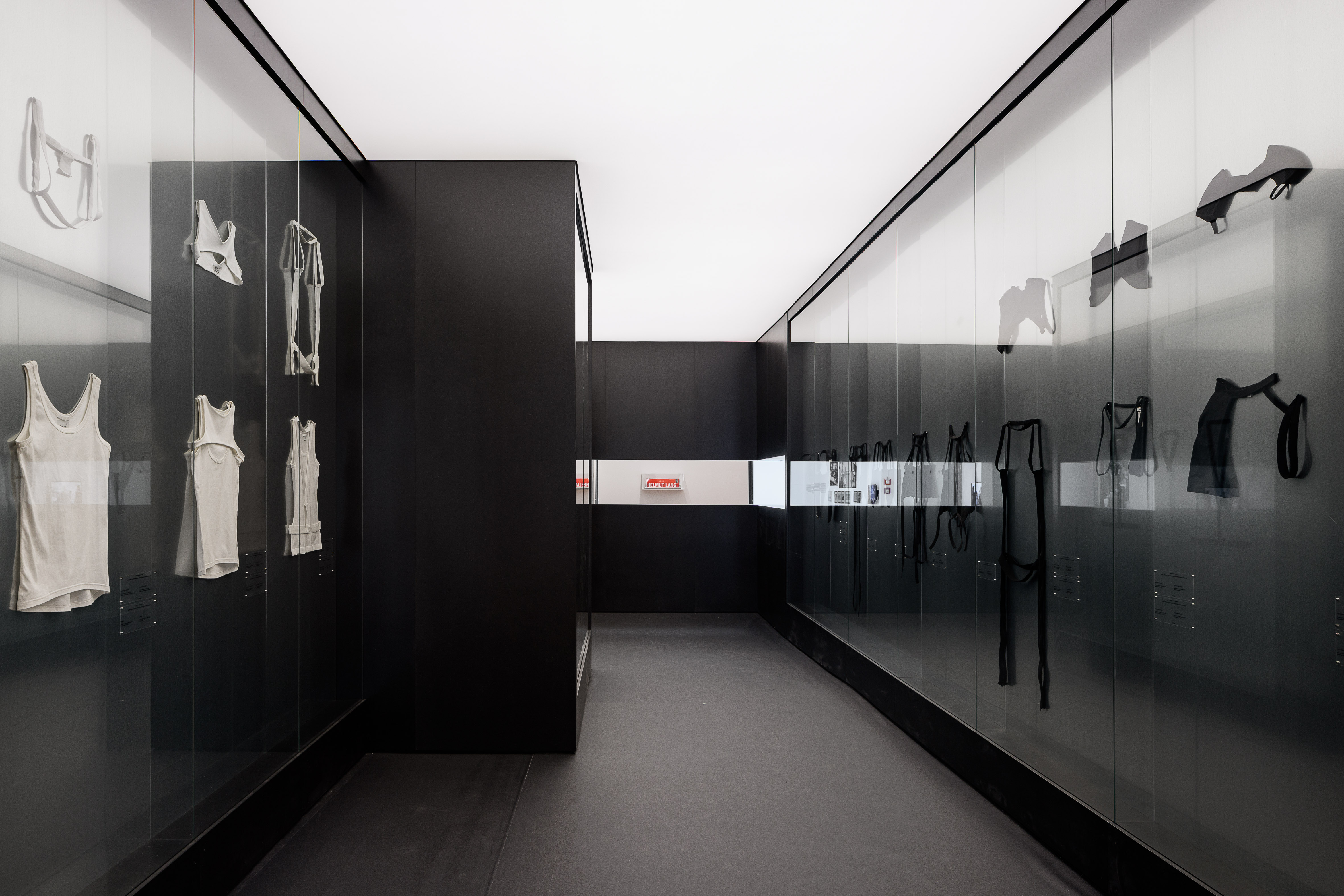
And yet a brief analysis of Helmut Lang's clothing is indispensable. Away from the tour, in a small black container, Lang's complete abstraction of garments is on display. Several items from his ‘accessoire-vêtements’ collection are attached to the wall in pairs, sorted by category and colour. From a thin bra strap, consisting of only four strips of fabric, several processes of adding and removing fabric ultimately lead to the standard tank top. Through the artistic process of abstraction, Helmut Lang exposes the structure of his garments, turning deconstruction into enlightenment.
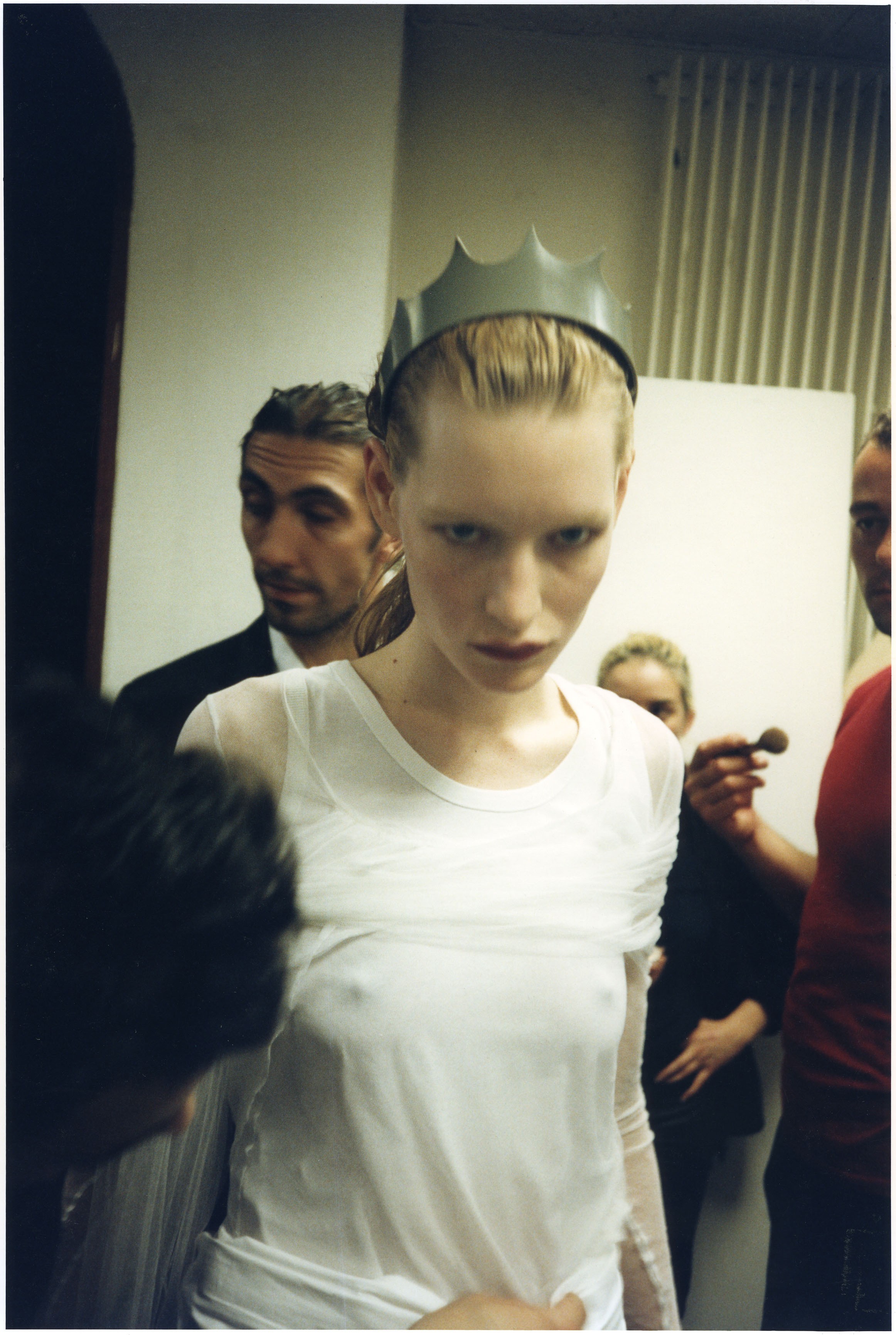
The exhibition concludes with the place where every fashion show begins and ends: the backstage. Here, alongside a few accessories and - what is probably the most Instagrammable object in the exhibition - an Astro biker jacket from the autumn/winter 1999 collection, you will find Juergen Teller's photo documentation of the backstage area at Lang's shows in the 1990s. The pictures, taken spontaneously and characterized by a certain imperfection, are nowadays no longer provocative with the rise of the ugly-chic aesthetic. But at the time, they broke with the clean and tidy photographic practices of luxury fashion. And in addition to this norm-breaking approach, these shots of the usually hidden backstage achieved one thing: they democratised fashion. The photographs made work processes, previously accessible only to professionals, public and visible to everyone.
Backstage Photograph by Juergen Teller of Kirsten Owen, Helmut Lang Collection Hommes Femmes Séance De Travail Defile # Hiver 97/98, Paris - Courtesy of hl-art
Helmut Lang was a driving force in making fashion more accessible. Whether it was introducing workwear such as denim into a high-fashion context, eliminating the stage for models at his shows to put them on the same level as the audience, or using different media forms such as the internet or backstage photographs to reveal previously hidden processes, all aspects had the goal of opening up fashion to a wider public.
It is precisely this democratisation of access and opinion on fashion that is more important than ever in today's world. The prevailing problematic structures of the industry can only be reconsidered and redesigned by independent critical voices. As fashion journalist Philippe Pourhashemi so accurately put it in an episode of the Stylezeitgeist podcast: ‘I see the fashion industry as Marie Antoinette, totally self-referential, in a bubble, not wanting to give up their privileges. And I see voices from the outside starting to shatter that bubble.’
Nevertheless, the democratisation process triggered by the internet must be critically reflected upon. In an article from 2013, fashion journalist Suzy Menkes deplored the attention-seeking transformation of the fashion crowd. She goes on to write that she is ‘sceptical that anyone can be a critic who passes judgement after watching a show on Style.com.’ The like-driven social media culture carries the risk of incomplete or inaccurate reporting, with the primary goal being to get the most likes for a post.
Democratisation is important, but it can only succeed through education. Outsider opinions can be a driving force and should not be ignored (otherwise you probably wouldn't be reading this article) yet they must be grounded in solid knowledge. Helmut Lang recognised this back in the 1990s and responded by liberating fashion from spectacle and mystery, revealing what had previously remained hidden behind the glamorous façade of luxury.
And so does the exhibition at the MAK. By leaving out photogenic clothing items and creating spaces for experiences, – which are indivisible on social media – the exhibition succeeds in forcing visitors to really reflect on the information presented and not be distracted by thoughts of their next post. After all, a photo of a letter in which André Leon Talley asks Helmut Lang for a coat only means something to you if you have actually read and understood it.
Today, institutions such as the MAK are tasked with supporting Helmut Lang’s project of democratising fashion, adapting it to the modern age through sustainable education. Because only when you know how the gates to Marie Antoinette’s cake party are built can you tear them down.
Doc/34 all rights reserved, sponsored by IFM.
" height="65.65946764590899px" id="biO_icj08" transform="translate(0 1.371)" width="59.174572953517554px"/><path d="M 63.167 33.692 C 63.167 54.377 50.565 68.088 31.544 68.088 C 12.524 68.088 0 54.69 0 33.927 C 0 13.163 12.371 0 31.626 0 C 50.882 0 63.17 13.163 63.17 33.692 Z M 46.89 33.848 C 46.89 21.155 41.097 13.477 31.626 13.477 C 22.155 13.477 16.206 21.234 16.206 33.848 C 16.206 46.463 22.077 54.533 31.626 54.533 C 41.176 54.533 46.89 46.698 46.89 33.848 Z" fill="rgb(0, 0, 0)" height="68.08839784893921px" id="A8_8V8D77" transform="translate(58.705 0.196)" width="63.17042207703656px"/><path d="M 43.755 24.133 C 42.268 17.003 38.119 13.477 31.388 13.477 C 21.838 13.477 16.281 20.998 16.281 33.927 C 16.281 46.855 22.073 54.455 31.779 54.455 C 36.084 54.455 39.763 52.653 42.033 49.519 C 43.363 47.638 43.911 46.071 44.381 42.781 L 60.662 45.209 C 59.175 51.869 57.453 55.709 54.165 59.548 C 49.312 65.111 41.72 68.088 32.249 68.088 C 22.778 68.088 14.637 65.111 9.08 59.47 C 3.287 53.593 0 44.426 0 33.927 C 0 23.427 3.287 14.26 9.471 8.149 C 14.872 2.899 22.778 0 31.935 0 C 42.033 0 49.938 3.448 55.026 10.264 C 57.531 13.477 58.861 16.376 59.879 20.998 Z M 100.346 1.41 L 72.246 77.804 L 58.235 77.804 L 86.414 1.41 Z" fill="rgb(0, 0, 0)" height="77.80411839929134px" id="v1AksvdEb" transform="translate(121.519 0.196)" width="100.34629996240147px"/><path d="M 16.594 46.933 C 17.064 49.519 17.533 50.616 18.786 51.948 C 20.899 54.142 24.03 55.317 27.787 55.317 C 33.892 55.317 37.728 52.261 37.728 47.482 C 37.728 44.269 36.162 41.762 33.501 40.743 C 31.701 40.117 29.274 39.725 26.222 39.725 C 23.169 39.725 19.647 39.881 16.594 40.195 L 16.594 26.718 C 19.255 27.032 21.838 27.188 24.891 27.188 C 32.327 27.188 36.006 24.681 36.006 19.666 C 36.006 15.435 33.031 13.007 27.865 13.007 C 22.308 13.007 19.49 15.2 18.316 20.215 L 1.409 17.786 C 2.896 12.928 4.148 10.578 6.653 7.835 C 11.428 2.664 18.629 0 28.178 0 C 36.71 0 43.755 2.351 48.216 6.66 C 51.112 9.559 52.6 13.32 52.6 17.786 C 52.6 26.091 48.138 31.263 39.137 33.378 C 43.911 34.083 46.494 35.18 49.234 37.531 C 52.521 40.508 54.4 44.583 54.4 49.127 C 54.4 53.123 53.304 56.806 51.269 59.548 C 49.547 61.899 46.807 64.092 43.911 65.424 C 39.841 67.305 33.501 68.48 27.63 68.48 C 20.586 68.48 13.541 66.835 9.393 64.092 C 5.792 61.742 3.053 58.294 1.331 53.985 C 0.861 52.888 0.548 51.869 0 49.832 Z" fill="rgb(19, 136, 8)" height="68.48016075605614px" id="UrmKxPWFQ" transform="translate(219.752 0)" width="54.399905030019454px"/><path d="M 0 37.844 C 2.348 35.233 4.853 32.36 7.514 29.226 L 24.5 9.324 C 28.257 5.015 29.744 3.056 31.779 0 L 47.825 0 C 47.355 4.623 47.199 7.757 47.199 13.007 L 47.199 38.471 L 49.469 38.471 C 51.895 38.471 54.478 38.236 57.218 37.844 L 57.218 52.104 C 54.87 51.791 51.973 51.634 49.547 51.634 L 47.199 51.634 L 47.199 55.552 C 47.199 59.94 47.355 62.212 47.825 65.189 L 31.701 65.189 C 32.092 62.525 32.327 59.235 32.327 55.395 L 32.327 51.556 L 10.176 51.556 C 5.088 51.556 2.896 51.634 0 51.869 Z M 32.405 29.539 C 32.405 26.013 32.562 21.704 32.875 18.256 C 31.309 20.45 30.135 22.017 28.022 24.681 L 16.594 38.628 L 32.405 38.628 Z" fill="rgb(19, 136, 8)" height="65.18935212489366px" id="nz3MAn0g5" transform="translate(272.782 1.567)" width="57.21774185674667px"/></g></svg>)