Reflections
The Reason Why You Won’t Read My Articles
By Niclas Kauermann
It’s all right, you don’t have to read this article – your Instagram For-You page is probably more exciting anyway. Yet this simple choice reflects a much larger cultural shift. For decades, journalists acted as cultural gatekeepers, deciding which artists and ideas entered public discourse. With the rise of social media, that role appeared to change. Influencers promise a more democratic medium – one without the old elites. The gatekeepers are their enemies: a system they want to fight. But influencers did not eliminate gatekeeping – they merely moved its power elsewhere. In the background, a new gatekeeper had quietly taken control: the algorithm.

After a twenty-year wait, the sequel to The Devil Wears Prada took the cinema audiences back into the absurd world of fashion. Once again, Andrea Sachs had to work in the challenging environment of fashion journalist Miranda Priestly – an environment marked by exclusion, elitism, and, of course, Miranda Priestly’s narcissism. This time, however, the glamorous world of fashion journalism is beginning to crack.
The devil still wears Prada. Only this time, it does not come straight from the boutique, but is second-hand – snagged through a lowballing deal on Vinted. In the movie, hardly anyone reads print media anymore. Fashion magazines are slowly dying and Miranda Priestly's influence is fading, while digital media and its new stars – the influencers – continue to gain ground. At the end of the movie, a Silicon Valley billionaire tries to take over Miranda Priestly’s magazine – and with it, fashion journalism itself. What fails in the Hollywood happy ending, however, has long since happened in reality.
The problem the film addresses is nothing new. An article by fashion journalist Suzy Menkes from the 2010s almost seems today as if it had already predicted Miranda Priestley’s future. In it, Menkes warns of the troubling prospects for fashion journalism. Driven by the internet, she observed an increasing focus within the industry on attention and reach. The modern technology would encourage the rise of unprofessional outsiders who turn the fashion world into a “fashion circus.” Self-published fashion writers would merely “spark a critical discussion that can go viral.” Their sole goal, she argued, was simply to attract attention.
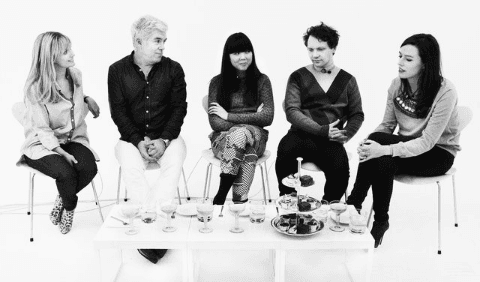
Fashion blogger Susie Bubble (center) sitting next to fashion journalists Tim Blanks (left) and Alex Fury (right) while reviewing the London Autumn/Winter 2013 womenswear shows. – Source: YouTube (@SHOWstudio)
Menkes, however, did not foresee the rise of influencers, nor the script for the movie The Devil Wears Prada 2. When she wrote her article in 2013, her criticism was directed instead at amateur street photographers and fashion bloggers whose growing influence was beginning to reshape the industry. Many of them saw their work as a contribution to the democratization of fashion. Photographer and former blogger Tommy Ton believed that blogs “gave people [...] the opportunity to be part of the fashion world,” thereby breaking down the industry’s “exclusive private club.”
Unsurprisingly, many viewed Menkes' article as a personal attack. A harsh backlash followed: Critics accused her of attacking the new generation of bloggers solely because she wanted to preserve the exclusivity of the fashion world. She was portrayed as someone trying to keep the gates shut – as a “gatekeeper.” The criticism became so intense that Menkes was eventually forced to soften some of her remarks.
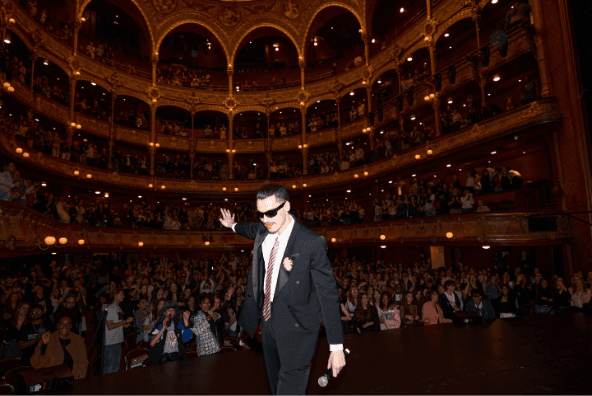
Influencer Lyas at one of his “LA Watch Parties,” where he screens fashion shows for which he is said to have “opened the gates.” – Source: Instagram (@ly.as)
The influencers – who emerged shortly afterwards with the rise of social media – make the same promise as bloggers. They, too, promise to democratize fashion. And they, too, view “gatekeepers” like Miranda Priestly and Suzy Menkes as their enemies – as a group of people they wanted to fight. For example, the fashion influencer Brandahashtag writes in the comments under a video that glorifies gatekeeping: “I actually share everything.” According to his fellow influencer Dylan Kelly, fashion influencer Lyas has “opened the gates,” and IDeserveCouture (also a fashion influencer) advocates in an interview for a fashion world in which there are “no gatekeepers.”
The Internet defines “gatekeeping” as “the act of restricting who is allowed to participate in or be part of a certain segment of society,” which makes it “essentially a synonym for discrimination.” These elite figures would block access to information in order to exclude ordinary people from their exclusive circles — à la Eyes Wide Shut.
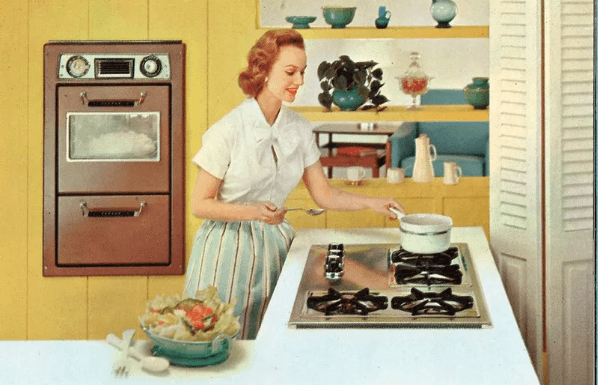
1950s happy housewife in the kitchen cooking – Source: Ethan: SportSuburban/Flickr: uploaded 24 May 2011
However, this negative view of the “gatekeeper” is rather a modern phenomenon. Just a few years ago, “gatekeeping” was considered a useful practice. The term dates back to wartime. The psychologist Kurt Lewin first used the term “gatekeeping” in connection with the consumer behavior of American households. According to him, the housewife acted as the “gatekeeper in the purchasing process.” She decided which products made their way into the household and which were left on the supermarket shelf. The housewife thus guarded the gate against poor-quality or overly expensive products and let only the good ones in.
A few years later, the concept was applied to journalism. Journalists were now regarded as gatekeepers – as experts who let only the important news through the gate and held back the unimportant. They sifted through the overwhelming flood of information, sorted it by relevance, and used their expertise to decide which topics truly deserved their readers’ limited attention.
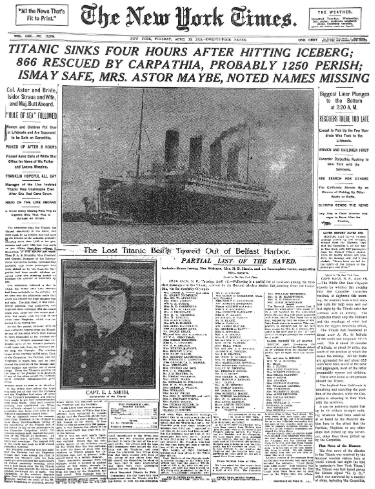
The New York Times, April 16, 1912, reporting on the sinking of the Titanic. The newspaper’s slogan, “All the News That’s Fit to Print,” appears in the upper left corner. – Source: Wikipedia
Back in the late 19th century, The New York Times advertised with the promise “All the News That’s Fit to Print.” Publications and journalists therefore had to decide which news stories were relevant enough for the limited pages of the print medium. In this context, “gatekeeping” information meant nothing less than acting as a filter for the public, preventing them from dealing with every single unimportant piece of news.
The gatekeepers appear in all areas of society. They are essentially filters that decide which information, ideas, or products deserve attention: a curator who selects artworks that fit the theme of an exhibition, a history teacher who focuses on the most significant events of the past, a shop owner who chooses which brands to offer their customers, or, of course, a journalist.
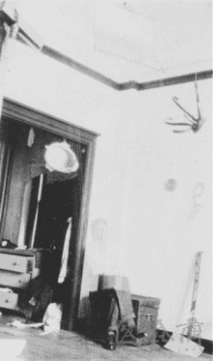
The urinal suspended in Marcel Duchamp's studio at 33 West 67th Street, New York, 1917–1918 – Source: By Philadelphia Museum of Art, Fair use.
This gatekeeping role was particularly important in cultural journalism. Since culture is often a leisure activity (unless you are involved in it professionally), people rarely have unlimited time to explore every available option themselves. Not everyone has the time to spend hours reading through movie guides to decide which film to watch. This is precisely where cultural journalists help: Through their training and expertise, they provide a valuable filter, guiding audiences toward films worth watching, while helping them avoid wasting time on those that may not be.
Their role as gatekeepers is even crucial in this cultural context. As Pierre Bourdieu noted in his book “The Field of Cultural Production,” it is the evaluation of (cultural) journalists that helps determine the value of a cultural good. Thus, “cultural intermediaries [i.e., journalists] are involved in the qualification of goods, framing how consumers engage with them.” A cultural good gains its value from journalists’ recommendations. Marcel Duchamp's readymade Fountain (1917), for example, did not receive the attention and art-historical significance it holds today until the 1960s, following a series of articles by journalists such as Calvin Tomkins.
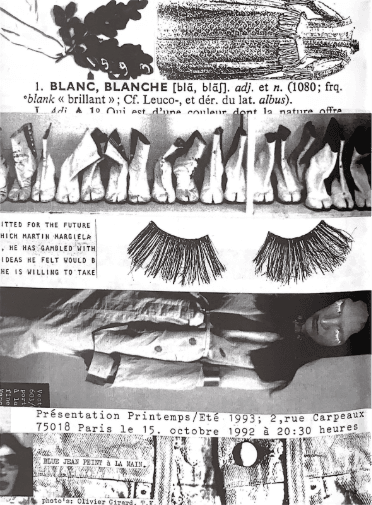
Page from Purple Prose 3 (1993) featuring Martin Margiela’s Autumn/Winter 1993 collection – Source: Rare Books Paris
In the fashion world, journalism played a similarly valuable role. A notable example is Purple Magazine, founded in the early 1990s by art curator and critic Olivier Zahm. Acting as a gatekeeper, Zahm rejected the superficially glamorous fashion world of the 1980s and instead focused on the avant-garde of the following decade. By inviting readers to shows by the then up-and-coming designer Martin Margiela, publishing photographs by then-unknown photographers such as Jürgen Teller and Wolfgang Tillmans, and featuring bands like Sonic Youth alongside artists like Maurizio Cattelan, Purple Magazine helped to establish 1990s avant-garde fashion as the cultural phenomenon it is today.
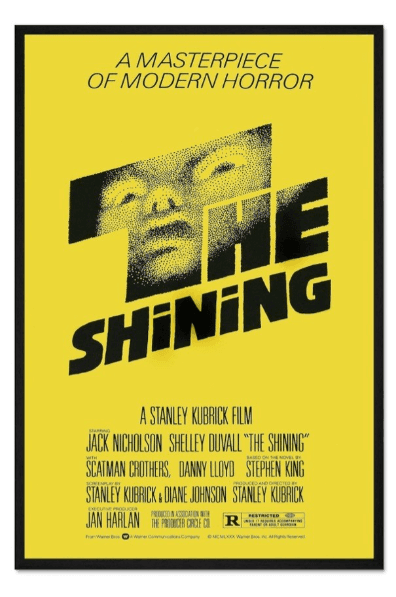
The Shining (1980) – Source: By Movie Poster Shop, Fair use.
However, the exclusive control of the gatekeeping role by cultural journalists also came with its own problems. When a small group of journalists holds the power to determine the value and significance of cultural works, their judgments can be just as wrong as anyone else. A well-known example of this is Stanley Kubrick’s film The Shining (1980). Now considered one of the most influential horror films of all time, it was panned by many critics upon its release. Janet Maslin wrote in The New York Times 1980 that the film “offers frustratingly little logic or coherence.”
It wasn't until 20 years later that perceptions of the movie changed. With the rise of the Internet, anyone could now freely express their opinion on review platforms. And here, user reviews viewed the movie differently than film critics had before, giving it consistently positive ratings. This ultimately led to the film’s status in cinematic history, which it retains to this day. Thus, a film journalist could have been wrong in his cultural assessment. It was only through the Internet that this error was corrected.

Homepage of the StyleZeitgeist blog, founded by Eugene Rabkin (May 29, 2008) – Source
Fashion journalism, too, was not spared by the emerging Internet and its promise of democratization. In the early 2000s, the first fashion blogs – nogoodforme.com (2003) and myfashionlife.com (2004) – launched, independently publishing their thoughts on the latest fashion shows. Shortly thereafter came Diane Pernet’s “A Shaded View of Fashion,” Eugene Rabkin’s “StyleZeitgeist,” and Kevin Ma’s “Hypebeast.” From then on, even people without formal training in journalism were able to assign value to cultural assets online.
The internet liberalized the value creation of journalists, which was now distributed by a democratic mass. In the years that followed, the spread of social media platforms further reinforced this apparent democratization. On Instagram and similar platforms, influencers could now freely share their opinions about Maria Grazia’s “monotonous” Dior collections. And independent education was not forgotten in this democratization process either. Through their research, YouTubers like Understitch, made it possible for everyone to learn about fashion – even those who did not own expensive books or have access to private universities.
The gatekeeper status of journalists was seemingly no longer needed – challenged by the rise of influencers. Now everyone was sharing information about movies, art, and culture. In the digital world, anything could be published without having to be curated to fit within the limited pages of a newspaper. The filter between society and culture seemed to have been removed by the (fashion) influencers.

Mark Zuckerberg, Lauren Sánchez, Jeff Bezos, Sundar Pichai and Elon Musk (from left) at Donald Trump’s 2025 inauguration – Source: Julia Demaree Nikhinson
But while the traditional gatekeeping system was weakened, another filter soon took its place. Although everyone now had the opportunity to access all information, they still did not have the time to do so. Simply put, it is impossible to watch all the TikTok clips, all the YouTube video or all the Instagram post. Another filter is therefore needed – one that determines which parts of this overwhelming amount of content actually reach you: the algorithm. In this sense, social media algorithms have taken on a role that was previously performed by journalists. Influencers haven’t defeated the gatekeepers – they’ve simply changed who fills the role.
And this new occupation of the gatekeeper role brings new problems with it. After all, social media platforms are not neutral public spaces – they are tech companies run by billionaires. In today’s world, figures like Mark Zuckerberg and Elon Musk have become powerful figures behind the new gatekeepers. The algorithms they rely on are primarily driven by profit. Social media users become data that the platforms want to keep on their sites for as long as possible in order to serve as many ads as possible.
According to an article by Sonia Sodha, algorithms reward content based on a specific principle: “The most engaging material is that which triggers emotional reactions ... This is what the algorithms push, and hence encourage.” Influencers are increasingly tailoring their content to this algorithmic logic. Videos begin with a sensational opening or deliberately include misinformation to get people riled up in the comments. In an era in which (fashion) journalism has been replaced by (fashion) influencers, topics are thus unnecessarily sensationalized and framed as controversial – a world full of tabloid journalism.
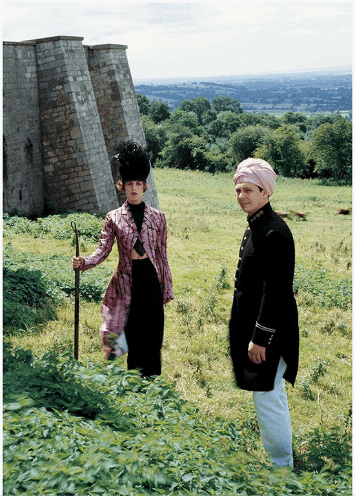
Detmar and Isabella Blow wearing Lee Alexander McQueen “Jack the Ripper Stalks his Victims” AW ‘92 graduate collection frock coat (1992) – Source: Instagram (@mcqueen_vault)
This particularly hurts smaller designers, whose names don’t generate as many clicks as those of the major fashion houses. For example, the Instagram video by influencer Lyas about the IFM master’s graduation show had only 60k views, while the video of the Dior show racked up 150k views. Lyas uploaded two videos from the Matières Fécales show: the video featuring a simple model received only 90k views, while the video featuring Rick Owens and Michèle Lamy received 2.5M views.
Whereas journalists used to be able to decide, based on their own knowledge, which designers to highlight in their articles, today it is the algorithm that determines this. In the early 1990s, fashion journalist Isabella Blow played a key role in Alexander McQueen’s rise to fame. And in 1986, The Antwerp Six were given their name by journalist John Fairchild, who thereby helped shape their cultural significance. Today, in a world where algorithms act as gatekeepers, it is these systems that determine which fashion brands gain visibility and cultural value.
According to Eugene Rabkin, this is the secret behind the success of designers like Duran Lantink. In an article, Rabkin criticizes the designer’s creations – such as the silicone torso from his FW25 collection – arguing that they are primarily aimed at provocation. He claims that this provocation is designed mainly to attract attention on social media. According to journalist Ayọ̀ Òjó (aka Fashion Roadman), a similar phenomenon can be seen in the hiring of singers and actors like Pharrell Williams or Jaden Smith as creative directors for fashion houses. It is about a form of attention that the algorithm rewards.
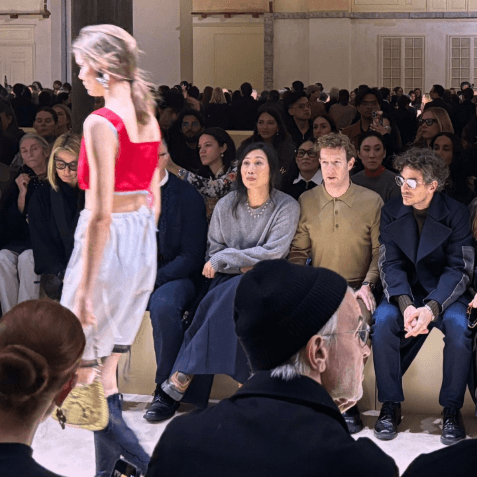
Mark Zuckerberg and his wife Priscilla at the Prada Fall/Winter 2026 Womenswear Show – Source: Colleen Barry / AP / Profimedia
The Devil Wears Prada 2 has correctly shown us that journalists today have been stripped of their role as gatekeepers by the internet. However, the film was not correct with its happy ending, in which fashion journalism is saved from being bought out by Silicon Valley billionaires. In reality, journalists have handed over their gatekeeper role to the algorithms of social media platforms. This leads to a style of reporting and a design philosophy that are increasingly based on grabbing attention or on the highest bidder. At the end of the day, the power to determine cultural value in art, music, and fashion is thus controlled by profit-driven tech billionaires .
When influencers celebrate the decline of Miranda Priestly or Suzy Menkes as “gatekeepers”, there is one thing they should not forget: the new devil wearing Prada may no longer be a fashion journalist – it may be Mark Zuckerberg, who now sits in Prada’s front row.
Doc/34 all rights reserved, sponsored by IFM.
" height="65.65946764590899px" id="biO_icj08" transform="translate(0 1.371)" width="59.174572953517554px"/><path d="M 63.167 33.692 C 63.167 54.377 50.565 68.088 31.544 68.088 C 12.524 68.088 0 54.69 0 33.927 C 0 13.163 12.371 0 31.626 0 C 50.882 0 63.17 13.163 63.17 33.692 Z M 46.89 33.848 C 46.89 21.155 41.097 13.477 31.626 13.477 C 22.155 13.477 16.206 21.234 16.206 33.848 C 16.206 46.463 22.077 54.533 31.626 54.533 C 41.176 54.533 46.89 46.698 46.89 33.848 Z" fill="rgb(0, 0, 0)" height="68.08839784893921px" id="A8_8V8D77" transform="translate(58.705 0.196)" width="63.17042207703656px"/><path d="M 43.755 24.133 C 42.268 17.003 38.119 13.477 31.388 13.477 C 21.838 13.477 16.281 20.998 16.281 33.927 C 16.281 46.855 22.073 54.455 31.779 54.455 C 36.084 54.455 39.763 52.653 42.033 49.519 C 43.363 47.638 43.911 46.071 44.381 42.781 L 60.662 45.209 C 59.175 51.869 57.453 55.709 54.165 59.548 C 49.312 65.111 41.72 68.088 32.249 68.088 C 22.778 68.088 14.637 65.111 9.08 59.47 C 3.287 53.593 0 44.426 0 33.927 C 0 23.427 3.287 14.26 9.471 8.149 C 14.872 2.899 22.778 0 31.935 0 C 42.033 0 49.938 3.448 55.026 10.264 C 57.531 13.477 58.861 16.376 59.879 20.998 Z M 100.346 1.41 L 72.246 77.804 L 58.235 77.804 L 86.414 1.41 Z" fill="rgb(0, 0, 0)" height="77.80411839929134px" id="v1AksvdEb" transform="translate(121.519 0.196)" width="100.34629996240147px"/><path d="M 16.594 46.933 C 17.064 49.519 17.533 50.616 18.786 51.948 C 20.899 54.142 24.03 55.317 27.787 55.317 C 33.892 55.317 37.728 52.261 37.728 47.482 C 37.728 44.269 36.162 41.762 33.501 40.743 C 31.701 40.117 29.274 39.725 26.222 39.725 C 23.169 39.725 19.647 39.881 16.594 40.195 L 16.594 26.718 C 19.255 27.032 21.838 27.188 24.891 27.188 C 32.327 27.188 36.006 24.681 36.006 19.666 C 36.006 15.435 33.031 13.007 27.865 13.007 C 22.308 13.007 19.49 15.2 18.316 20.215 L 1.409 17.786 C 2.896 12.928 4.148 10.578 6.653 7.835 C 11.428 2.664 18.629 0 28.178 0 C 36.71 0 43.755 2.351 48.216 6.66 C 51.112 9.559 52.6 13.32 52.6 17.786 C 52.6 26.091 48.138 31.263 39.137 33.378 C 43.911 34.083 46.494 35.18 49.234 37.531 C 52.521 40.508 54.4 44.583 54.4 49.127 C 54.4 53.123 53.304 56.806 51.269 59.548 C 49.547 61.899 46.807 64.092 43.911 65.424 C 39.841 67.305 33.501 68.48 27.63 68.48 C 20.586 68.48 13.541 66.835 9.393 64.092 C 5.792 61.742 3.053 58.294 1.331 53.985 C 0.861 52.888 0.548 51.869 0 49.832 Z" fill="rgb(19, 136, 8)" height="68.48016075605614px" id="UrmKxPWFQ" transform="translate(219.752 0)" width="54.399905030019454px"/><path d="M 0 37.844 C 2.348 35.233 4.853 32.36 7.514 29.226 L 24.5 9.324 C 28.257 5.015 29.744 3.056 31.779 0 L 47.825 0 C 47.355 4.623 47.199 7.757 47.199 13.007 L 47.199 38.471 L 49.469 38.471 C 51.895 38.471 54.478 38.236 57.218 37.844 L 57.218 52.104 C 54.87 51.791 51.973 51.634 49.547 51.634 L 47.199 51.634 L 47.199 55.552 C 47.199 59.94 47.355 62.212 47.825 65.189 L 31.701 65.189 C 32.092 62.525 32.327 59.235 32.327 55.395 L 32.327 51.556 L 10.176 51.556 C 5.088 51.556 2.896 51.634 0 51.869 Z M 32.405 29.539 C 32.405 26.013 32.562 21.704 32.875 18.256 C 31.309 20.45 30.135 22.017 28.022 24.681 L 16.594 38.628 L 32.405 38.628 Z" fill="rgb(19, 136, 8)" height="65.18935212489366px" id="nz3MAn0g5" transform="translate(272.782 1.567)" width="57.21774185674667px"/></g></svg>)