Identities
The Making of System: A Conversation with Veronica Latourrette
Written by Sofie Kraus and edited by Leyla Boudieb
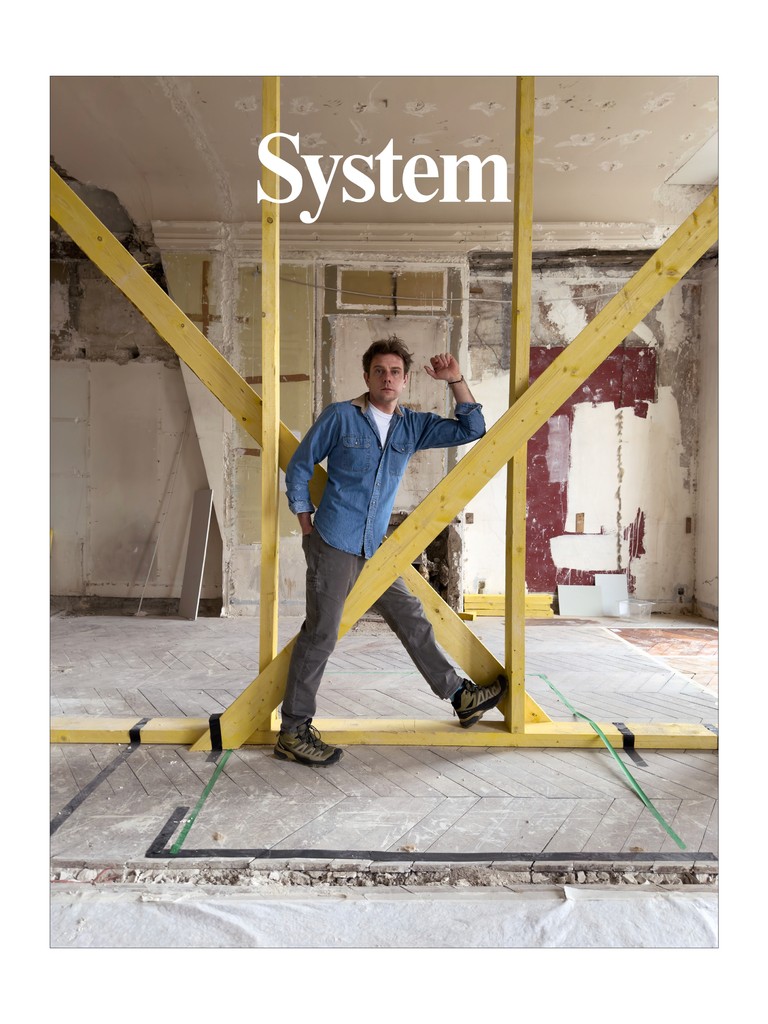
Veronica Latourrette is an IFM alumna, having completed her Executive MBA in 2020. Originally from Uruguay, she studied Communication and Social Sciences in Montevideo, and French 18th-century literature at the Sorbonne in Paris before working in photography production at Management+Artists. She started working with Thomas Lenthal in 2011 and took part in the creation of System magazine in 2013. Today she serves as Managing Editor across both System and Alphabet Magazine, and as Director at Lenthal, the independent creative direction studio and publishing house behind both titles. In conversation with Doc/34, she discusses the constraints of independent publishing, and how the industry is adapting within the changing landscape of AI — a glimpse into the gears that make the machine run.
Sofie Kraus: Could you tell me a bit about your position as Managing Editor at System, like on a day-to-day basis?
Veronica Latourrette: There are two main parts to my job at System. The first one is participating in editorial conversations with the team about what choices we want to make for future issues, what we want to put on the cover, and what features we want to produce. This is both for print and digital of course. The second part is making it happen: reaching out to photographers, editors, stylists... We initiate each feature, but then we also let people do their thing, because it is an editorial project, not commercial work. Then I participate in the production process from editorial close to final distribution and launch. I'm also involved in the conversations with every sponsor and partner, or for the special projects that we develop in collaboration with brands.
Sofie: What is the percentage of you reaching out to collaborators versus collaborators approaching you?
Veronica: We almost always reach out to people ourselves. Through our ongoing conversations, we determine what we want to feature and with whom we want to collaborate. For instance, there is this great piece in the new issue about Anton Perich, who used to film fashion shows and party people in the '70s in New York. We ended up creating an archive piece out of that. Somebody mentioned this wonderful source to our editor-in-chief Jonathan Wingfield, and we said to ourselves, there's this opportunity, this subject nobody else is talking about, and then you build the story by reaching out to the people you feel can execute it best.
Sofie: Independent magazines often appear very free creatively. What are the hidden constraints you must work with — in terms of timing, production, and budget — that maybe the audience doesn't think about?
Veronica: Budget is always a constraint. So basically, we need to work very creatively and in close partnership with all our contributors. They are partners, not hired hands, that's part of the magazine's economy.
And then of course you have advertisers. At System, we've built good relationships with brands based on the understanding that we're not there to showcase products. We are really about the making of fashion as part of contemporary culture. It's also super important for us not to speak only about brands.
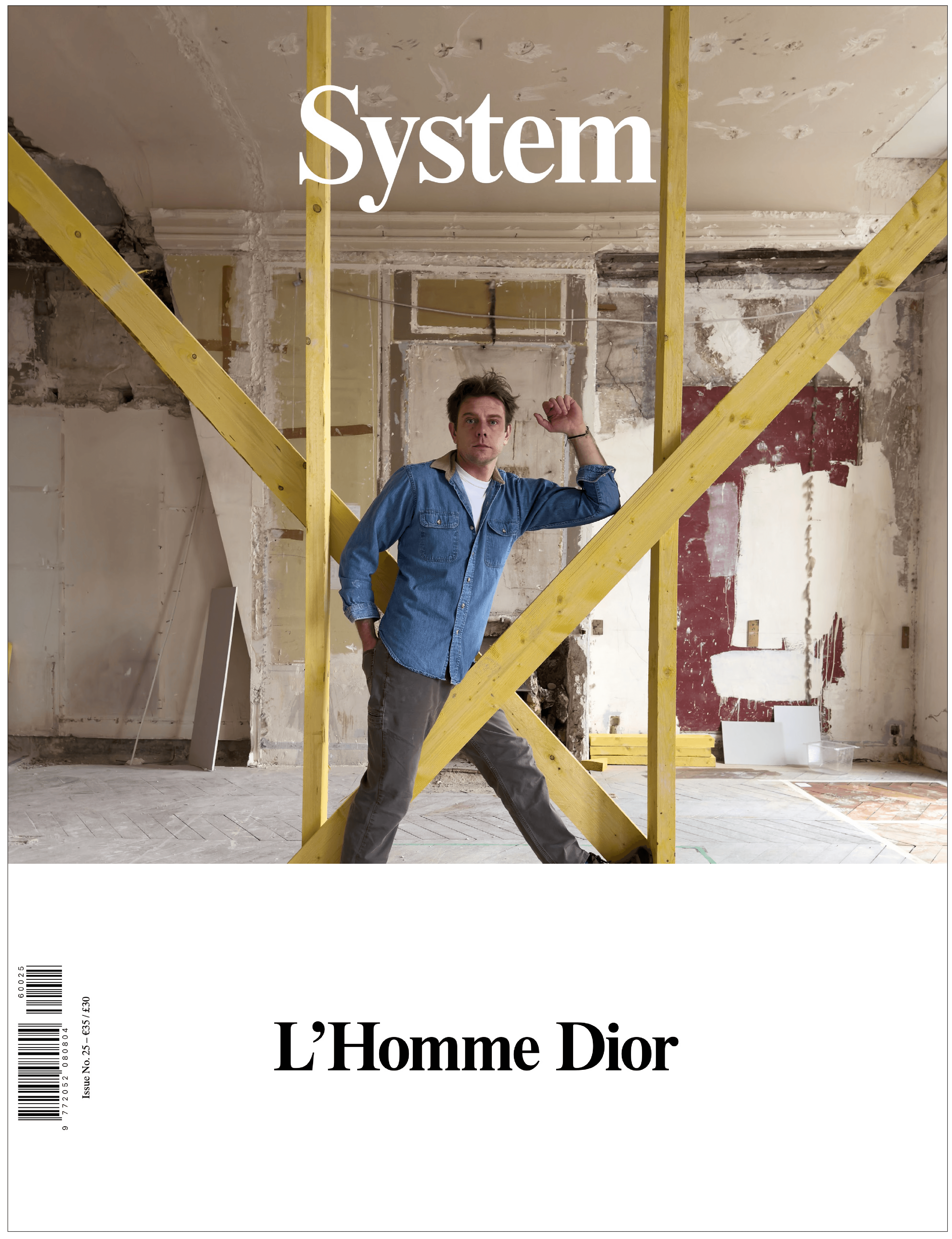
System Issue No. 25, photography by Juergen Teller.
Sofie: With the rise of AI — some people say it's a threat, others an opportunity — how do you approach it and are you adapting your strategies?
Veronica: For us today, AI is a tool. It's neither a threat nor particularly an opportunity at the moment. Our previous issue was a photography special issue where we interviewed around 15 photographers and image makers about their work and creative journey. AI was a very present subject because everybody is reflecting on it, working with it or reacting to it somehow. We work a lot on digital, and we create more and more digital content every day. But we try to create quality content with human beings, we are not using AI to create content. System is a lot about dialogue and conversation, it’s about putting one person in front of another. That you cannot do with AI.
Sofie: How does this impact the value and role of print within fashion and culture?
Veronica: I don't think the rise of AI is particularly threatening to the place that print has. It’s the whole digitalization of the world that potentially says print will become less important. But you know, it's as if you said, because we are more and more online and we play more and more games, we will buy fewer and fewer clothes because we only want to dress our avatars, but that's not what is happening. People still want to dress their bodies and interact with nice things. Physical objects still matter, and a magazine is a physical object, it can even be considered a luxury object. You want to collect it, it looks nice in your place, it will build your memories, it speaks of the now but will become a reference of the past. It has been produced with great care, and you probably enjoyed the experience of buying it at a cool store. We could also argue that something you see in print will imprint itself more in your consciousness, rather than in the endless flow we have online. So print still has that role, it can give a lot of pleasure as an object and it’s still relevant as a vehicle for images and ideas.
Sofie: How do you collaborate with editors, creative directors, photographers, and stylists and still keep coherence across an issue?
Veronica: Each magazine is like an ideal dinner party, a good mix of people, a mix of aesthetic perspectives and good conversations. And of course, you only feature people that mean something in the current cultural moment, and that you're interested in.
Sofie: Is it something you pay particular attention to, that people you reach out to are not too similar?
Veronica: Yes, of course. We try to build each magazine like a sample of a lot of different things, and globally, I think we manage to have a good variety.
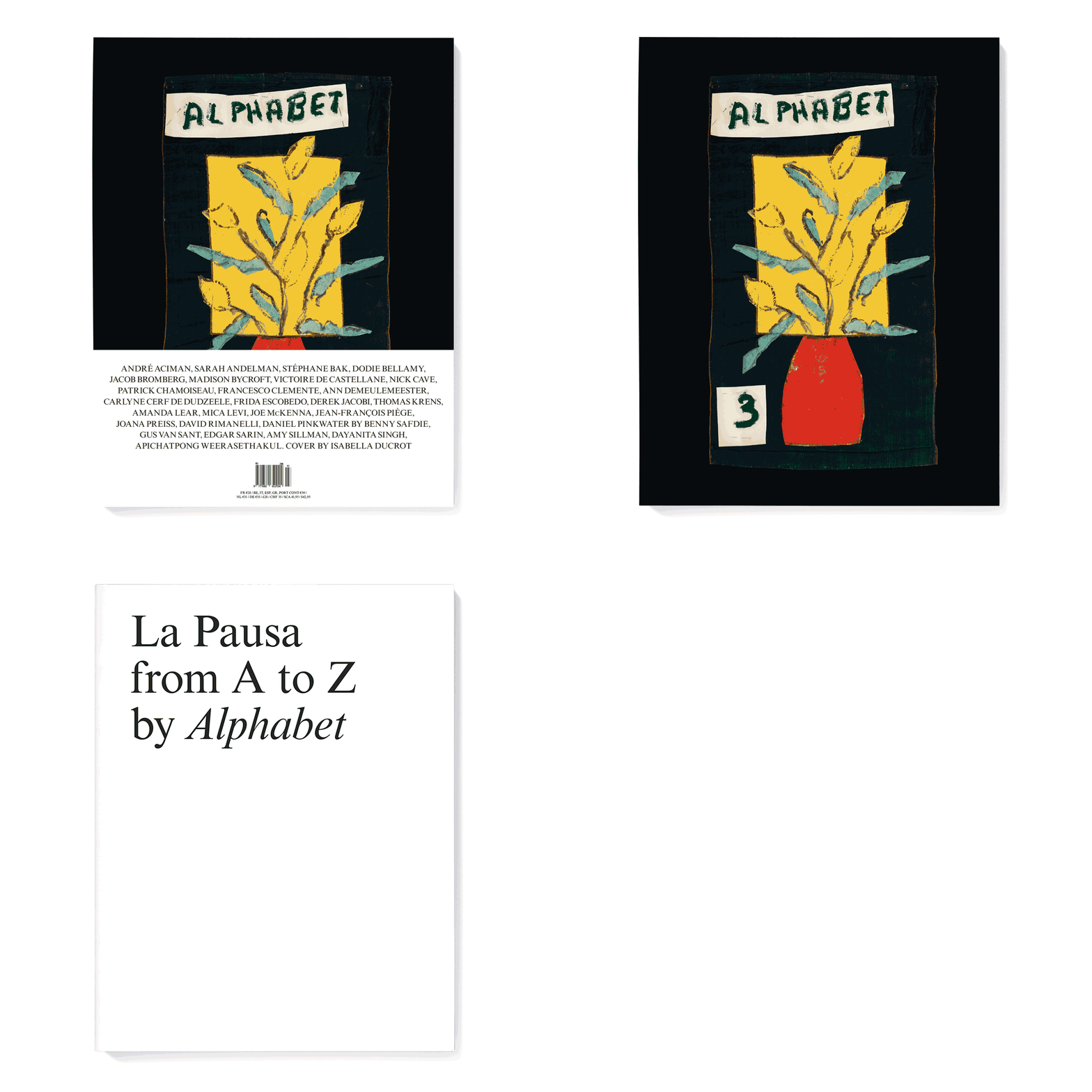
Alphabet Magzine Issue No. 3, cover by Isabella Ducrot.
Sofie: What do you think sets System apart from other magazines?
Veronica: System looks at fashion from an insider perspective. We are not a magazine about trends or what you should wear. We are more interested in looking at fashion as a cultural phenomenon, and revealing the meaningful conversations happening behind the scenes. Fashion today is like cinema or sport: people are passionate about it, and about those who create it, and that’s the audience we speak to. Also, System never puts models wearing clothes on the cover. Our covers are always creative directors or creative people who are shaping this cultural field today. Last year we launched System Collections, a new biannual magazine where we do feature-models of the season with the clothes of the season, through 80 total looks interpreted by a photographer and stylist team. We felt it was interesting to create this space within our platform, and also feature fashion season commentary by many different voices, coming from different places. It’s a great document.
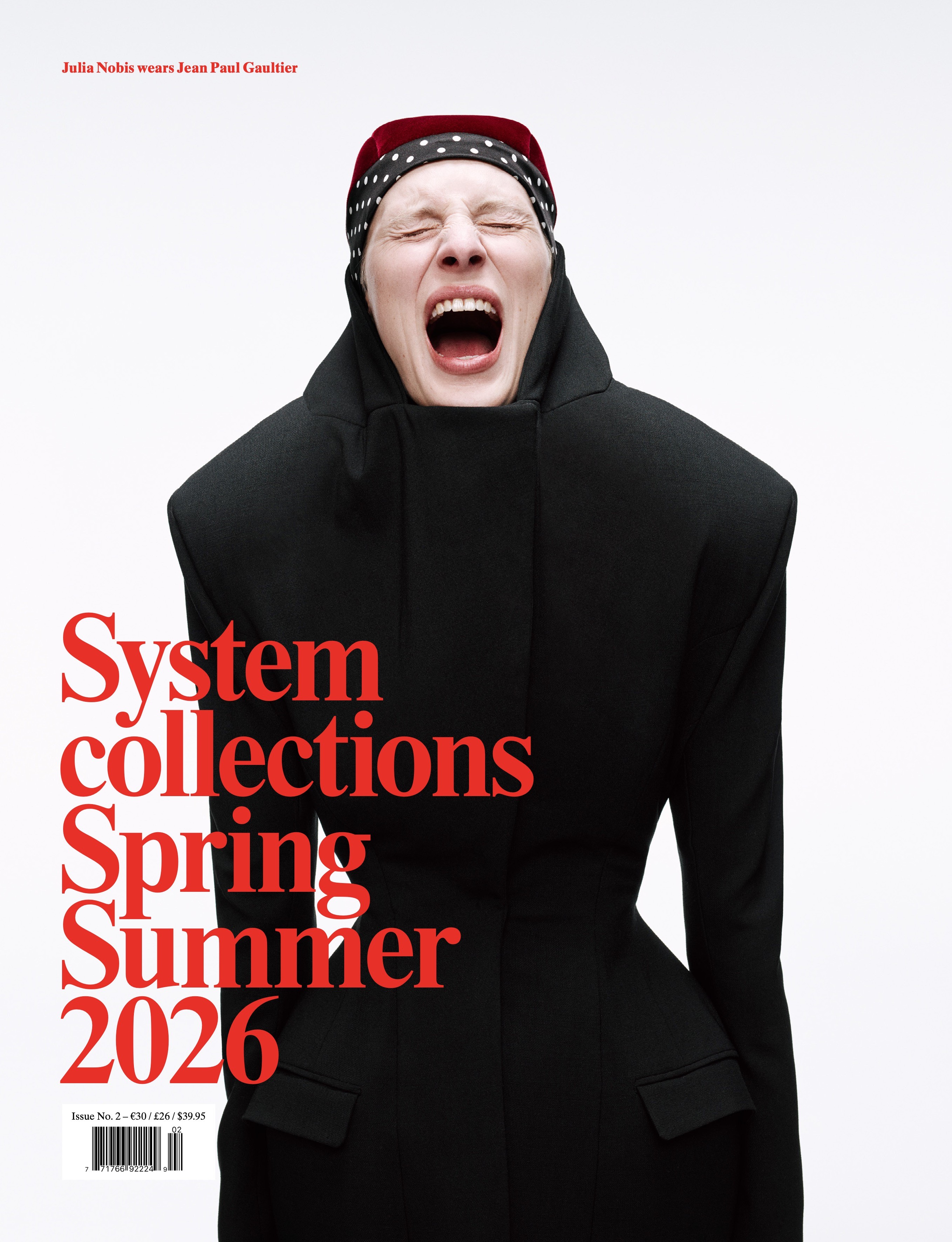
System collections Issue No. 2, photography by Willy Vanderperre.
Sofie: Alongside your work at System, you're also director at Thomas Lenthal’s creative direction studio. How do these two sides of your work merge?
Veronica: At Lenthal, we do more commercial projects for clients. So it's different work, but with the same team. Mostly, what defines my work is that I'm juggling different conversations going on at different levels. I have a hybrid profile: I can move between strategy, creative thinking and execution. I understand the management and project direction side, but also the creative side, and how to make things happen. My main mission is to make creative projects come alive in a way that makes sense for the creative and for the client. It’s complex in practice, but the principle is simple : it's always a commission - a set of parameters - that you have to play with and make succeed.
Sofie: Is there a misconception that students have about working in magazines that you'd like to challenge?
Veronica: It's kind of a mysterious field, isn’t it? Unless you're in it, you just don't know how it works. When I speak with students, they're always asking: how do you get that photographer, that model? One thing most people don't immediately realise is that magazines are not paying commercial level fees for the creatives they work with. But by working with you, those creatives are exploring their creative universe, and showing what they can do, and that will inspire other creatives in different areas, and will also result in commercial work. So a magazine can be both a laboratory and a gallery, a space of research and development for the whole industry.
Doc/34 all rights reserved, sponsored by IFM.
" height="65.65946764590899px" id="biO_icj08" transform="translate(0 1.371)" width="59.174572953517554px"/><path d="M 63.167 33.692 C 63.167 54.377 50.565 68.088 31.544 68.088 C 12.524 68.088 0 54.69 0 33.927 C 0 13.163 12.371 0 31.626 0 C 50.882 0 63.17 13.163 63.17 33.692 Z M 46.89 33.848 C 46.89 21.155 41.097 13.477 31.626 13.477 C 22.155 13.477 16.206 21.234 16.206 33.848 C 16.206 46.463 22.077 54.533 31.626 54.533 C 41.176 54.533 46.89 46.698 46.89 33.848 Z" fill="rgb(0, 0, 0)" height="68.08839784893921px" id="A8_8V8D77" transform="translate(58.705 0.196)" width="63.17042207703656px"/><path d="M 43.755 24.133 C 42.268 17.003 38.119 13.477 31.388 13.477 C 21.838 13.477 16.281 20.998 16.281 33.927 C 16.281 46.855 22.073 54.455 31.779 54.455 C 36.084 54.455 39.763 52.653 42.033 49.519 C 43.363 47.638 43.911 46.071 44.381 42.781 L 60.662 45.209 C 59.175 51.869 57.453 55.709 54.165 59.548 C 49.312 65.111 41.72 68.088 32.249 68.088 C 22.778 68.088 14.637 65.111 9.08 59.47 C 3.287 53.593 0 44.426 0 33.927 C 0 23.427 3.287 14.26 9.471 8.149 C 14.872 2.899 22.778 0 31.935 0 C 42.033 0 49.938 3.448 55.026 10.264 C 57.531 13.477 58.861 16.376 59.879 20.998 Z M 100.346 1.41 L 72.246 77.804 L 58.235 77.804 L 86.414 1.41 Z" fill="rgb(0, 0, 0)" height="77.80411839929134px" id="v1AksvdEb" transform="translate(121.519 0.196)" width="100.34629996240147px"/><path d="M 16.594 46.933 C 17.064 49.519 17.533 50.616 18.786 51.948 C 20.899 54.142 24.03 55.317 27.787 55.317 C 33.892 55.317 37.728 52.261 37.728 47.482 C 37.728 44.269 36.162 41.762 33.501 40.743 C 31.701 40.117 29.274 39.725 26.222 39.725 C 23.169 39.725 19.647 39.881 16.594 40.195 L 16.594 26.718 C 19.255 27.032 21.838 27.188 24.891 27.188 C 32.327 27.188 36.006 24.681 36.006 19.666 C 36.006 15.435 33.031 13.007 27.865 13.007 C 22.308 13.007 19.49 15.2 18.316 20.215 L 1.409 17.786 C 2.896 12.928 4.148 10.578 6.653 7.835 C 11.428 2.664 18.629 0 28.178 0 C 36.71 0 43.755 2.351 48.216 6.66 C 51.112 9.559 52.6 13.32 52.6 17.786 C 52.6 26.091 48.138 31.263 39.137 33.378 C 43.911 34.083 46.494 35.18 49.234 37.531 C 52.521 40.508 54.4 44.583 54.4 49.127 C 54.4 53.123 53.304 56.806 51.269 59.548 C 49.547 61.899 46.807 64.092 43.911 65.424 C 39.841 67.305 33.501 68.48 27.63 68.48 C 20.586 68.48 13.541 66.835 9.393 64.092 C 5.792 61.742 3.053 58.294 1.331 53.985 C 0.861 52.888 0.548 51.869 0 49.832 Z" fill="rgb(19, 136, 8)" height="68.48016075605614px" id="UrmKxPWFQ" transform="translate(219.752 0)" width="54.399905030019454px"/><path d="M 0 37.844 C 2.348 35.233 4.853 32.36 7.514 29.226 L 24.5 9.324 C 28.257 5.015 29.744 3.056 31.779 0 L 47.825 0 C 47.355 4.623 47.199 7.757 47.199 13.007 L 47.199 38.471 L 49.469 38.471 C 51.895 38.471 54.478 38.236 57.218 37.844 L 57.218 52.104 C 54.87 51.791 51.973 51.634 49.547 51.634 L 47.199 51.634 L 47.199 55.552 C 47.199 59.94 47.355 62.212 47.825 65.189 L 31.701 65.189 C 32.092 62.525 32.327 59.235 32.327 55.395 L 32.327 51.556 L 10.176 51.556 C 5.088 51.556 2.896 51.634 0 51.869 Z M 32.405 29.539 C 32.405 26.013 32.562 21.704 32.875 18.256 C 31.309 20.45 30.135 22.017 28.022 24.681 L 16.594 38.628 L 32.405 38.628 Z" fill="rgb(19, 136, 8)" height="65.18935212489366px" id="nz3MAn0g5" transform="translate(272.782 1.567)" width="57.21774185674667px"/></g></svg>)