Identities
Student Profile : Fanny Vilhelmsson
By Ena Fleischhacker
Fanny Vilhelmsson is a Fashion Design student in the third year of the BA.
She describes herself and her designs as silly, colorful and passionate.
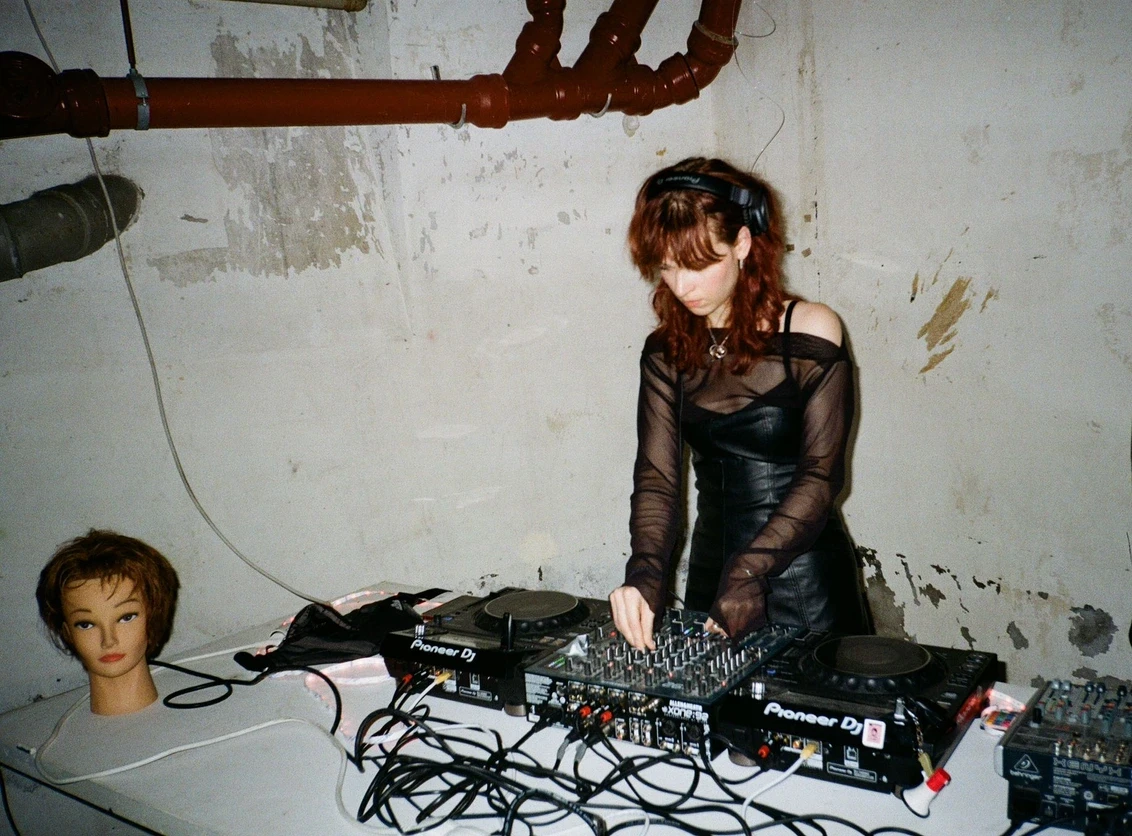
Besides being known for her designs, bubbly personality, and intoxicating laugh, she is recognised for her quick rise in the Parisian DJ scene.
Her preferred outfit is a skirt over some trousers with a t-shirt.
Fanny misses chocolate and the sea the most about Sweden.
Her number one fashion icons are Alexa Chung and Chloë Sevigny.
Ena Fleischhacker: What brought you to Paris instead of staying in Sweden where there is currently a rising fashion scene and how would you differentiate the two?
Fanny Vilhelmsson: It has always been a dream of mine to study abroad. I was born a city rat; I love the pulse and pace of Paris. There are so many opportunities to be inspired, Paris has become something like my muse.
I'm from Gothenburg, a small city in Sweden, and I felt that I had become too comfortable there. I wanted to broaden my horizons and challenge myself. When I first arrived here,
I thought the fashion scene was slightly stuck up and elitist; I didn't think there was much room for smaller brands. However, once you get to know the smaller circles, which I am still discovering, it's a lot of fun. There are so many voices that I think should be heard here.
Ena: What got you interested, and made you decide to pursue a career in the fashion industry?
Fanny: As an only child I was drawn to activities I could do on my own, drawing was one of them. I found a sketch for the next H&M summer collection from when I was five years old. My mother worked in the fashion and design industry, so I grew up around fashion. Every time we walked the streets, I paid attention to the clothes people wore. I was fascinated by the idea that all these shapes and colours could trigger such emotions in me. I realized that this is my form of expression and that there is nothing I would rather do. There are only two fashion schools in Sweden, and luckily for me, one of them is in Gothenburg. Fashion school can make you doubt yourself a lot and you wonder if you are good enough or if people would really like to wear it. In the end, my doubts made me focus on the fun of fashion. If I see the fun, maybe others will see it too.
Ena: What inspires you and your creative process? Is there a connection between your work and your Swedish heritage?
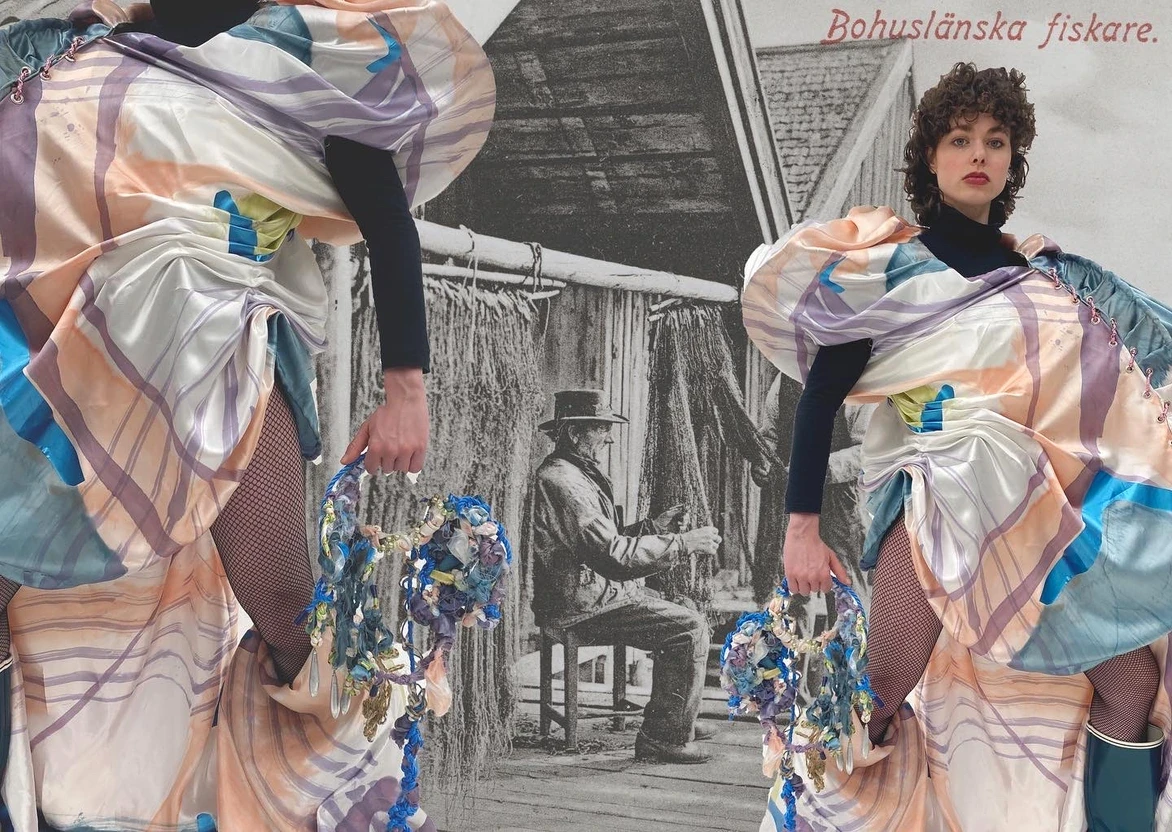
Fanny: When I was younger, my main sources of inspiration were Vivienne Westwood and Alexander McQueen. Now I'm more concerned with the people I see on the street who express strong character through clothing. The majority in Sweden dresses in shades of gray and beige, which feels like a uniform. I want to oppose this in my work. Yet, I have done projects where I embrace my heritage. My family has a house in a small fishing village, and my father's family are all fishermen.
I portrayed the memories I have of this house in several projects. I have taken up the aesthetic of the fishermen and given it my own twist. The fishermen are a perfect example of male stereotypes. It's dirty and wet, and I wanted to turn it into something precious and beautiful.
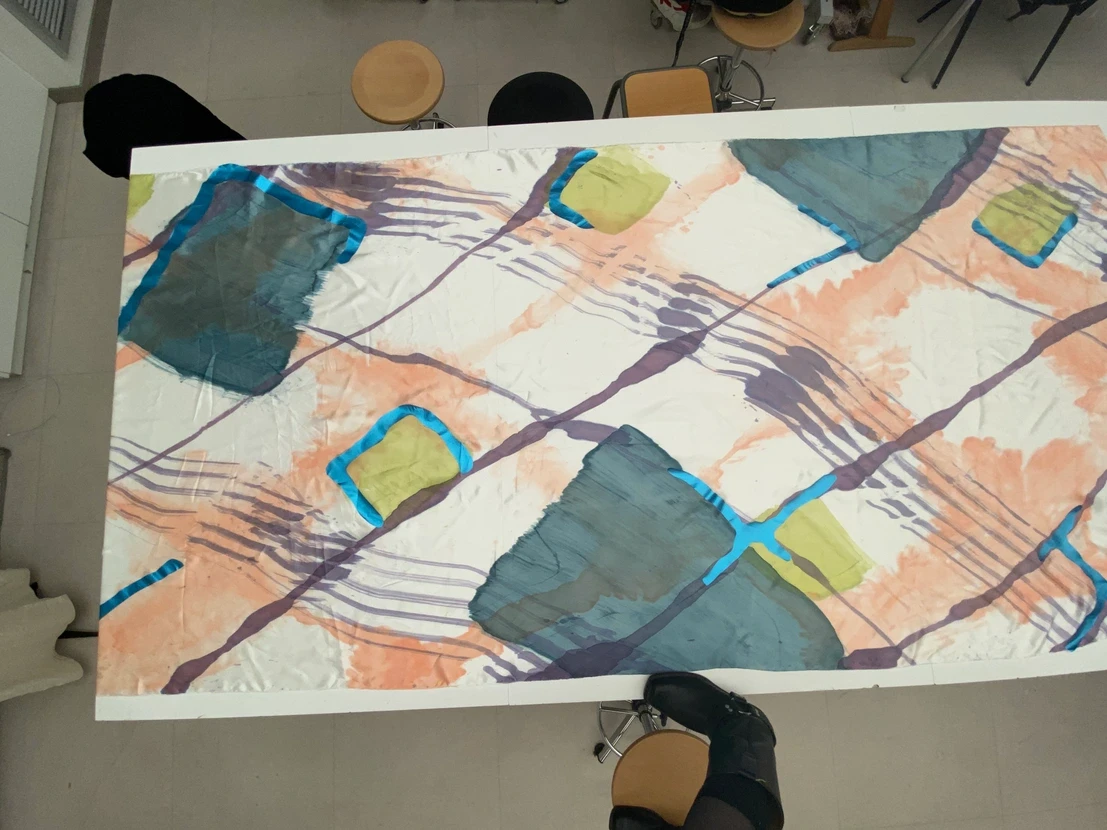
One of the projects consisted of deconstructed fishing cages and an eight-meter-long silk fabric draped around it. Inspired by the beautiful colors of the Swedish west coast, such as the granite stone, the sun, and the sea, I painted the silk fabric myself. The fish cages were lobster cages that I had brought back from Sweden.
It was a fun experience to pick them up at the airport.
 |  |
For another project, I learnt how to make fishing nets on YouTube. It took a while, but I felt connected to my ancestors, like I was doing their work. You'd be surprised how many old men on the internet are teaching how to twist fishing nets!
Ena: How would you describe your creative evolution?
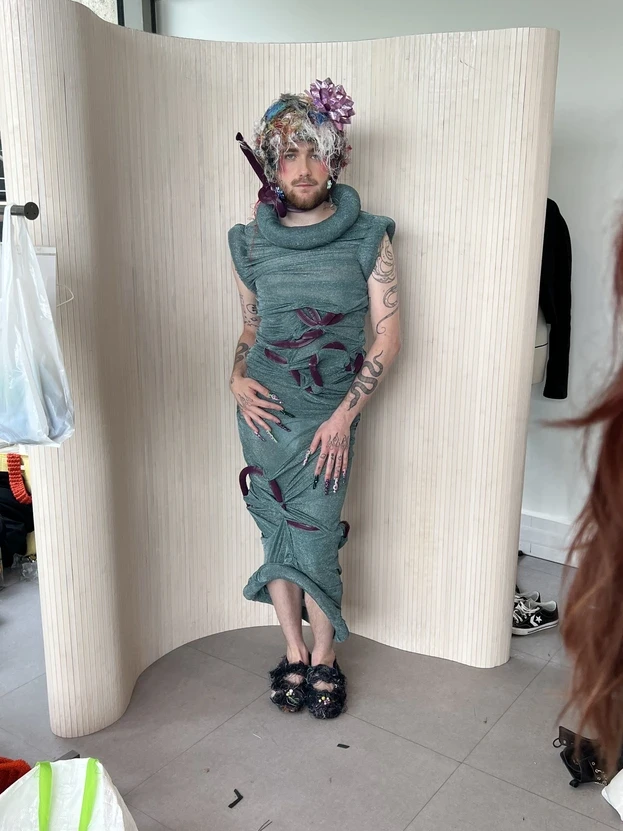
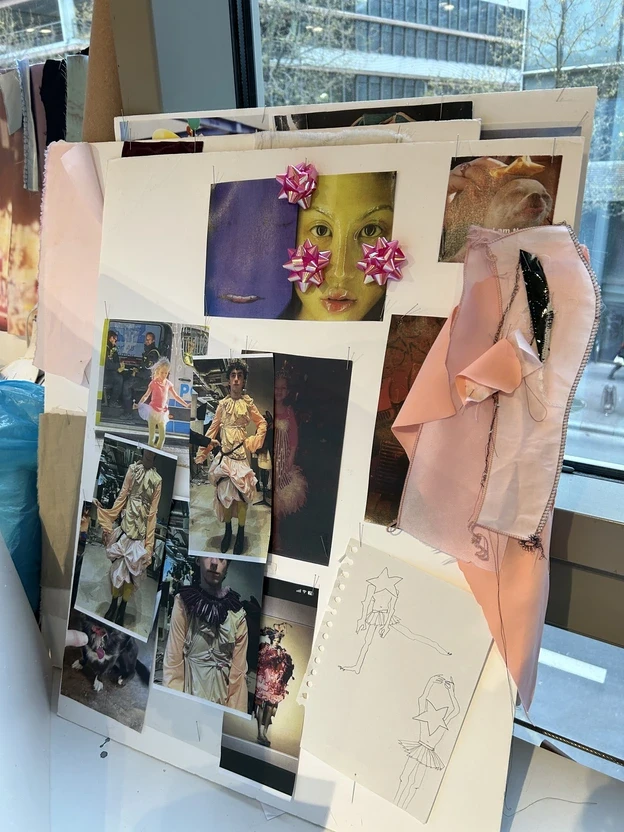
Fanny: Like many others, I had my first encounter with the fashion world through the big houses. I drew Chanel logos everywhere and wore only black, elegant clothes. After a while, I realized that this just felt like a costume and didn't represent who I am. My creative process has become more fun and experimental. My color palette is more unexpected, and I like to have fun with my collections. I am currently working on a collection called "Silly fragility".
It's about clowns or the fact that we are all clowns in a way. Clowns are the embodiment of humanity. They show vulnerability and take certain situations and emotions to extremes, which is why they make many of us uncomfortable.
 |  |
Ena: Last year you worked on an underwear project that switched the narrative of a misogynistic and sexist interview with Björk. Do you see fashion as a rebellion against sexism and how do you feel about entering a still quite male dominated industry
Fanny: I love this question.
I think we are moving away from it, but the male gaze is still there. The main issues are the narratives and the lack of representation. The place of empowerment in fashion has long been reserved for white, thin women, and I don't think it’s doing any good for the feminist revolution. Fashion is a tool that could be used for the feminist revolution but isn't used as such often enough. I'm not scared or intimidated though, because it's just about finding the right people to work with. I believe that the fashion industry is a very collaborative industry, and am confident that I will find people who share my views.
Ena: To that, what does inclusive fashion mean to you?
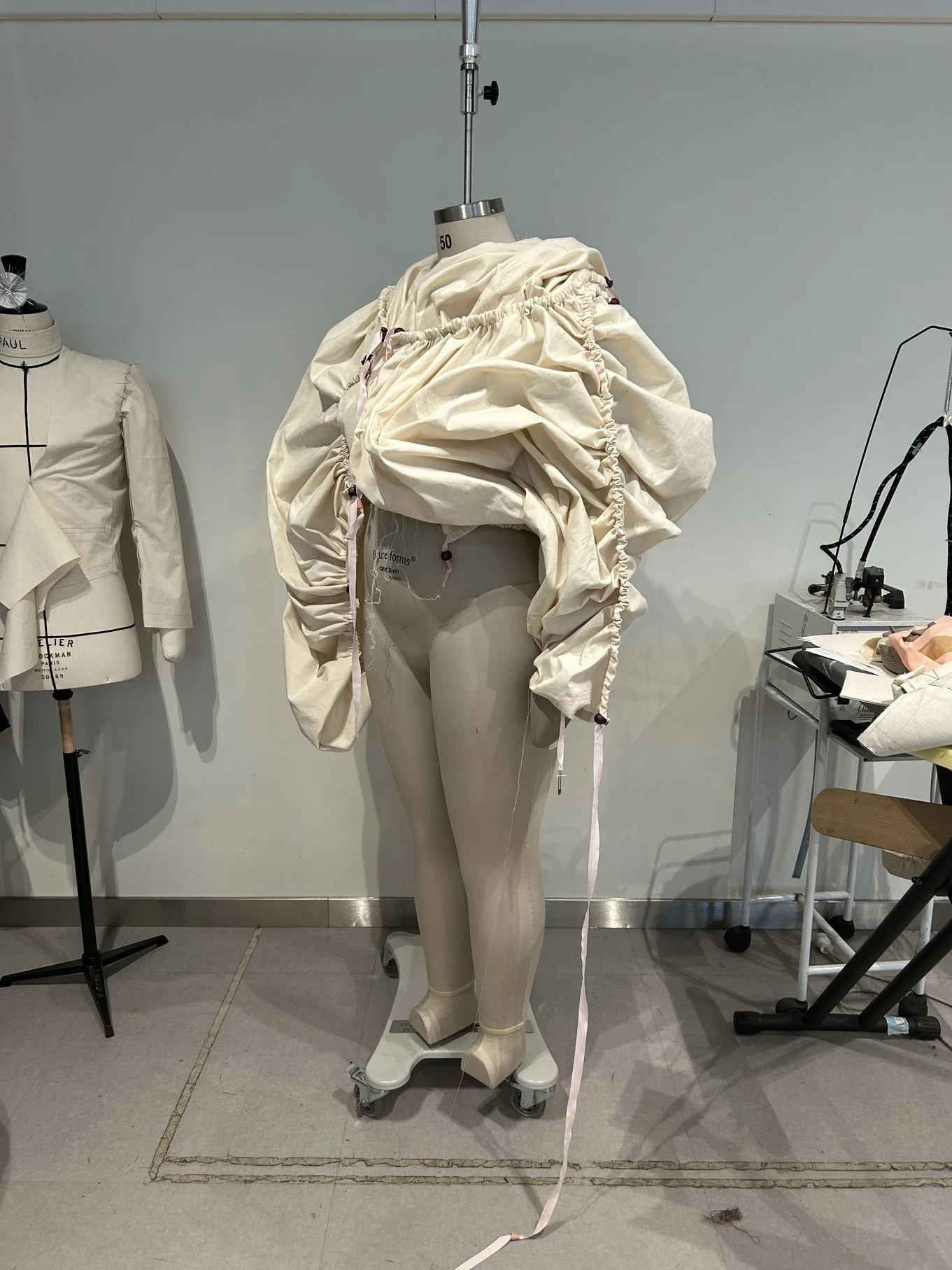
Fanny: It's all about the representation. If garments are meant for all bodies, then they need to be shown on all types of bodies. A big problem we face is the lack of knowledge about designing for different body shapes.
Right now, people feel comfortable using only one type of mannequin. Everyone, including myself, needs to start challenging themselves more so that we can create a better space for everyone. I think Hillary at Collina Strada does a great job with inclusion in such a fun and obvious way. I was lucky enough to intern with her last summer and work on the collection that was shown at NYFW.
Ena: As you don't limit yourself to just fashion with your creativity, do you have a preferred form of art?
Fanny: I don't want to limit myself to one artform. I have two passions, I want to pursue both of them. I think at the core it will always be fashion because it involves so many other creative elements like drawing, styling and photography. However, it's a great feeling to share music with others and make people dance as music. Music has always touched me deeply. I started making different playlists at a young age and thanks to my father, I was always open to different genres. I never thought I would have the opportunity to be involved in the music scene, but during COVID I learnt how to DJ and I fell in love with music.
Ena: Would you like to share about Book Club Radio and Libertanga?
Fanny: I came across Book Club Radio last summer. I instantly fell in love. They organize house parties with their friends, record the sets and post them to Youtube. I was enchanted by the ambience, it felt so safe and inclusive.
The DJ isn't in front of the crowd and there's no filming with phones allowed, it's all about the music and the moment. Later that summer I went to New York for my internship, texted them I loved their parties and energy and would love to join them.
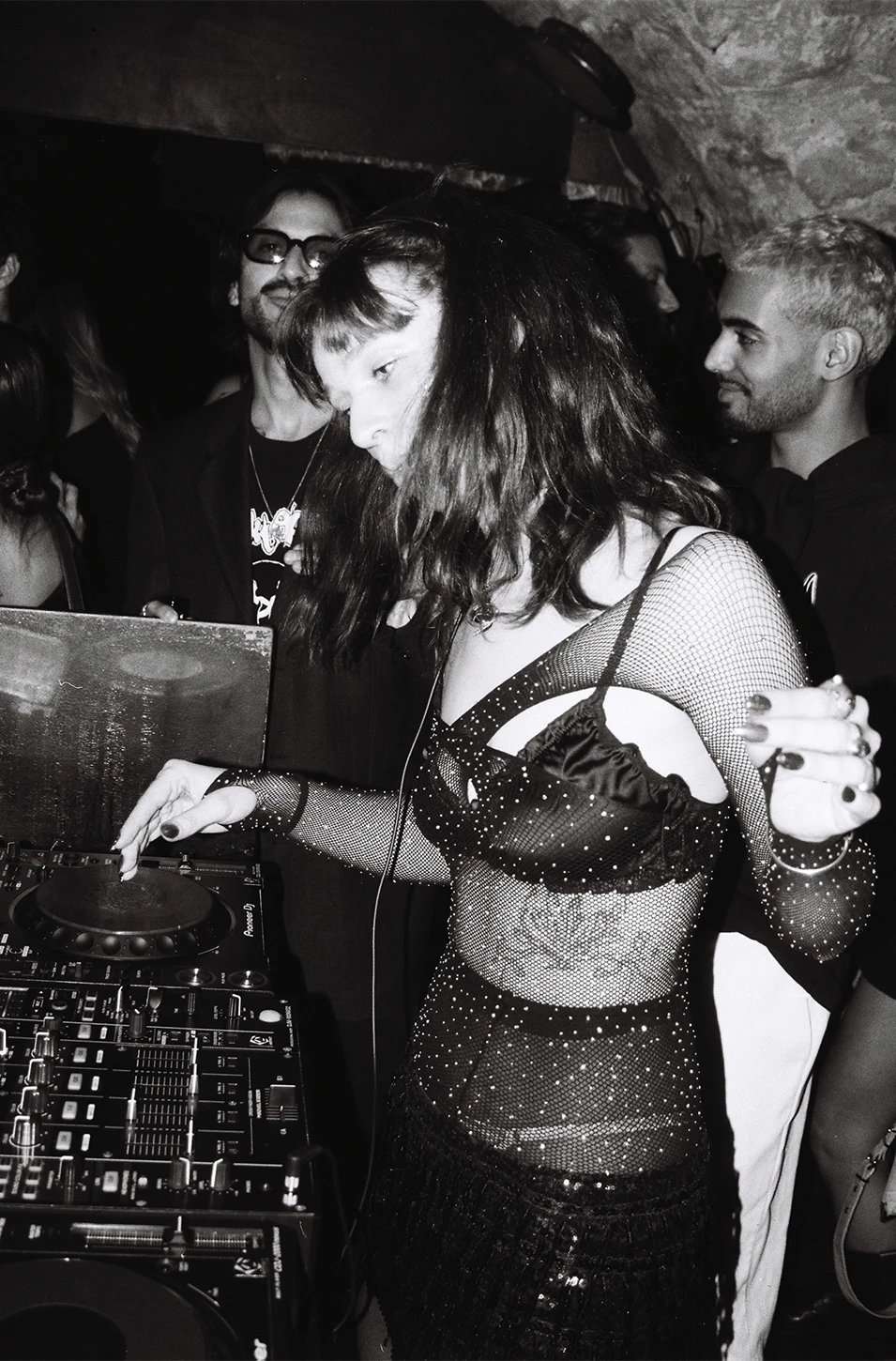
I went to one of their events, got to know them and they invited me to play. It felt like a dream to be part of something like that. I got some good reactions, and it gave me some validation after wondering if I was any good at this DJ thing. Libertanga is my party at Club Pamela in Paris.
I had the opportunity to organize a few events there. I saw how free and glamorous Studio 54 was and wanted to recreate that atmosphere in a modern setting. I decided to play house music rather than music from back then. At the end of the night, I want people to have danced their arse off.
Ena: Is there an intersection between your interest in fashion and music also in terms of inspiration?
Fanny: I've always enjoyed going to clubs or events with music to get inspired and take a break from everyday life. When you find your spaces where you feel safe, which is not a given in clubs, you get inspired by the people you see and by the music itself. I often go to parties because of the DJs and to see how they express themselves. It gives me both inspiration and energy. Now that I DJ myself, I even consider it research when I go out. DJs are artists and their clothes are important. In both fashion and music, I'm always looking for fun characters and curiosity.
Ena: Is there a specific brand that would be your ultimate goal to work for?
Fanny: While 11-year-old Fanny would immediately say Chanel, I find it harder to answer this question today. I always thought I wanted to work for a brand or start my own, but now I'm not so sure.
I am someone who thrives on collaboration.
In both fashion and music, there is that one person on top of the hierarchy you look up to. I used to think that I wanted to be the person up there, but now I want to work with people I respect in an environment similar to Collina Strada. A small brand that has something to say and is passionate about what it does.
If the brand is passionate, I will be too.
Doc/34 all rights reserved, sponsored by IFM.
" height="65.65946764590899px" id="biO_icj08" transform="translate(0 1.371)" width="59.174572953517554px"/><path d="M 63.167 33.692 C 63.167 54.377 50.565 68.088 31.544 68.088 C 12.524 68.088 0 54.69 0 33.927 C 0 13.163 12.371 0 31.626 0 C 50.882 0 63.17 13.163 63.17 33.692 Z M 46.89 33.848 C 46.89 21.155 41.097 13.477 31.626 13.477 C 22.155 13.477 16.206 21.234 16.206 33.848 C 16.206 46.463 22.077 54.533 31.626 54.533 C 41.176 54.533 46.89 46.698 46.89 33.848 Z" fill="rgb(0, 0, 0)" height="68.08839784893921px" id="A8_8V8D77" transform="translate(58.705 0.196)" width="63.17042207703656px"/><path d="M 43.755 24.133 C 42.268 17.003 38.119 13.477 31.388 13.477 C 21.838 13.477 16.281 20.998 16.281 33.927 C 16.281 46.855 22.073 54.455 31.779 54.455 C 36.084 54.455 39.763 52.653 42.033 49.519 C 43.363 47.638 43.911 46.071 44.381 42.781 L 60.662 45.209 C 59.175 51.869 57.453 55.709 54.165 59.548 C 49.312 65.111 41.72 68.088 32.249 68.088 C 22.778 68.088 14.637 65.111 9.08 59.47 C 3.287 53.593 0 44.426 0 33.927 C 0 23.427 3.287 14.26 9.471 8.149 C 14.872 2.899 22.778 0 31.935 0 C 42.033 0 49.938 3.448 55.026 10.264 C 57.531 13.477 58.861 16.376 59.879 20.998 Z M 100.346 1.41 L 72.246 77.804 L 58.235 77.804 L 86.414 1.41 Z" fill="rgb(0, 0, 0)" height="77.80411839929134px" id="v1AksvdEb" transform="translate(121.519 0.196)" width="100.34629996240147px"/><path d="M 16.594 46.933 C 17.064 49.519 17.533 50.616 18.786 51.948 C 20.899 54.142 24.03 55.317 27.787 55.317 C 33.892 55.317 37.728 52.261 37.728 47.482 C 37.728 44.269 36.162 41.762 33.501 40.743 C 31.701 40.117 29.274 39.725 26.222 39.725 C 23.169 39.725 19.647 39.881 16.594 40.195 L 16.594 26.718 C 19.255 27.032 21.838 27.188 24.891 27.188 C 32.327 27.188 36.006 24.681 36.006 19.666 C 36.006 15.435 33.031 13.007 27.865 13.007 C 22.308 13.007 19.49 15.2 18.316 20.215 L 1.409 17.786 C 2.896 12.928 4.148 10.578 6.653 7.835 C 11.428 2.664 18.629 0 28.178 0 C 36.71 0 43.755 2.351 48.216 6.66 C 51.112 9.559 52.6 13.32 52.6 17.786 C 52.6 26.091 48.138 31.263 39.137 33.378 C 43.911 34.083 46.494 35.18 49.234 37.531 C 52.521 40.508 54.4 44.583 54.4 49.127 C 54.4 53.123 53.304 56.806 51.269 59.548 C 49.547 61.899 46.807 64.092 43.911 65.424 C 39.841 67.305 33.501 68.48 27.63 68.48 C 20.586 68.48 13.541 66.835 9.393 64.092 C 5.792 61.742 3.053 58.294 1.331 53.985 C 0.861 52.888 0.548 51.869 0 49.832 Z" fill="rgb(19, 136, 8)" height="68.48016075605614px" id="UrmKxPWFQ" transform="translate(219.752 0)" width="54.399905030019454px"/><path d="M 0 37.844 C 2.348 35.233 4.853 32.36 7.514 29.226 L 24.5 9.324 C 28.257 5.015 29.744 3.056 31.779 0 L 47.825 0 C 47.355 4.623 47.199 7.757 47.199 13.007 L 47.199 38.471 L 49.469 38.471 C 51.895 38.471 54.478 38.236 57.218 37.844 L 57.218 52.104 C 54.87 51.791 51.973 51.634 49.547 51.634 L 47.199 51.634 L 47.199 55.552 C 47.199 59.94 47.355 62.212 47.825 65.189 L 31.701 65.189 C 32.092 62.525 32.327 59.235 32.327 55.395 L 32.327 51.556 L 10.176 51.556 C 5.088 51.556 2.896 51.634 0 51.869 Z M 32.405 29.539 C 32.405 26.013 32.562 21.704 32.875 18.256 C 31.309 20.45 30.135 22.017 28.022 24.681 L 16.594 38.628 L 32.405 38.628 Z" fill="rgb(19, 136, 8)" height="65.18935212489366px" id="nz3MAn0g5" transform="translate(272.782 1.567)" width="57.21774185674667px"/></g></svg>)