Identities
Documenting Fashion’s Past in a Digital Age: an interview with Gabin Bolou from @Mysteriummuseum
By Sydney Wilde
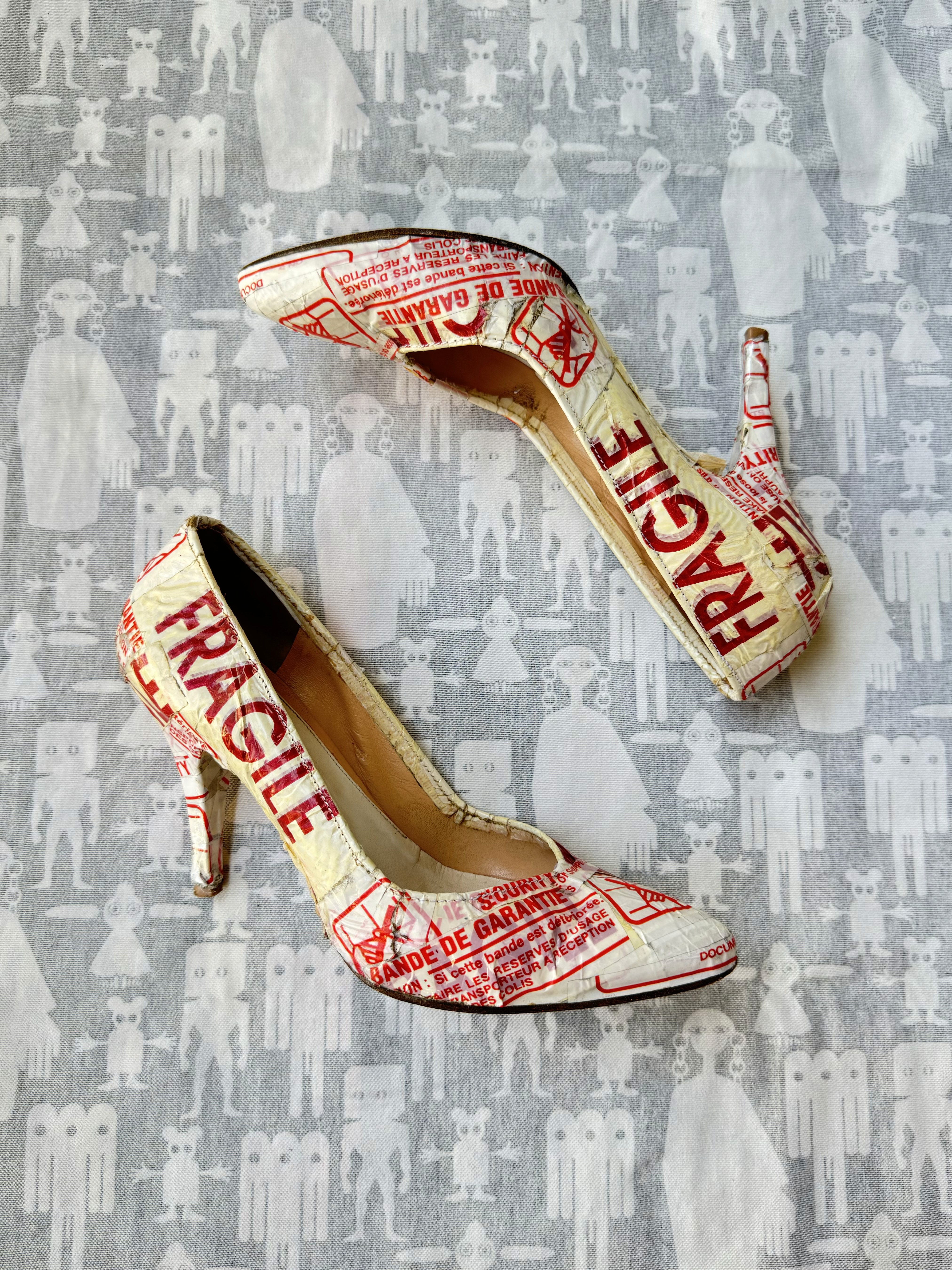
Gabin is a recent graduate of the Fashion and Creative Industries Management program. He launched his project, Mysterium Museum, five years ago, before beginning his studies at IFM, and it has since grown to become his full-time job. Through Mysterium Museum, he collects archive fashion pieces and shares insights about them on social media. While archive fashion can be understood as garments from a designer’s past collections, it has grown into much more than that. Enthusiasts of early work by influential designers such as Helmut Lang, Raf Simons, Martin Margiela, and Ann Demeulemeester have built a subculture around researching, trading, and celebrating these pieces together. Gabin describes his archive as a self-portrait, one that reflects his personality and inspirations through his thoughtful selection of designers and their work. Over the years, he has specialized his work on European and Belgian fashion from the 1990’s and 2000s.
Sydney: How did you start collecting? Can you tell me about the piece that started it all and how you acquired it?
Gabin: I think I got into archive very naturally. I was initially into streetwear during high school, and then I was influenced by a friend of mine who was already buying vintage clothes from designers like Helmut Lang and Hedi Slimane during his tenure at Dior. I started at first with the 90's underground wave of Japanese designers such as Jun Takahashi and Takahiro Miyashita. The first piece? I can't remember it... but one of the first that I can mention is probably the Autumn/Winter 2017 "I Love New York" sweater from Raf Simons. I remember I was so attached to this top that I bought it on Grailed in 2 colors. Today, I can't really say that I like this piece, but back in the day, it was a great introduction to this field for someone who didn't come from a fashion background. It was, and it is still, a very important piece for today's streetwear culture.
Figure 1. The FW17 Raf Simons sweater in question
Sydney: I think streetwear is such a gateway into fashion because you find designer pieces that are very iconic and collected in the streetwear scene. Then, you start to learn about the designers and their stories and fall into the rabbit hole of fashion.
Gabin: Exactly, and it's also thanks to social media like Instagram. We are more aware of what can be "fashion". To make a link with this sweater, I remember seeing it online for the first time, worn by various Hip-Hop celebrities. And after, you start digging more and more on the Internet, and you suddenly discover what "archive pieces" are. It is indirectly, thanks to streetwear, that I got obsessed with vintage fashion and ended up where I am now.
Sydney: You have over 200 Helmut Lang pieces in your archive. What makes Helmut Lang’s work special to you?
Gabin: The energy behind his work feels unique to me. There is this special feeling when you look at his shows and garments that is hard to explain in my case. The sex appeal, the simplicity, the colors of his clothes... Helmut proposed something truly groundbreaking during an era when no one was doing these types of pieces. Lang was making fashion clothes for people who didn't want to look fashion. I really like this approach. It looks effortless, but it’s among the most well-tailored, qualitative, ready-to-wear pieces I’ve ever had. You look refined while wearing his work without doing too much. There is also this idea that his work can be collected in an endless way that really obsesses me. I like that he used to dress random people outside of the often too-pretentious fashion industry. Painters, photographers, dancers, artists... it wasn't superficial at all. Back when fashion was really about the clothes. It’s sometimes a straightforward vision he had; it's not loud when you wear his stuff, it's about the cut of the clothes and the intellectual approach of the fabrics, the movement, the energy conveyed behind them. From 1986 to 2005, 19 years of legacy, with each collection having multiple similar pieces over each year... it means that you always end up discovering new things you had no idea existed before. You literally can't be bored with collecting his work. To me, Helmut Lang is one of the best designers to collect in the contemporary fashion scene because, altogether, it shows you a pure way of "how to make fashion", as well as how he shaped a major part of today's fashion landscape.
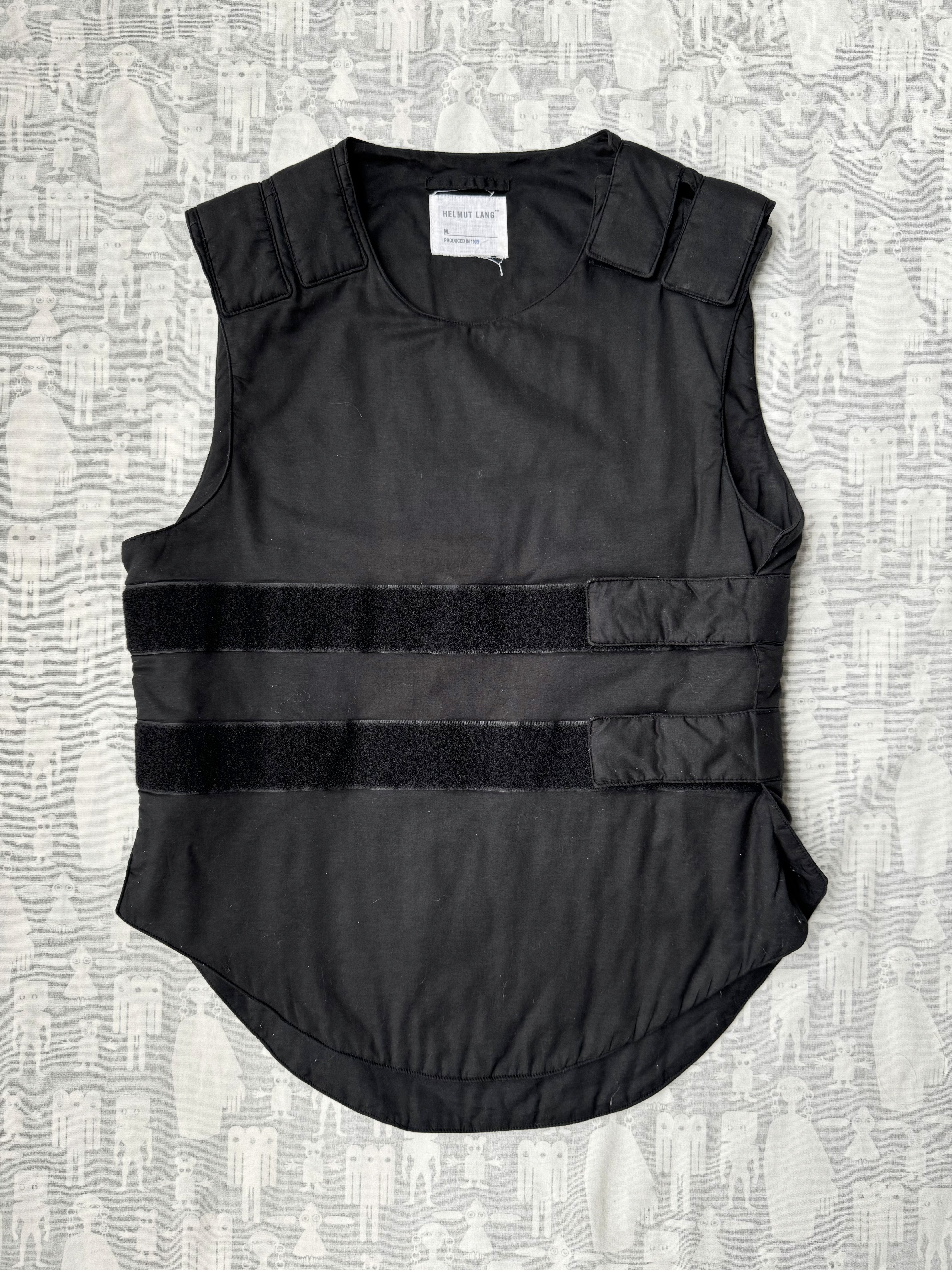
Figure 2. Helmut Lang S/S1999 Bulletproof Vest
Sydney: Is there a piece in your archive that holds a significant story or memory for you?
Gabin: My Autumn/Winter 2003 Raf Simons Unknown Pleasure Hand-painted Parka. I think it’s the most personal piece in my entire collection. It was worn on the 1st look of the Autumn 2003 Closer runway. The collection was inspired by 60's British youth culture. It’s in collaboration with Peter Saville, who gave Raf the right to use his artworks. He is a famous English artistic director who worked at Factory Records at the beginning of his career. The label was producing a lot of post-punk and new wave bands from Manchester, like Joy Division and, later, New Order. He is the one who made plenty of iconic album covers such as Unknown Pleasures and Power Corruption and Lies... The coat presents this legendary Unknown Pleasures album cover of Joy Division, as well as the graphic of Technique, another great and underrated New Order album. Joy Division is probably the most important band in my life. Their music helped me during my darkest times, and I have a lot of deep memories linked to Ian Curtis's texts. It's among the most iconic pieces in archive fashion culture, so it was crazy for me to acquire this grail after years of looking for it. Again, I believe this piece is really a reflection of who I am, of my personality, and my most important cultural influences.
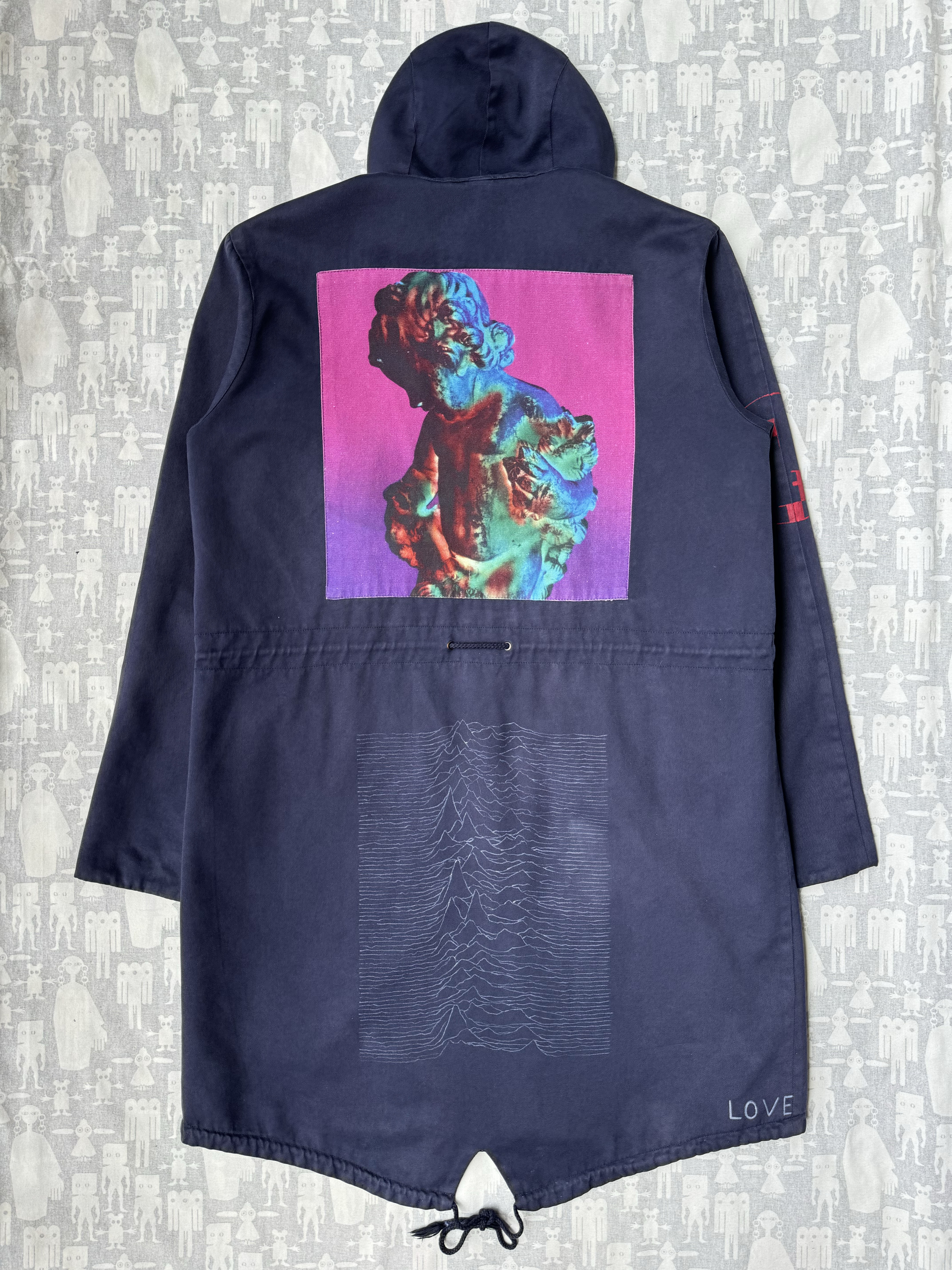
Figure 3. Raf Simons A/W2003 ''Closer'' Unknown Pleasures Handpainted Fishtail Parka
Sydney: Through your Instagram and TikTok, you pass on contemporary fashion history knowledge. How did you first learn about archive fashion?
Gabin: I started getting into archives around four years ago. Back then, in France, nobody was really talking about this young movement. That’s why I mainly learned about it through old fashion books, magazines, articles written by journalists, and the internet. What's interesting about this small niche part of modern fashion culture is how the global interest in it grew so fast. A few years back, knowledge was mainly transmitted through word of mouth and little-known forums or closed groups of nerds and enthusiasts. Now, it ironically became, to some extent, a trendy "style" on TikTok.
Sydney: Did fashion forums play a role in getting you into fashion, getting you into this community?
Gabin: Fashion forums are still a real, underrated, and important source of knowledge that I often use when I do my writing. Simply because finding out how people interpreted the collections when they originally came out is a really useful tool to understand the context of the industry at that time. Having the point of view of the public, not that of those who attend fashion shows and do journalistic reviews, but that of those who were just consuming and following fashion, is really important to keep the culture alive. For example, it helped me a lot when my friends at L’Obscur Paris and I wrote one of the biggest and most documented writings about Rick Owens's tenure at Revillon because a lot of info about how the clothes were received during this era and how some of them were made was found on old forums.
Sydney: Did you meet a lot of people on the Internet as well? Was that an important meeting place for you?
Gabin: Yes, I met many friends sharing the same interests as mine for Helmut Lang, Raf Simons, Belgian fashion, and more on the internet. From Japan, isolated cities in Europe, the United States... mainly thanks to Instagram and Discord. I didn't really have anyone around me in Paris who was invested in this at that time, so I had to open my phone to talk about my passion. When I started posting about my archives pick-ups on Instagram, I slowly got connected to these people with whom I could talk about our passion for niche culture. These online communities are super important to keep this movement alive because they are huge sources of knowledge, scans, and clothes that are not always well-documented.
Sydney: Sourcing and caring for an archive takes a lot of time, money, and energy. Additionally, the videos and texts you create for your social media must be quite time-consuming. What drives you to do this? What do you think the importance of archiving fashion and sharing knowledge is?
Gabin: Passion. It was the first thing that motivated me to do that, and it's still the case today. When I created my page, I was one of the first people to write about archive in French. I felt there was something missing, so I was like: "If nobody does it, why not me?" You also have the business side of this project that I have been trying to push further for 3 years, with the consulting, renting, and, of course, selling side of Mysterium Museum. When you add all that, it's what gives me a reason to wake up every day. The importance of archiving is to perpetuate that culture. I am doing my best not to make it elitist and too niche when I document and write about it. I know some people dislike this approach, but if a culture is only gatekept, it ends up dying. I don't want this to happen, especially in France, where no one with a social media platform was sharing knowledge about archive fashion culture before.
Sydney: Besides archiving clothing, you also scan and share fashion magazines and books. Has print played an important role in developing your relationship to fashion?
Gabin: Print played an important role for me in the sense that I discovered a lot of things about all these designers from the 80s up to the early 2000s, with information that you can't find online. It also gives me a great approach to how the fashion industry was structured back then. We can say that it's important from a historical point of view, as magazines were releasing issues for every season, that's where you can find specific facts and info about collections that aren't well referenced on the internet. My favorite ones are Men's Non-No, Mr. High Fashion, L'Uomo Vogue, and i-D Magazine. There are very good sources of knowledge, and the styling is almost always amazing.
Sydney: Archival fashion has recently blown up into the mainstream, with #archivefashion gaining over 1 billion views on TikTok. 91% of these viewers are aged 18-24. Why do you think Gen Z is so fascinated by archive fashion?
Gabin: I think that our generation’s recent fascination with archive fashion possibly comes from the fact that the fashion field of today is possibly at a dead point, where creativity isn't at its best, according to many people. So, this new generation is curious and starts to be interested in what has been done in the past. There is probably a huge gap for many between what was possible in terms of creativity during the 80s and 90s, compared to today. The fact that most of the greatest fashion designers, who shaped the landscape of what fashion is today, are either retired or at the end of their careers is also a reason, probably making a kind of void in people's perception.
Sydney: Would you also say fashion nowadays is very self-referential, specifically compared to the era of the 90s and early 2000s?
Gabin: Of course, it's partially due to the growing interest in vintage fashion and the concept of archive in a way. It is also a safe way for fashion houses to make money when they reinterpret themselves. They want to capitalize on their legacy because some consumers seem to be more sensitive to what has been done in the past due to the iconicness and cultural importance.
Sydney: How do you think this hyper-growth of people interested in archive fashion has affected the dynamics of the previously relatively small and tight-knit scene?
Gabin: I think the worst part of this recent hype is the price increases on the second-hand market because, by definition, archive fashion is really niche, and there aren’t many pieces available. The demand is higher now, and it becomes harder sometimes to buy pieces. However, from a cultural point of view, I think it's good because it highlights the work of some designers from the past who are not known by many people. Thanks to this archive trend, there are niche designers who finally receive the recognition and respect they deserve for what they’ve brought to fashion.
Sydney: In what ways has running Mysterium Museum changed your life?
Gabin: It showed me what I want to do in my life.
Sydney: Do you have any plans for the future of the Mysterium Museum?
Gabin: I want to continue running it with more side projects linked to Mysterium Museum and keep this idea talking about archive fashion and contemporary fashion culture. I would like to finally be able to have a showroom in order to welcome my people. More garments documented, more Helmut vintage pieces in my collection, more writing, scans... bringing Mysterium Museum to the best level possible!
Doc/34 all rights reserved, sponsored by IFM.
" height="65.65946764590899px" id="biO_icj08" transform="translate(0 1.371)" width="59.174572953517554px"/><path d="M 63.167 33.692 C 63.167 54.377 50.565 68.088 31.544 68.088 C 12.524 68.088 0 54.69 0 33.927 C 0 13.163 12.371 0 31.626 0 C 50.882 0 63.17 13.163 63.17 33.692 Z M 46.89 33.848 C 46.89 21.155 41.097 13.477 31.626 13.477 C 22.155 13.477 16.206 21.234 16.206 33.848 C 16.206 46.463 22.077 54.533 31.626 54.533 C 41.176 54.533 46.89 46.698 46.89 33.848 Z" fill="rgb(0, 0, 0)" height="68.08839784893921px" id="A8_8V8D77" transform="translate(58.705 0.196)" width="63.17042207703656px"/><path d="M 43.755 24.133 C 42.268 17.003 38.119 13.477 31.388 13.477 C 21.838 13.477 16.281 20.998 16.281 33.927 C 16.281 46.855 22.073 54.455 31.779 54.455 C 36.084 54.455 39.763 52.653 42.033 49.519 C 43.363 47.638 43.911 46.071 44.381 42.781 L 60.662 45.209 C 59.175 51.869 57.453 55.709 54.165 59.548 C 49.312 65.111 41.72 68.088 32.249 68.088 C 22.778 68.088 14.637 65.111 9.08 59.47 C 3.287 53.593 0 44.426 0 33.927 C 0 23.427 3.287 14.26 9.471 8.149 C 14.872 2.899 22.778 0 31.935 0 C 42.033 0 49.938 3.448 55.026 10.264 C 57.531 13.477 58.861 16.376 59.879 20.998 Z M 100.346 1.41 L 72.246 77.804 L 58.235 77.804 L 86.414 1.41 Z" fill="rgb(0, 0, 0)" height="77.80411839929134px" id="v1AksvdEb" transform="translate(121.519 0.196)" width="100.34629996240147px"/><path d="M 16.594 46.933 C 17.064 49.519 17.533 50.616 18.786 51.948 C 20.899 54.142 24.03 55.317 27.787 55.317 C 33.892 55.317 37.728 52.261 37.728 47.482 C 37.728 44.269 36.162 41.762 33.501 40.743 C 31.701 40.117 29.274 39.725 26.222 39.725 C 23.169 39.725 19.647 39.881 16.594 40.195 L 16.594 26.718 C 19.255 27.032 21.838 27.188 24.891 27.188 C 32.327 27.188 36.006 24.681 36.006 19.666 C 36.006 15.435 33.031 13.007 27.865 13.007 C 22.308 13.007 19.49 15.2 18.316 20.215 L 1.409 17.786 C 2.896 12.928 4.148 10.578 6.653 7.835 C 11.428 2.664 18.629 0 28.178 0 C 36.71 0 43.755 2.351 48.216 6.66 C 51.112 9.559 52.6 13.32 52.6 17.786 C 52.6 26.091 48.138 31.263 39.137 33.378 C 43.911 34.083 46.494 35.18 49.234 37.531 C 52.521 40.508 54.4 44.583 54.4 49.127 C 54.4 53.123 53.304 56.806 51.269 59.548 C 49.547 61.899 46.807 64.092 43.911 65.424 C 39.841 67.305 33.501 68.48 27.63 68.48 C 20.586 68.48 13.541 66.835 9.393 64.092 C 5.792 61.742 3.053 58.294 1.331 53.985 C 0.861 52.888 0.548 51.869 0 49.832 Z" fill="rgb(19, 136, 8)" height="68.48016075605614px" id="UrmKxPWFQ" transform="translate(219.752 0)" width="54.399905030019454px"/><path d="M 0 37.844 C 2.348 35.233 4.853 32.36 7.514 29.226 L 24.5 9.324 C 28.257 5.015 29.744 3.056 31.779 0 L 47.825 0 C 47.355 4.623 47.199 7.757 47.199 13.007 L 47.199 38.471 L 49.469 38.471 C 51.895 38.471 54.478 38.236 57.218 37.844 L 57.218 52.104 C 54.87 51.791 51.973 51.634 49.547 51.634 L 47.199 51.634 L 47.199 55.552 C 47.199 59.94 47.355 62.212 47.825 65.189 L 31.701 65.189 C 32.092 62.525 32.327 59.235 32.327 55.395 L 32.327 51.556 L 10.176 51.556 C 5.088 51.556 2.896 51.634 0 51.869 Z M 32.405 29.539 C 32.405 26.013 32.562 21.704 32.875 18.256 C 31.309 20.45 30.135 22.017 28.022 24.681 L 16.594 38.628 L 32.405 38.628 Z" fill="rgb(19, 136, 8)" height="65.18935212489366px" id="nz3MAn0g5" transform="translate(272.782 1.567)" width="57.21774185674667px"/></g></svg>)