Reflections
A Brief History of the Leather Jacket, and Why It’s the Perfect Exemplification of Fashion as a Tool for Communication.
By Sydney Wilde
Few garments carry messages as diverse yet clear as the leather jacket. Throughout the history of the leather jacket, many iterations have emerged, often building on or subverting the symbolism of previous editions. The leather jacket can be used as a tool to express many messages varying from masculinity, sex appeal, and anti-authoritarianism, to community, or sexual preference, depending on the details and context of how it’s worn and by whom. By examining the history of this garment, we can begin to understand how symbols accumulate meaning over time through appropriation, subversion, and reinterpretation, and how wearers have used these mechanisms to communicate their message of choice.
The first to create anything resembling the leather Jacket were likely North American indigenous tribes, who used animal hides to make warm and practical Parkas. There was great significance given to the leather used, as it was seen as a gift from the animal. These North American tribes’ leather garments often used fringes to save material by saving seams and to decorate the object. During the American Frontier era, cowboys, traders, and ranchers were in close contact with Native American tribes. This cross-cultural influence led to the adoption of handcrafted beadwork, fringed leather designs, and earthy tones in cowboy clothing. Fringed leather became a representation of ‘‘westernness’’ and was adopted by performers like Buffalo Bill in his Wild West shows starting in 1883. The fringed leather jacket then became a staple for actors in Western films and rodeo performers starting in the 1890s. This could be seen as the nail in the coffin for reducing the jacket to a costume of the idea of the Wild West, which prevails today, in both Western films and other performances.
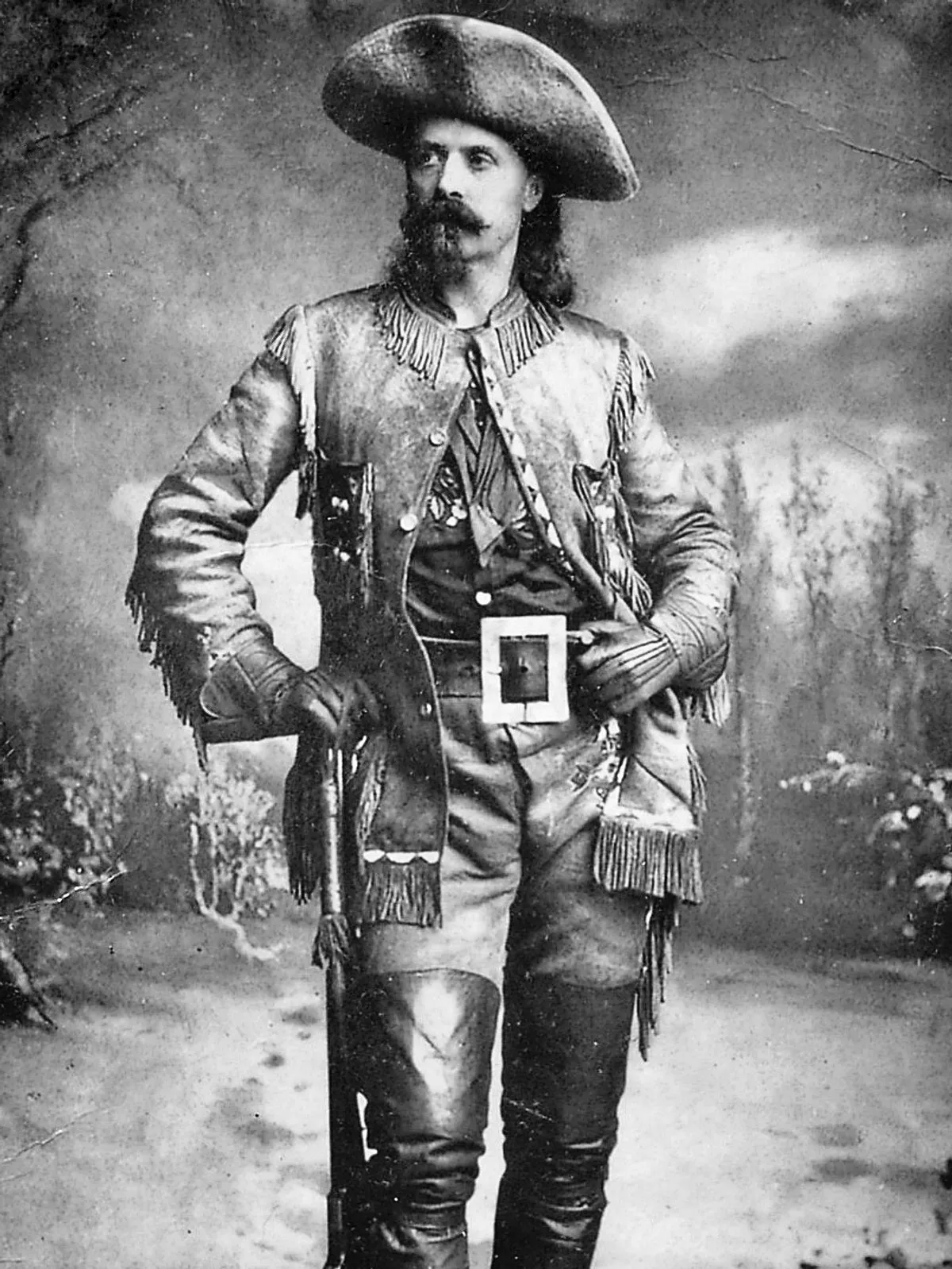
Buffalo Bill in his fringed leather jacket (source)
In the mid-60s, hippies emerged, and a new subculture adopted the fringed leather jacket. Hippies are often critiqued for romanticizing Native Americans and reducing complex cultures into an idealized, "noble savage" stereotype to serve their own anti-establishment goals. Many in the counterculture believed that Native Americans possessed lost spiritual wisdom that could save their "bankrupt" society. They thus also romanticized Native American fashion and adopted fringe as a symbol for their anti-establishment and, what they thought to be, native American ideals. For them, the fringed leather jacket signaled free-spiritedness, nonviolence, and a rejection of the mainstream.
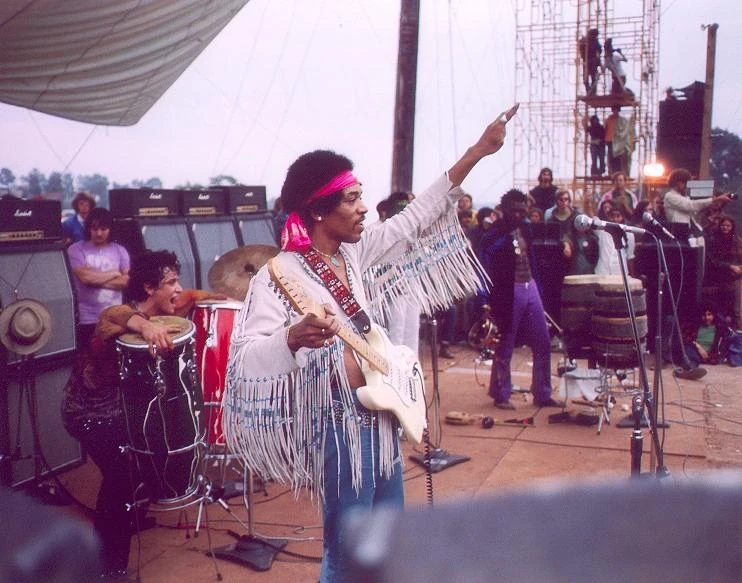
Jimi Hendrix performing at the first Woodstock, 1969 (source)
The story of the now classic leather jacket, however, begins with the first European iteration of the leather jacket, the Jerkin. This outer garment for men was born in the Middle Ages and was often sleeveless, but could have short or long sleeves. Some versions also show stamping and carving, highlighting an aesthetic purpose in addition to functionality.
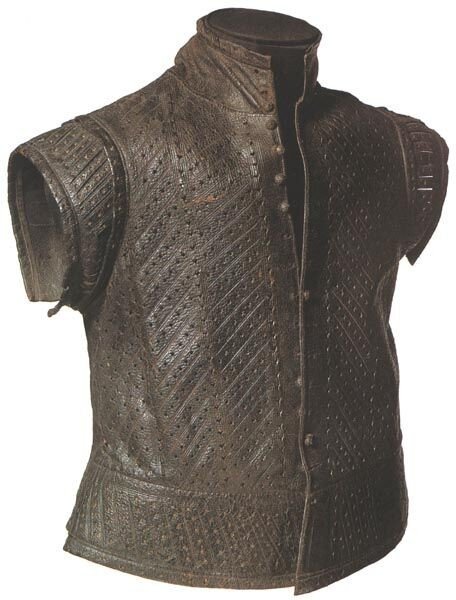
16th century leather jerkin (source)
During the First World War, the British army issued brown leather jerkins to the troops as a measure to protect against the cold and to allow freedom of movement. They were practical, hardwearing, and appreciated by officers and other ranks alike. By the time of the Second World War, the leather jerkins were still on issue to all the Commonwealth forces and were universally popular.
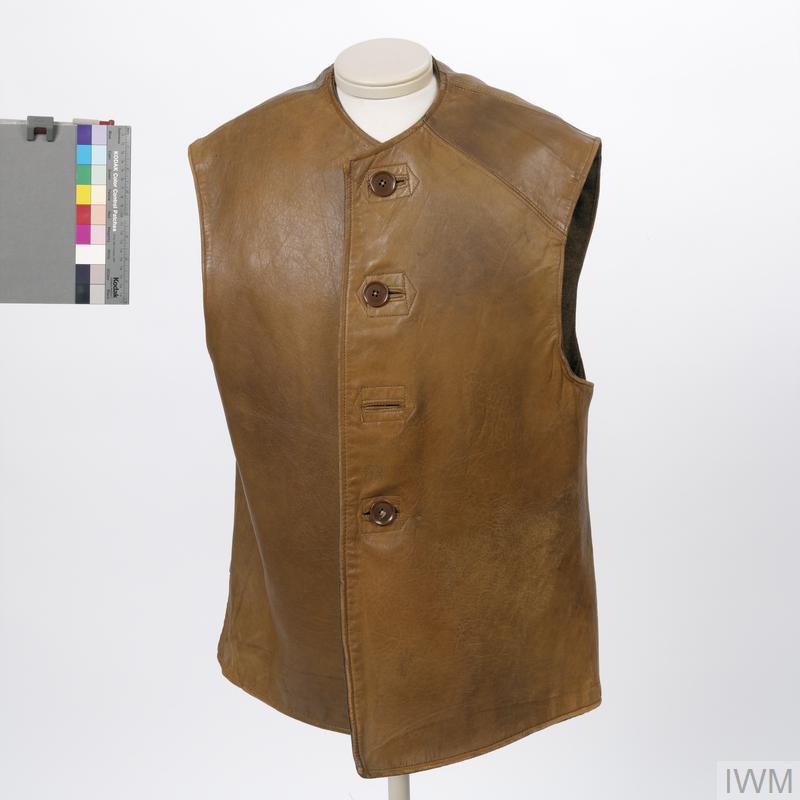
British army leather Jerkin (source)
The first and second world wars were crucial in introducing the leather jacket to mainstream culture. During WWI, the US Army, as well as the Royal Flying Corps in France and Belgium, issued leather ‘’flight jackets’’ to keep pilots warm in the open-air cockpits of early fighter planes. These jackets were made of thick leather and often featured a fur collar and lining. They were later nicknamed ‘’bomber jackets’’ for perhaps obvious reasons.
In WWII, the bomber jacket, produced by several manufacturers, underwent multiple iterations. Around 1926, Leslie Irvin designed an improved version of the bomber jacket and became the main supplier of the British Royal Air Force. The first standardized flight jacket, the Type A-1, was produced in 1927 and featured a button-front design with knitted cuffs and a waistband.
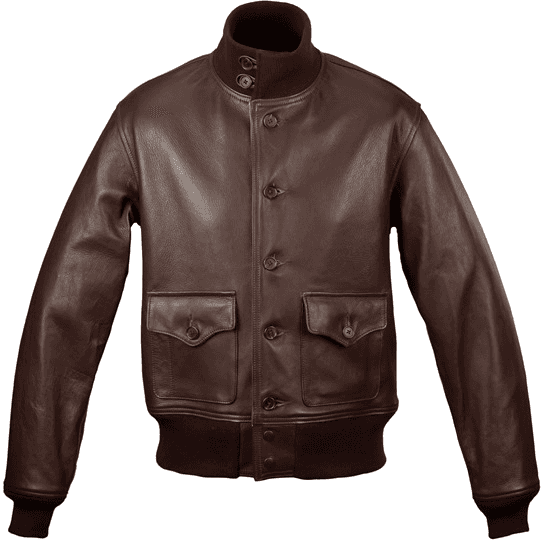
Replica of the Type A-1 flight jacket (source)
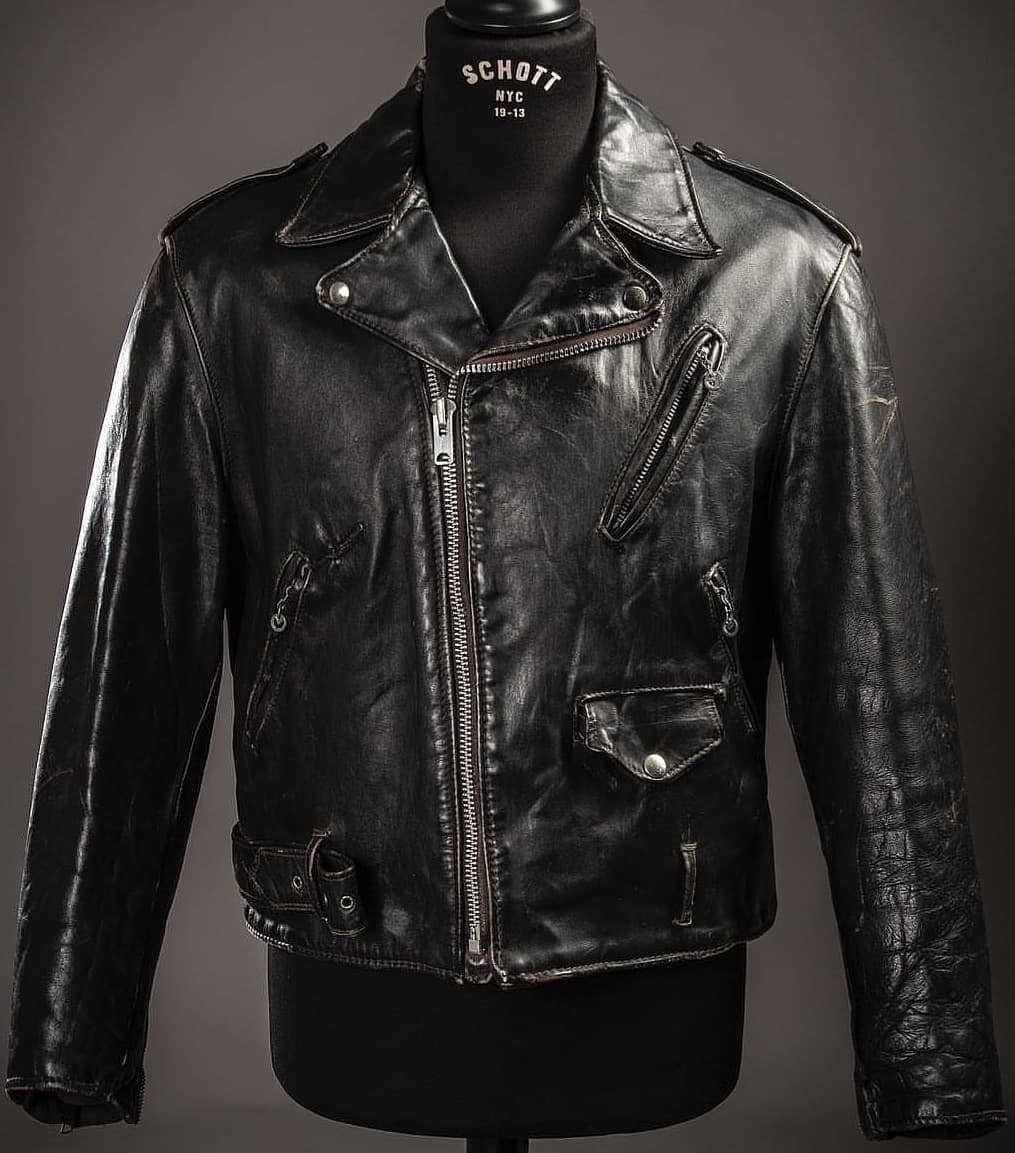
Taking notes from the practical wind-proof leather military jackets, Irving Schott introduced the first leather motorcycle jacket in 1928, naming it the ‘’Perfecto’’ after his favorite Cuban cigar. Made from horsehide, the jacket featured a belted front, shoulder epaulettes, a double-breasted cut, asymmetrical pockets, and an asymmetrical zipper, all designed to keep riders warm and unrestricted in windy riding conditions. It was sold for $5.50 at a Long Island Harley-Davidson dealer and was embraced by some early motorcyclists. However, most bikers still wore heavy-duty sweaters, varsity jackets, and overalls that wouldn’t exactly resonate as tough and ‘’biker’’ with a modern audience.
Original 1928 Schott Perfecto Jacket (source)
When WW2 broke out, Schott halted civilian leather jacket production and devoted its full manufacturing capacity to supplying the US army with predominantly leather and sheepskin jackets. This temporarily halted the Perfecto's popularity, but veterans riding in their military leather jackets reshaped what was considered acceptable style for motorcyclists, giving rise to a rougher, more rebellious aesthetic.
Riders began slicing the sleeves off their leather jackets and called it the cut. The resulting vests were worn over their riding gear and adorned with patches that signaled club allegiance, rank, and territory. In 1947, thousands of motorcyclists descended on the small town of Hollister, California, for a racing rally, overwhelming local authorities and generating a media frenzy that blew the disorder wildly out of proportion. The American Motorcyclist Association proceeded to publicly distance itself from unruly riders, inadvertently birthing the defiant "One-Percenter" outlaw identity and deepening the cut’s association with rebellion.
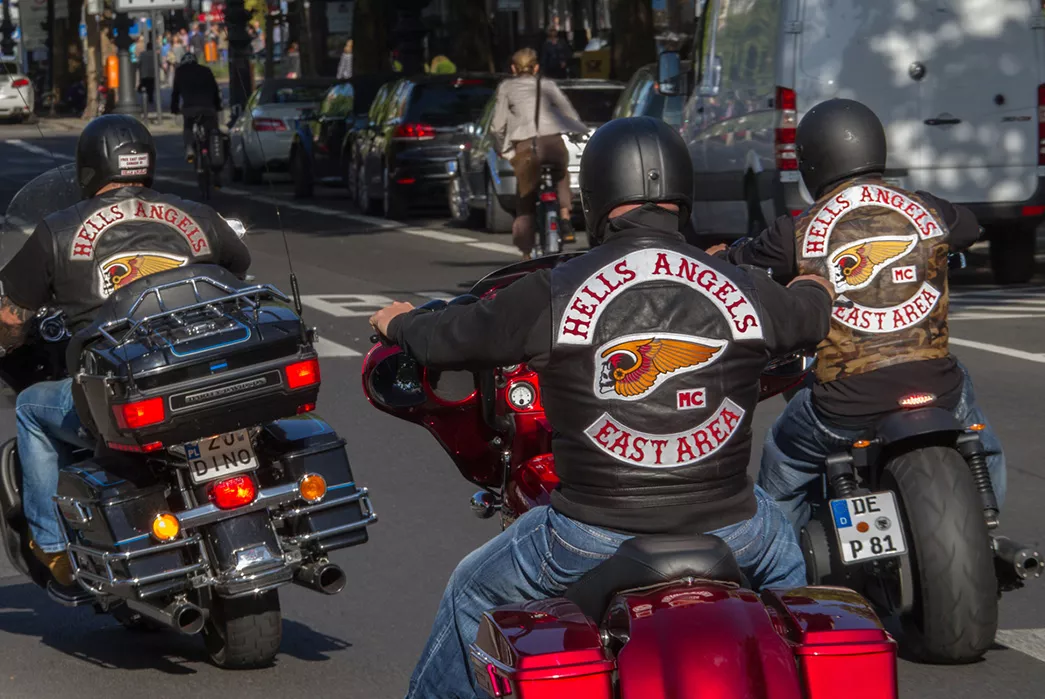
Hells Angels cut (source)
In 1953, a film dramatizing the events of the Hollister Riot was made, The Wild One. It featured Marlon Brando as the main character, and the portrayal of Brando and his outlaw motorcycle club challenging authority and societal norms in their black leather jackets officially synonymized the jacket with rebellion, counterculture, and toughness. This was later only further confirmed by following delinquent youth films featuring the Perfecto, like Rebel Without a Cause. The now strong symbolism attached to the jacket rendered it controversial, and school systems across the United States banned it. This ban perhaps only further strengthened the rebellious signal wearers sent out.
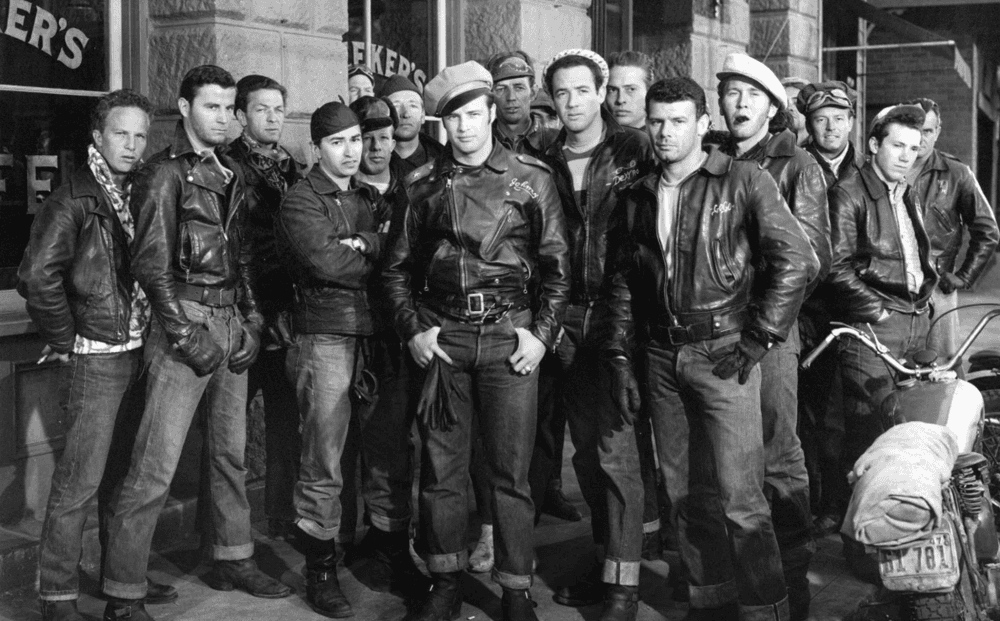
Still from The Wild One (1953), Marlon Brando in the front and center (source)
In Los Angeles, the gay leather scene developed from the broader biker-leather culture, with a significant portion of its community consisting of queer servicemen and servicewomen returning from WWII, some of whose S&M practices were even rooted in military traditions. These communities began forming in the second half of the 1940s and 50s, first in LA, and then spreading to cities across the US and eventually to Europe. The Wild One has been cited numerous times as formative imagery by leathermen, who described its leather look as masculine, sexual, and radical. Artists such as Tom of Finland and Etienne, whose suggestive drawings of well-endowed leather-clad muscle men were published in Physique Pictorial and elsewhere, further contributed to the spread of the outlaw biker aesthetic among gay men. For this community, the leather jacket functioned as a coded signal of sexual identity and solidarity. The masculinity attached to this leather look also set a new standard for gay men, who were previously only pictured as effeminate.
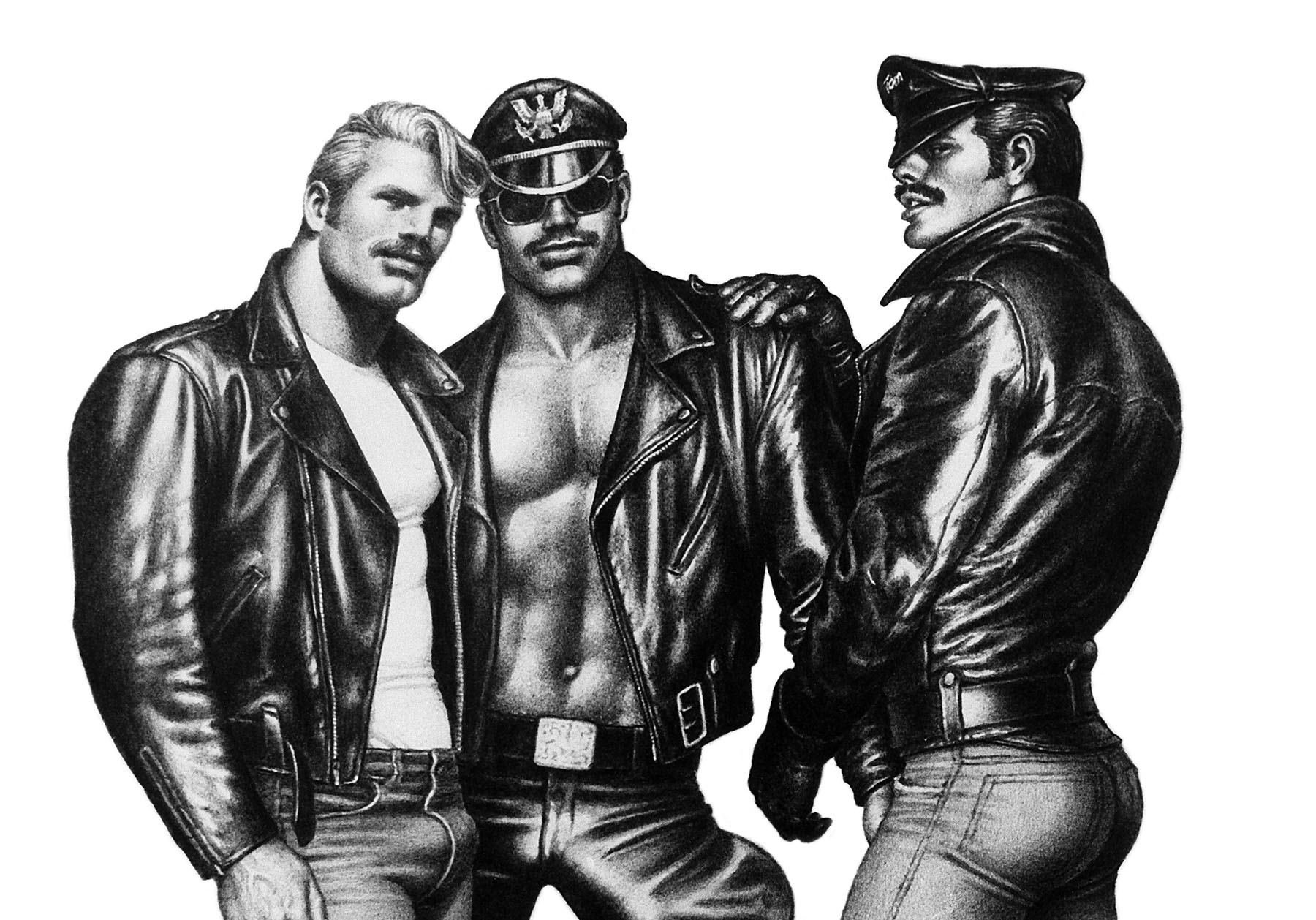
Drawing of 3 men in Perfecto-style jackets by Tom of Finland (source)
Various later counter-cultural groups of the 60s and 70s played on the rebellious, but also the military connotations of the leather jacket. The Black Panther movement, founded in 1966, incorporated a black leather jacket into their uniform. This was a big shift away from the ‘’Sunday’s best’’ previously worn by the civil rights movement activists who aimed for dignity and respect. The resemblance of the Black Panthers’ leather jackets to military models reinforced that they were no longer conforming to white standards and respectability politics and were now demanding an end to their oppression.
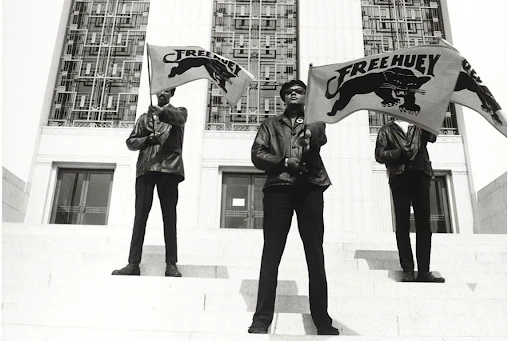
Black Panther protest outside Alameda Co. Court House, Oakland, California. (source)
Furthermore, participants of the punk subculture, which emerged in the mid 1970s in New York and the U.K., also wore leather jackets as a symbol of rebellion and as a subversion of its military connotations. Punks adopted the existing military symbolism of the jacket but re-signified it as anti-authority through context. Styling played a big part in this; for example, punks often covered their jacket in DIY Pins and Patches with anti-war, anti-authoritarianism, and anti-establishment political statements, and even painted these messages on. This is especially true for the British division of the movement, who were more maximalist than their American counterparts.
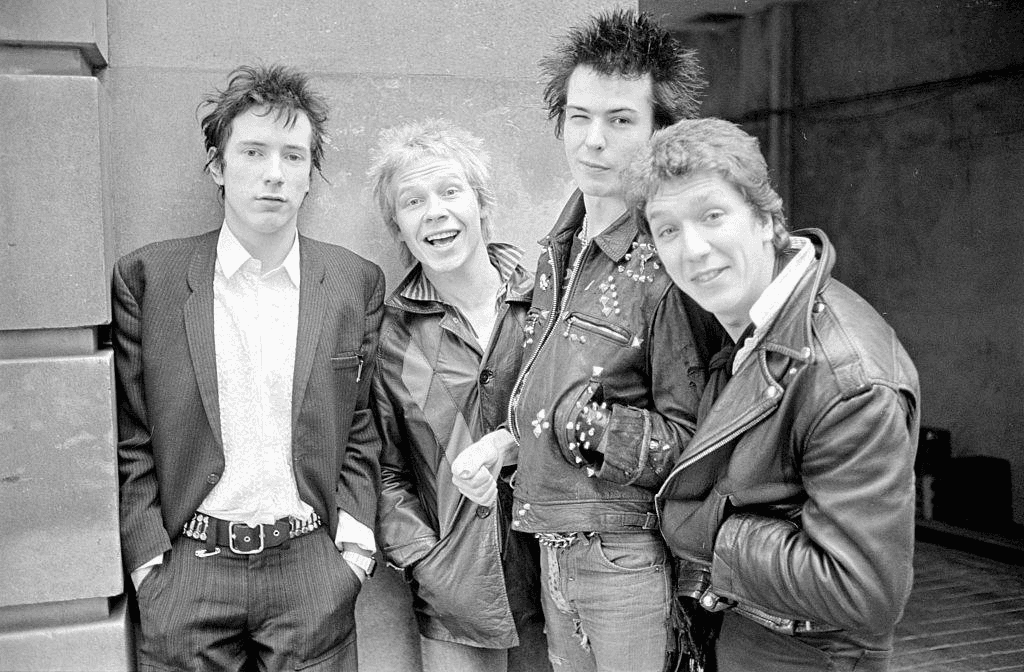
The Sex Pistols, 1977 (source)
Punk style then went on to be imitated, often to a less severe degree, by the masses, as punk styles entered the work of fashion designers, major fashion publications, and later mass market retailers. In this context, the strong political message was lost (perhaps to the benefit of the big fashion houses and mass market retailers participating in this trend), but the rebellious and edgy attitude associated with punk remained. Versace’s Spring 1994 collection remains an influential example of this, birthing the famous safety pin dress, but also Kate Moss in a perfecto-inspired leather jacket and skirt.
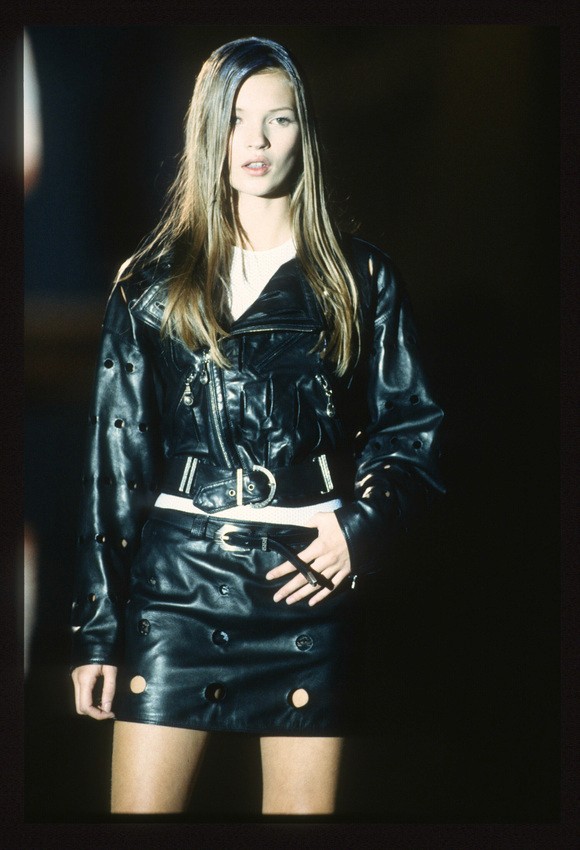 | 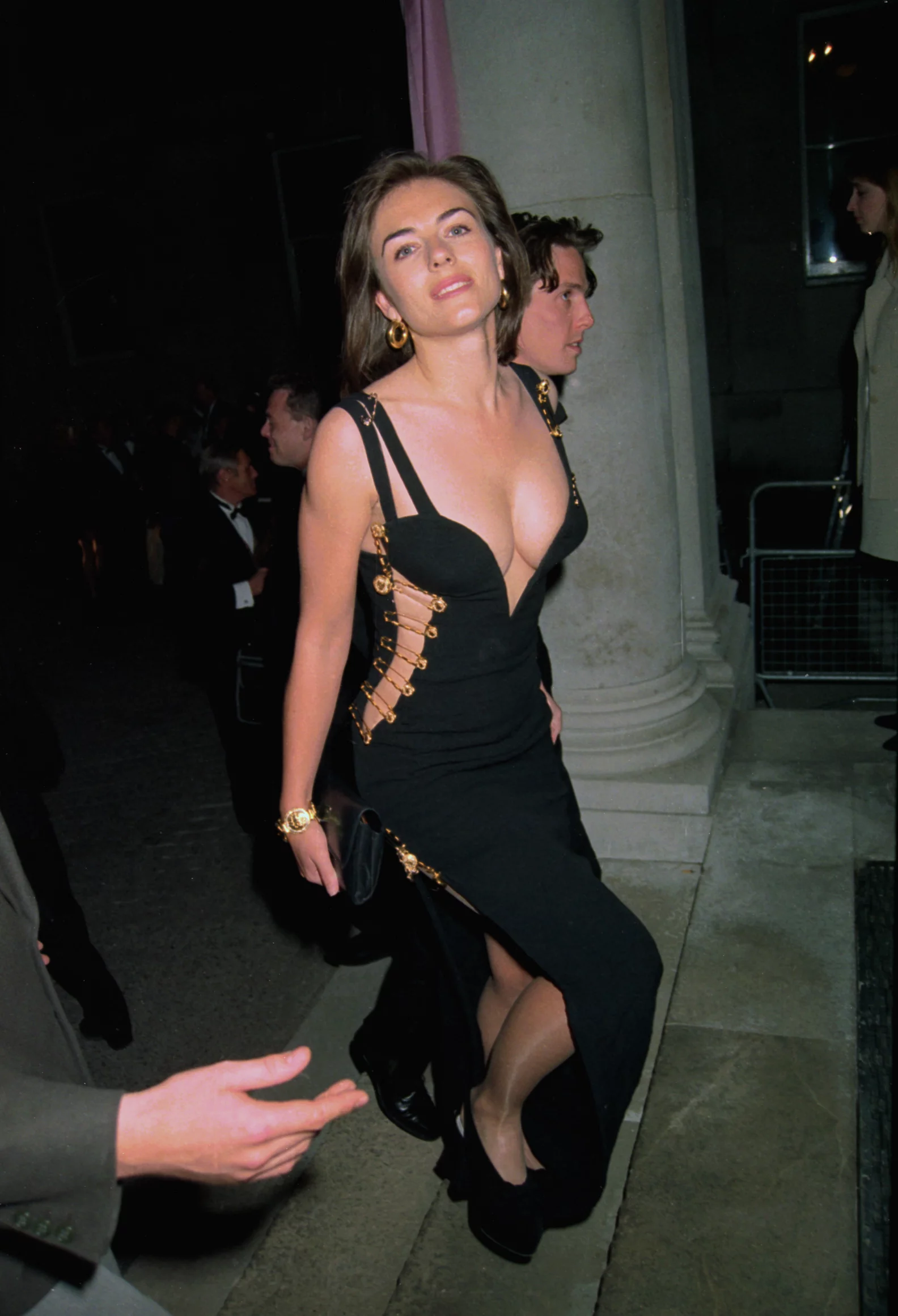 |
Kate Moss and Elizabeth Hurley in Versace Spring 1994 (source 1 and 2)
Today, leather jackets are no longer tied to strongly defined subcultures. As the subcultural styles were appropriated by high fashion houses, such as Versace, but later also the highly influential Hedi Slimane, Raf Simons, and many more, these styles trickled down from high fashion to mass-market retailers. The styles of leather jackets originally tied to subcultures are now worn by a vast range of people from outside the subculture. From the menswear enthusiast to the average citizen hoping to look badass, these leather jackets are everywhere, on everyone, and in every store.
The leather jacket's long journey from indigenous garment to military utility, and then subcultural uniform, illustrates how a garment accumulates meaning over time. Each group that adopted it either built on or subverted the symbolism left by those before them, and crucially, these messages were never communicated in isolation. These symbols made people with shared values, community members, visible to each other and allowed them to organize and create unity. This unity, in turn, strengthened the symbol’s message to the externals. Perhaps this positive feedback loop is what makes the leather jacket’s communication so uniquely strong, despite the divergent meanings.
However, the following step of the leather jacket’s journey, where it waters down from a meaningful subcultural garment to a standardized consumer good, shows how these meanings can be broken down. Through the mass market commodification of the subcultural style the positive feedback loop that once reinforced the meaning is broken. The standardized consumer good leather jacket is divorced from its original ideology or act, and it is left only somewhat carrying the attitude of the subcultural style, for example, rebelliousness or confidence. Through all of this, the leather jacket’s story becomes an ideal case study of how meaning is built, changed, used, and broken down in fashion.
Doc/34 all rights reserved, sponsored by IFM.
" height="65.65946764590899px" id="biO_icj08" transform="translate(0 1.371)" width="59.174572953517554px"/><path d="M 63.167 33.692 C 63.167 54.377 50.565 68.088 31.544 68.088 C 12.524 68.088 0 54.69 0 33.927 C 0 13.163 12.371 0 31.626 0 C 50.882 0 63.17 13.163 63.17 33.692 Z M 46.89 33.848 C 46.89 21.155 41.097 13.477 31.626 13.477 C 22.155 13.477 16.206 21.234 16.206 33.848 C 16.206 46.463 22.077 54.533 31.626 54.533 C 41.176 54.533 46.89 46.698 46.89 33.848 Z" fill="rgb(0, 0, 0)" height="68.08839784893921px" id="A8_8V8D77" transform="translate(58.705 0.196)" width="63.17042207703656px"/><path d="M 43.755 24.133 C 42.268 17.003 38.119 13.477 31.388 13.477 C 21.838 13.477 16.281 20.998 16.281 33.927 C 16.281 46.855 22.073 54.455 31.779 54.455 C 36.084 54.455 39.763 52.653 42.033 49.519 C 43.363 47.638 43.911 46.071 44.381 42.781 L 60.662 45.209 C 59.175 51.869 57.453 55.709 54.165 59.548 C 49.312 65.111 41.72 68.088 32.249 68.088 C 22.778 68.088 14.637 65.111 9.08 59.47 C 3.287 53.593 0 44.426 0 33.927 C 0 23.427 3.287 14.26 9.471 8.149 C 14.872 2.899 22.778 0 31.935 0 C 42.033 0 49.938 3.448 55.026 10.264 C 57.531 13.477 58.861 16.376 59.879 20.998 Z M 100.346 1.41 L 72.246 77.804 L 58.235 77.804 L 86.414 1.41 Z" fill="rgb(0, 0, 0)" height="77.80411839929134px" id="v1AksvdEb" transform="translate(121.519 0.196)" width="100.34629996240147px"/><path d="M 16.594 46.933 C 17.064 49.519 17.533 50.616 18.786 51.948 C 20.899 54.142 24.03 55.317 27.787 55.317 C 33.892 55.317 37.728 52.261 37.728 47.482 C 37.728 44.269 36.162 41.762 33.501 40.743 C 31.701 40.117 29.274 39.725 26.222 39.725 C 23.169 39.725 19.647 39.881 16.594 40.195 L 16.594 26.718 C 19.255 27.032 21.838 27.188 24.891 27.188 C 32.327 27.188 36.006 24.681 36.006 19.666 C 36.006 15.435 33.031 13.007 27.865 13.007 C 22.308 13.007 19.49 15.2 18.316 20.215 L 1.409 17.786 C 2.896 12.928 4.148 10.578 6.653 7.835 C 11.428 2.664 18.629 0 28.178 0 C 36.71 0 43.755 2.351 48.216 6.66 C 51.112 9.559 52.6 13.32 52.6 17.786 C 52.6 26.091 48.138 31.263 39.137 33.378 C 43.911 34.083 46.494 35.18 49.234 37.531 C 52.521 40.508 54.4 44.583 54.4 49.127 C 54.4 53.123 53.304 56.806 51.269 59.548 C 49.547 61.899 46.807 64.092 43.911 65.424 C 39.841 67.305 33.501 68.48 27.63 68.48 C 20.586 68.48 13.541 66.835 9.393 64.092 C 5.792 61.742 3.053 58.294 1.331 53.985 C 0.861 52.888 0.548 51.869 0 49.832 Z" fill="rgb(19, 136, 8)" height="68.48016075605614px" id="UrmKxPWFQ" transform="translate(219.752 0)" width="54.399905030019454px"/><path d="M 0 37.844 C 2.348 35.233 4.853 32.36 7.514 29.226 L 24.5 9.324 C 28.257 5.015 29.744 3.056 31.779 0 L 47.825 0 C 47.355 4.623 47.199 7.757 47.199 13.007 L 47.199 38.471 L 49.469 38.471 C 51.895 38.471 54.478 38.236 57.218 37.844 L 57.218 52.104 C 54.87 51.791 51.973 51.634 49.547 51.634 L 47.199 51.634 L 47.199 55.552 C 47.199 59.94 47.355 62.212 47.825 65.189 L 31.701 65.189 C 32.092 62.525 32.327 59.235 32.327 55.395 L 32.327 51.556 L 10.176 51.556 C 5.088 51.556 2.896 51.634 0 51.869 Z M 32.405 29.539 C 32.405 26.013 32.562 21.704 32.875 18.256 C 31.309 20.45 30.135 22.017 28.022 24.681 L 16.594 38.628 L 32.405 38.628 Z" fill="rgb(19, 136, 8)" height="65.18935212489366px" id="nz3MAn0g5" transform="translate(272.782 1.567)" width="57.21774185674667px"/></g></svg>)