Reflections
Fashion Wants Its Rebellious Youth Back
By Petrus Admiraal-Garbett
In March 2025, the BBC asked the question “Is this the end of hedonism?”, in their article of the same name, reporting that over 400 nightclubs closed. Once a symbol of freedom and the opportunity to find one’s tribe, the pillars of libellous weekends can no longer support themselves. The Times equally reported that 70% of nightclubs in France have closed down since the 1980s, and popular free-spirited Berlin spots have recently been forced to lock their doors too. A newly young generation’s lack of access to nightlife for several years due to pandemic restrictions, combined with widespread closure of nightlife venues, has indicated a shift in youth culture; drinking culture seems to be fading, a direct rebellion to the major nightlife enthusiasts that came directly before them, inspired by a novel access to personal freedom from post-war liberation, civil rights campaigns and sexual emancipation. The BBC also states that 31-39% of GenZ Brits are abstaining from alcohol completely, and with it memories of drunken follies, tequila-induced mistakes, and shouldn’t-have-kissed-him thoughts on a Monday. “Why is Gen Z becoming sober?”, we ask, and more specifically, in a world so dominated by alcohol-driven socialising, why are GenZ taking the step to be so defiant?
Fashion may paint a clearer picture. Post-Pandemic fashion was dominated by clean-cut lines, neutral tones, fine tailoring, and luxe materials, which came to be tagged ‘quiet luxury’. Google searches for ‘quiet luxury brands’ rose by 1600% over the last five years (Google Trends), with ‘old money style’ increasing by 1900%. A new fashion trend arose out of the rubble of a pain-stricken post-Covid, yet why this choice? Journalist Jenna Ledford argued in 2007 that each fashion movement is a rebellion against its predecessor (90s heroin chic a rebellion against 80s neon & 60s flower-power); ‘stealth wealth’ became a defiance against the loud logo-mania of the 2010s, highlighting a said ‘sober’ culture that values discretion over intensity. The 2010s fashion scene was dominated by figures like Olivier Rousteing at Balmain, who introduced the now infamous Balmain print, Donatella Versace modernising her brother’s staple baroque print, and Alessandro Michele at Gucci, who revolutionised a formerly sexy and scandalous Tom Ford-esque tailoring into a loud, contemporary, colourful artistic universe, most poignantly with his Gucci Ghost collection in 2016.
Journalist Elizabeth Segran notes that the rise in quiet luxury was a combination of a rejection of ‘2010s style’, an ease into pandemic entertainment culture (the one where we all got 5 different streaming subscriptions), newly-found TikTok fame (and subsequent user addictions) and a shifting economy with less disposable income that led people to, firstly, choose to invest in high-quality, timeless pieces, and secondly to wish to have a personalised, exclusive wardrobe, different from that which the masses could buy. This latter consumer mindset was, ironically, perverted by the mass rise in ‘quiet luxury’ on the internet, mainly TikTok. Social media masters like The Gstaad Guy brought back brands forgotten amidst the logomania and 2016 St Tropez glam-years, like Loro Piana and Brunello Cuccinelli, who define themselves through their timeless pieces and commitment to ‘if-you-know-you-know’ marketing.
Swapping vodka shots for ginger shots and a post-club kebab for quinoa bowls, the youth of the 2020s became infatuated with a clothing style that seemed to align with their lifestyles and newly formed values, all so drastically different from those of the generations before them. Similarly to quiet luxury, this ‘clean girl’ lifestyle (as it has been named), characterised by extensive skincare routines, minimalist jewellery and no-makeup-makeup adoption to match their novel style, according to La Trobe University, was equally a rejection of mass-trend and algorithm based lifestyles and aesthetics that came during the late 2010s and the pandemic (notably the “e-girl” trend in 2021). However, fashion is not founded on conformity and peace, being the art form of rejection, storm, and criticism, circling back to Ledford’s ideas of trends as rebellion, and it seems this season that the fashion industry has turned away from the ‘clean’ tastes of the youth and back to what fuels its core. Fashion wants its rebellious youth back.
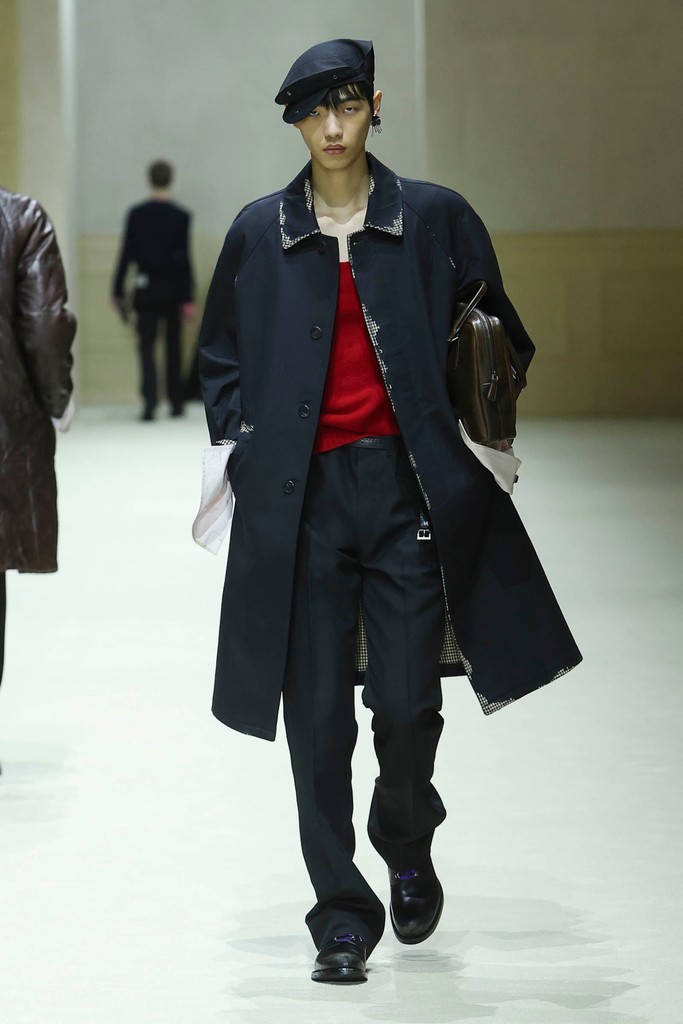
One of our earliest life rebellions ironically happens at the period which tries to mould us the most: our school days. “Tuck in your shirt”, “polish your shoes’’, “roll down your skirt”, countless comments children heard walking through the school gates every morning. Fashion houses are trying to remind young consumers of the thrill they used to taste through the subtle act of changing their school uniform. Prada’s messy shirt cuffs were reminiscent of boys’ defiant conduct to antagonise academic authorities, hanging out of their shirts and coats, cufflinks undone and swinging in a true laissez-faire manner. DSquared2 brought us the original rebellion of wearing sneakers with your suit, the only school rule stating “shoes must be black and leather”, open to our infantile interpretation. Louis Vuitton pushed the boundaries of uniform with stiff crinkled shirts, and our coat-belts transformed into makeshift ties. LV’s chef d’œuvre was its closing, with all tailoring being revealed to be glow-in-the-dark. You can’t punish what you can’t see, just as our teachers could never read invisible ink notes we would pass around. Even if we want to appear disciplined, our other side comes out when nobody can see.
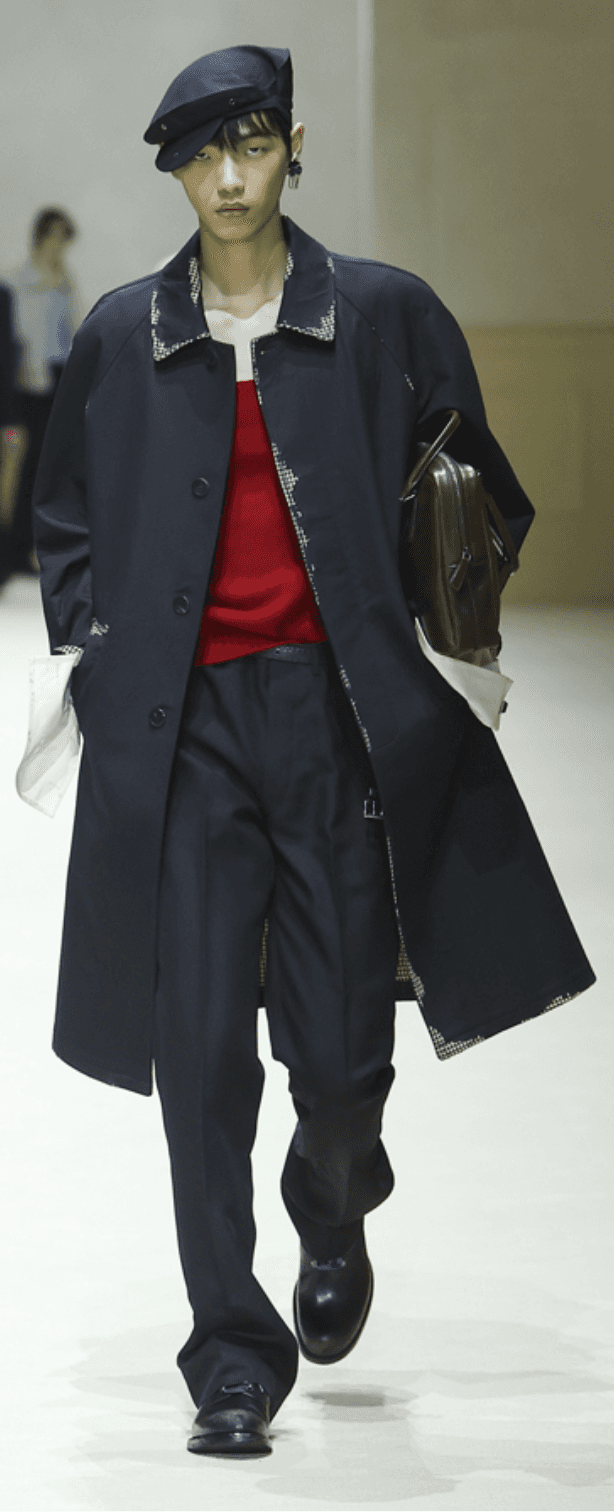 Prada mens F/W 27 courtesy of Numéro Magazine | 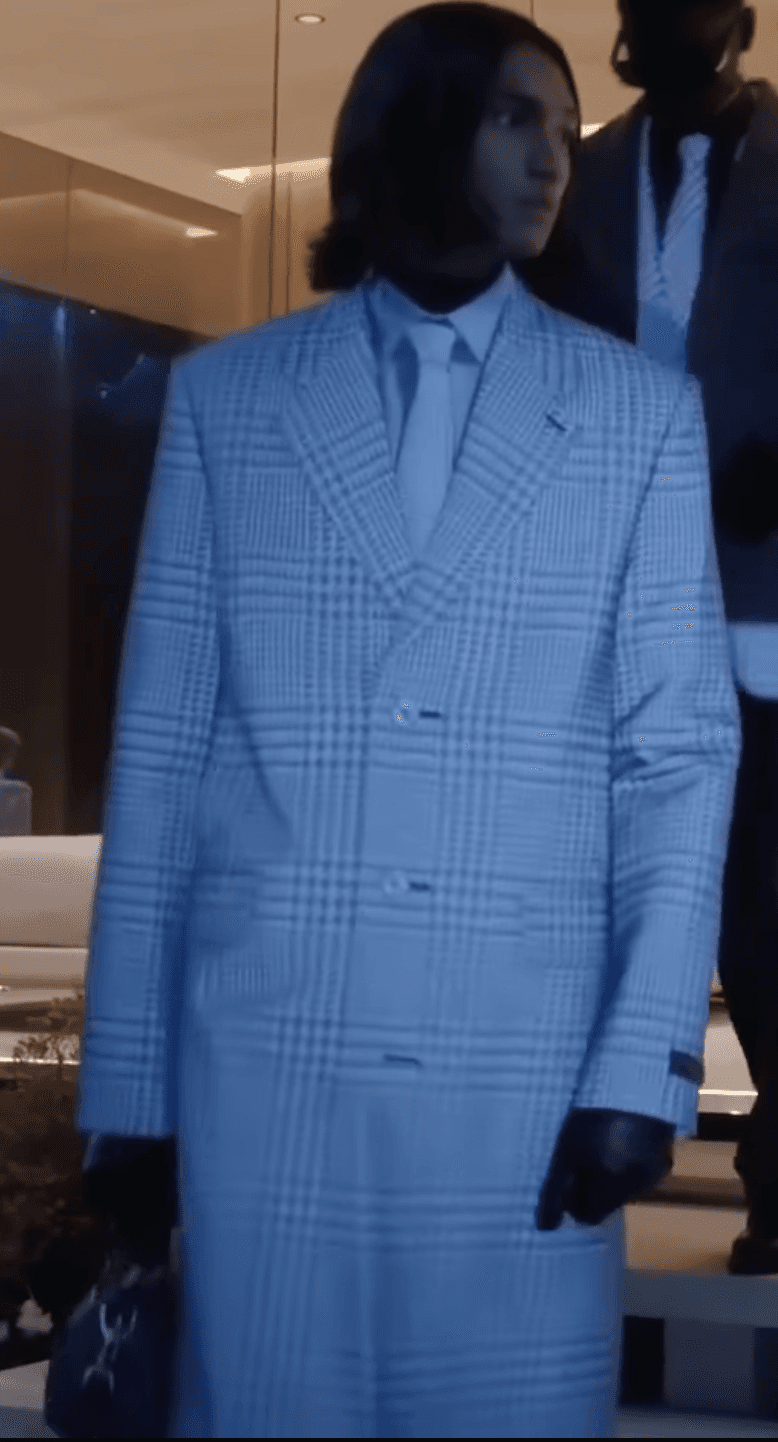 Louis Vuitton Men F/W 27 courtesy of Fashion Feed YT |
Fashion didn’t toss-aside GenZ’s focus on personal image and the need to ‘appear’ in 21st-century society. LinkedIn connections, Instagram reach, and the well-known ‘digital footprint’ have a hold on our identity in 2026, and fashion made sure to check that we could still be perceived in our professional-light, too; our spam accounts still hidden away in our back pockets. Despite the youth wanting to shine in their individuality, being in a societal mold of education and feeling the pressure of striving for an economically safe future in an oversaturated job market has dimmed the naive sparkle of adolescence. The World Economic forum showed us just how bad it can be, with 1.2 million UK graduates fighting for 17,000 jobs, and youth unemployment rates being as high as 36% in Morocco, rising to 11% even in the U.S.. Kenya, Madagascar and Morocco have experienced youth-led protests around limited opportunities and rising living costs (World Economic Forum), and mass-GenZ protests in Bulgaria led PM Rosen Zhelyazakov to resign; so it seems that there is a rebellious cinder in today’s youth - just not in the same way as our parents. Fashion is encouraging us to light that spark again, to take a big leap of faith and explore the new heights that the 2026 world can offer, if we are ready to fight for this change. Current social media trends have been asking us to look back and bring lost flavours to spice up our mundane current. ‘2026 is the new 2016’ has been dominating social platforms since late December, becoming so widespread that major media outlets like Forbes and Elle have been commenting, going so far as the trend being commemorated with its own Wikipedia page. Many seem to think that the past is the answer, not a new futuristic world dominated by AI and automation, wishing for another golden age.
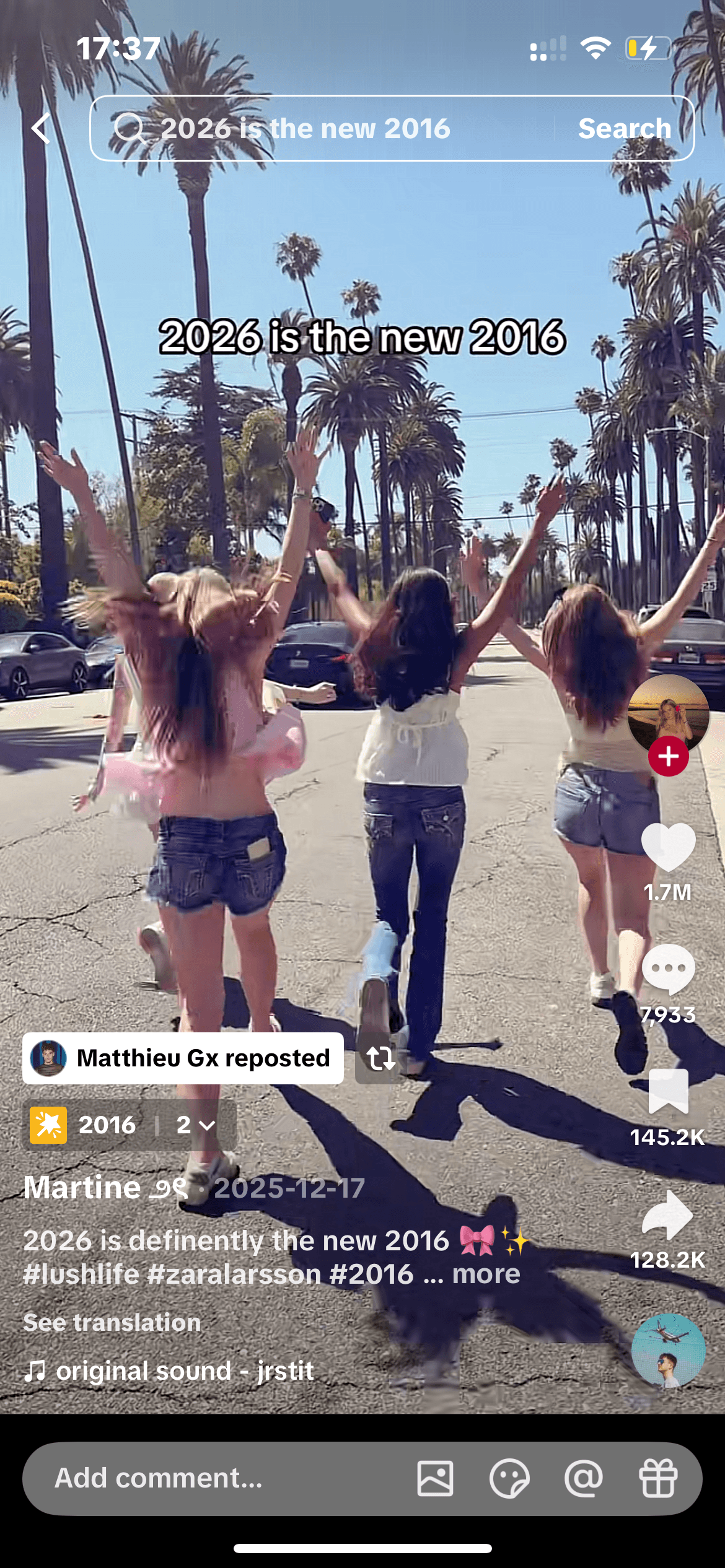
TikTok Video by @lifewmartine with 11.7M views
Fashion is looking to the past for answers, too, an attempt to fire up a craving for more history amongst social media users, and to show them another way out. Louis Vuitton was a time machine, with 50s-style Teddy boy style suits reminding us that rebellion can be found even in sharp tailoring - highlighting fashion’s importance in cultural antagonism. Teddy Boys were, arguably, one of the first U.K. subcultures, inspired by the Edwardian ‘dandy’, driving the spread of Rock n’ Roll amongst a more liberated post-war society. We are reminded that it is not only through mass protests and war that one can be set against the tide of current culture, but we can do so in our own, subtle, everyday manners, one being style. Beginning their show playing vinyls, Louis Vuitton similarly highlighted the importance of music in youth popular culture and its influence on our sentiments. Classic LV trunks were transformed into 90s Boom-Boxes, evoking a Fresh Prince of Bel Air note to Pharrell’s blast from the past, underlining the significance of RnB & Hip-Hop in African American culture, a similar form of rebellion. Even Prada couldn’t forget the turn of the century, with neon shoelaces paying homage to Doc Marten’s lace-code, with each colour attributed to a different music or social subculture, combined with tattered overcoats straight out of a Nirvana concert. For those who didn’t go through their own alternative phase in their teenage years: the Doctor Martens lace code was invented by U.K. Punks in the 70s in order to subtly signal their political, ideological or sexual allegiance, inspired by the LGBTQ+ handkerchief code that was used in the late 19th/early 20th century (according to Mary McMican). This was a way of discreetly displaying your counter-cultural views (e.g. yellow for anti-racism, blue for anti-police, purple for LGBT) in a world where they were not accepted by the ‘mainstream’. Fashion houses are hinting at this hidden rebellion as a reminder of how to become yourself in a world that does not let you.
With youth being threatened with war, drafting, or mandatory military service, Walter Van Beirendonck questioned how we are to rediscover a lost youth, drifting amidst a world that does not let them spread their wings. He quotes an ‘unfiltered way of thinking’, displaying how GenZ is becoming filtered by the system surrounding it, evolving into puppets of a state and system characterised by and dependent on capitalistic gain and greed. His models carried mock artillery and guns, a vulgar perversion of NERF guns we would play with as children, demonstrating how those little party games may become essential training. Neon prints and loud slogans gave us a Horrid Henry-esque rendition of today’s youth’s wish to just simply be young. Van Beirendonck stated he wanted to “describe the youth before we are lost”, with guns and targets on our torsos.
Now, we return to our original question: “Why is GenZ becoming sober?” Yet, after viewing all of this, it may be more appropriate to rephrase our question and conclusion: GenZ is not becoming sober; the world is not allowing GenZ to get drunk. The New Yorker recently wrote a statement article that GenZ’s babbly inexpression is our reinterpreted form of the Dada movement. The movement was characterised by “meaningless meaning”, in other words, not meant to mean anything, only meant to shock, confuse, or outrage. This free-form art was a form of expression of madness and instability during the unthinkable horrors of World War I. For GenZ of today, Trump is capturing and deporting immigrants in the U.S., Russia is in an endless war with Ukraine, Israel and Palestine have experienced unimaginable massacres; in addition to not being able to find a job, possibly being drafted for war, all-the-while having to think about what food we’re eating, if our brand is ‘quiet luxury’ enough and if we are matching a perpetually changing fashion scene. Pretty stressful, no? So, why not just take a step back? Well, the youth may be doing just that. Between Dec 2025-Feb 2026, Google searches for ‘offline’ increased from 76 to 100+, with ‘anti-doomscroll’ going from 0 (non-existent) to 100+. Young people are fed up with the constant reminders, non-stop content, and algorithm control. Instead of getting drunk and going partying, GenZ is taking a different way forward. The ‘clean-girl’ aesthetic and wish to be understated in our fashion, whilst undeniably a social trend, can equally be interpreted as a way of young people trying to find and ground themselves. In a fast-paced, onto-the-next-thing world, it can be nice to just slow down. Do that long skincare routine, perfect that glowy everyday makeup, go to pilates, and disconnect.

Screenshot from Substack - Article by MAPU
Yet, this equally doesn’t last forever. On top of reporting major nightlife closing, the BBC equally published an article 7 days ago about how “Nightlife isn’t dying, it's evolving”. Nightlife venues can no longer solely be nightlife venues; they must also be personal event spaces, have corporate capacities, and cultural capital. We are evolving, like the generations before us. Yes, the world we are evolving in is crushing us and constraining us, but fashion is attempting to give us a way out. We are rebelling, but not in the same way as before.
Trying to rebel in a world already overflowing with information, trends, and expectations is hard, but what change will arise from conformity? If we are becoming sober to go against a drinking-centred culture, then we are sober. If we are getting offline to go against an algorithm-marketing-based metaverse, then we are offline. But what does this really change? What we have seen from these examples, and history as a whole, is that the subtle can become the dominant. These singular brands presenting small, hidden rebellions of current trends on their own are meaningless, a passing trend that will be overtaken next season. Grouped, we form a more coherent idea of not only the current state of fashion, but its consumer and the world.
Despite many online users now being ‘anti-trend’, trends teach us that one small action can become a mass movement. Did that small group of fed-up workers in South London ever think their expression of depravity would become a worldwide political and fashion movement spanning decades? Did those Teddy Boys plan out the rise of Elvis, leading to The Beatles, leading to Blur, Radiohead, Nirvana… I doubt the first girl to post her ‘minimalist’ makeup routine ever thought millions of people would take inspiration, adopting her small daily habit as an entire lifestyle. Change does not happen overnight, nor does it happen easily; most of all, it happens randomly. Yet, we can influence and see how it comes about. Most importantly, it will not come about if everybody does nothing. Furthermore, everybody may be a mass, but a mass is only possible due to the individual, and the individual starts with you. If fashion is telling us anything this season, it is to not forget ourselves, even amongst a world of terrible chaos & limitless expectations. Your small daily rebellions can become a large-scale movement, only if you take the step to do them. It starts with you.
Doc/34 all rights reserved, sponsored by IFM.
" height="65.65946764590899px" id="biO_icj08" transform="translate(0 1.371)" width="59.174572953517554px"/><path d="M 63.167 33.692 C 63.167 54.377 50.565 68.088 31.544 68.088 C 12.524 68.088 0 54.69 0 33.927 C 0 13.163 12.371 0 31.626 0 C 50.882 0 63.17 13.163 63.17 33.692 Z M 46.89 33.848 C 46.89 21.155 41.097 13.477 31.626 13.477 C 22.155 13.477 16.206 21.234 16.206 33.848 C 16.206 46.463 22.077 54.533 31.626 54.533 C 41.176 54.533 46.89 46.698 46.89 33.848 Z" fill="rgb(0, 0, 0)" height="68.08839784893921px" id="A8_8V8D77" transform="translate(58.705 0.196)" width="63.17042207703656px"/><path d="M 43.755 24.133 C 42.268 17.003 38.119 13.477 31.388 13.477 C 21.838 13.477 16.281 20.998 16.281 33.927 C 16.281 46.855 22.073 54.455 31.779 54.455 C 36.084 54.455 39.763 52.653 42.033 49.519 C 43.363 47.638 43.911 46.071 44.381 42.781 L 60.662 45.209 C 59.175 51.869 57.453 55.709 54.165 59.548 C 49.312 65.111 41.72 68.088 32.249 68.088 C 22.778 68.088 14.637 65.111 9.08 59.47 C 3.287 53.593 0 44.426 0 33.927 C 0 23.427 3.287 14.26 9.471 8.149 C 14.872 2.899 22.778 0 31.935 0 C 42.033 0 49.938 3.448 55.026 10.264 C 57.531 13.477 58.861 16.376 59.879 20.998 Z M 100.346 1.41 L 72.246 77.804 L 58.235 77.804 L 86.414 1.41 Z" fill="rgb(0, 0, 0)" height="77.80411839929134px" id="v1AksvdEb" transform="translate(121.519 0.196)" width="100.34629996240147px"/><path d="M 16.594 46.933 C 17.064 49.519 17.533 50.616 18.786 51.948 C 20.899 54.142 24.03 55.317 27.787 55.317 C 33.892 55.317 37.728 52.261 37.728 47.482 C 37.728 44.269 36.162 41.762 33.501 40.743 C 31.701 40.117 29.274 39.725 26.222 39.725 C 23.169 39.725 19.647 39.881 16.594 40.195 L 16.594 26.718 C 19.255 27.032 21.838 27.188 24.891 27.188 C 32.327 27.188 36.006 24.681 36.006 19.666 C 36.006 15.435 33.031 13.007 27.865 13.007 C 22.308 13.007 19.49 15.2 18.316 20.215 L 1.409 17.786 C 2.896 12.928 4.148 10.578 6.653 7.835 C 11.428 2.664 18.629 0 28.178 0 C 36.71 0 43.755 2.351 48.216 6.66 C 51.112 9.559 52.6 13.32 52.6 17.786 C 52.6 26.091 48.138 31.263 39.137 33.378 C 43.911 34.083 46.494 35.18 49.234 37.531 C 52.521 40.508 54.4 44.583 54.4 49.127 C 54.4 53.123 53.304 56.806 51.269 59.548 C 49.547 61.899 46.807 64.092 43.911 65.424 C 39.841 67.305 33.501 68.48 27.63 68.48 C 20.586 68.48 13.541 66.835 9.393 64.092 C 5.792 61.742 3.053 58.294 1.331 53.985 C 0.861 52.888 0.548 51.869 0 49.832 Z" fill="rgb(19, 136, 8)" height="68.48016075605614px" id="UrmKxPWFQ" transform="translate(219.752 0)" width="54.399905030019454px"/><path d="M 0 37.844 C 2.348 35.233 4.853 32.36 7.514 29.226 L 24.5 9.324 C 28.257 5.015 29.744 3.056 31.779 0 L 47.825 0 C 47.355 4.623 47.199 7.757 47.199 13.007 L 47.199 38.471 L 49.469 38.471 C 51.895 38.471 54.478 38.236 57.218 37.844 L 57.218 52.104 C 54.87 51.791 51.973 51.634 49.547 51.634 L 47.199 51.634 L 47.199 55.552 C 47.199 59.94 47.355 62.212 47.825 65.189 L 31.701 65.189 C 32.092 62.525 32.327 59.235 32.327 55.395 L 32.327 51.556 L 10.176 51.556 C 5.088 51.556 2.896 51.634 0 51.869 Z M 32.405 29.539 C 32.405 26.013 32.562 21.704 32.875 18.256 C 31.309 20.45 30.135 22.017 28.022 24.681 L 16.594 38.628 L 32.405 38.628 Z" fill="rgb(19, 136, 8)" height="65.18935212489366px" id="nz3MAn0g5" transform="translate(272.782 1.567)" width="57.21774185674667px"/></g></svg>)