Reflections
Eros, c’est la vie (Rrose Sélavy). The Anatomy of Desire, or Why Surrealist Men Liked Faceless Women.
Written by Leyla Boudieb
As a woman facing the works of Guy Bourdin, Hans Bellmer and Marcel Duchamp, each of them a household name in the category of “controversial surrealist depictions of women”, the question of what exactly happened to the woman in the image and left you with what you are looking at comes up quite a bit.
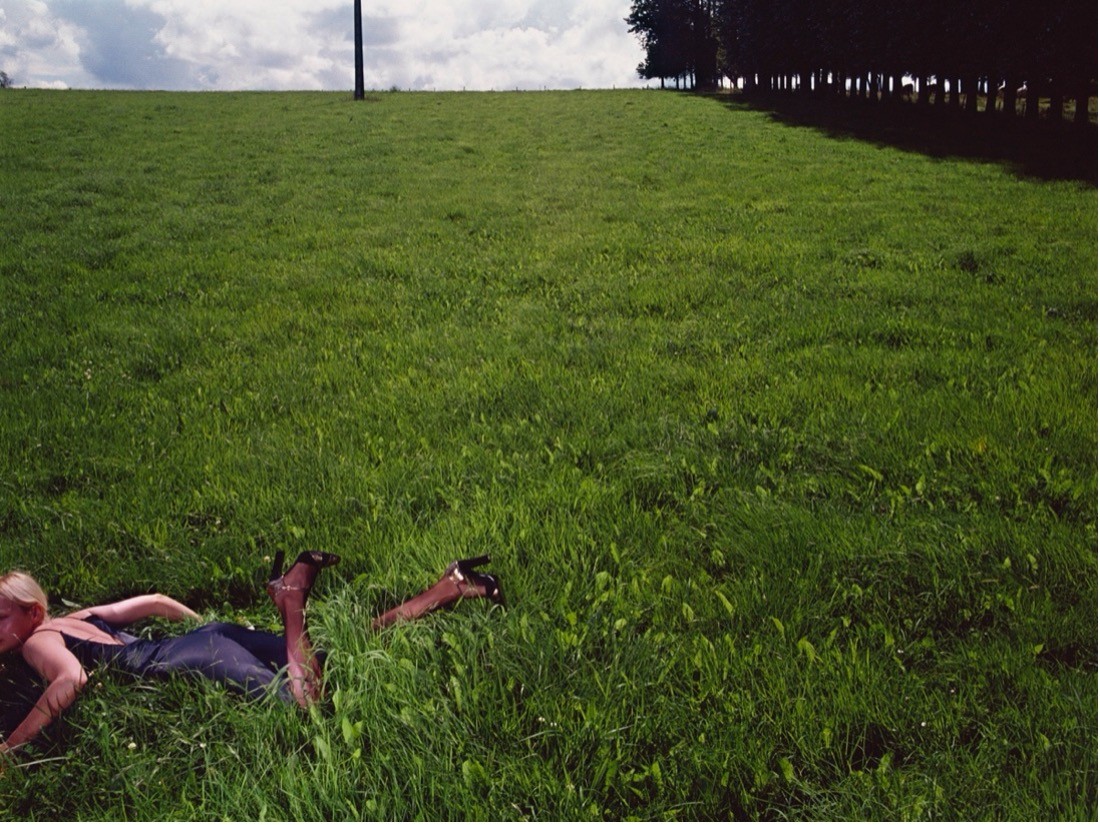
In an autumn 1974 Charles Jourdan campaign, shot by Guy Bourdin, a woman lies in tall grass on her belly. All we see is her rear and a pair of black and metallic shoes.
In the much more conservative climate of the 1960s, Guy Bourdin knew to poke (or stab?) at the two themes that attract our attention without fail: sex and violence. Under his direction, the Charles Jourdan shoe becomes an object of fetish, desire and mystery. At times, it is the focal point of sanguine scenarios- a frame of the outline of a woman’s body, petticoat and all, is traced on the ground in chalk; surrounded by a car, spots of blood and a bubblegum pink patent leather Charles Jourdan pump. A shoe is turned into an involuntary witness of crime, of fatalities- in Guy Bourdin’s work, death and desire, Eros and Thanatos, are omnipresent.
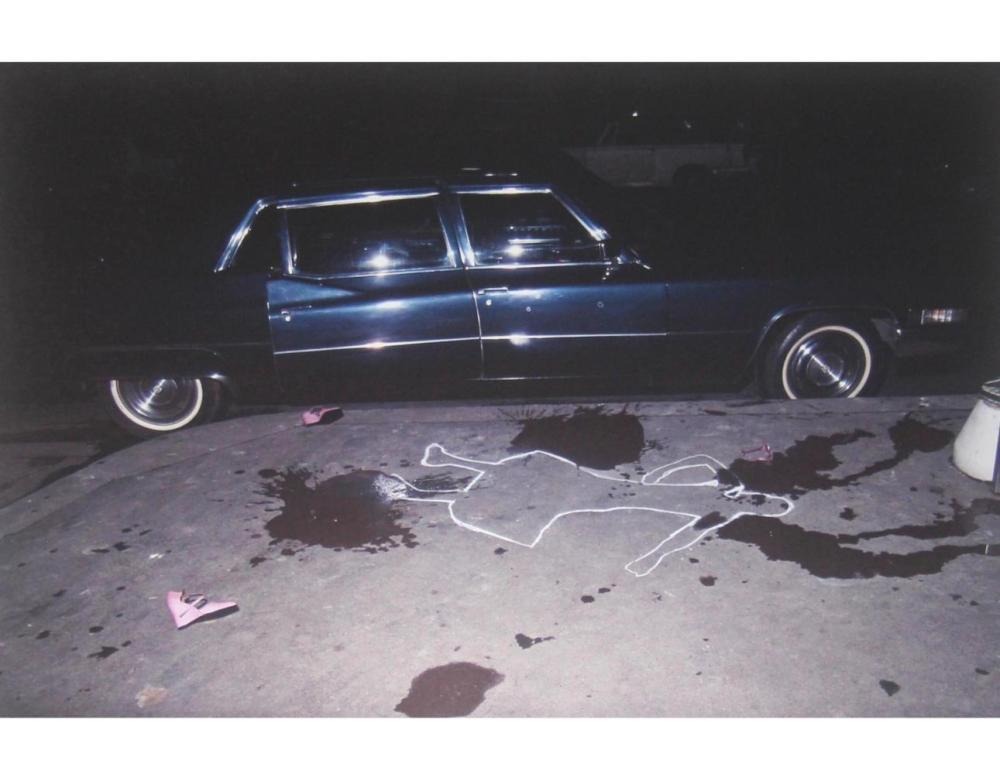
Guy Bourdin for Charles Jourdan, spring 1975
Guy Bourdin had a way with women. His first wife was rumored to have committed suicide. His second wife was found hanging. A girlfriend of his slashed her wrists but lived despite her contrary efforts. Another lived after mysteriously falling out of a tree. All throughout his work, Bourdin somewhat obsessively depicts women tied up, in compromising situations, subject to violence or straight-forward dead; stories have made the rounds (and press) that he subjects his models to downright cruel and dangerous conditions.
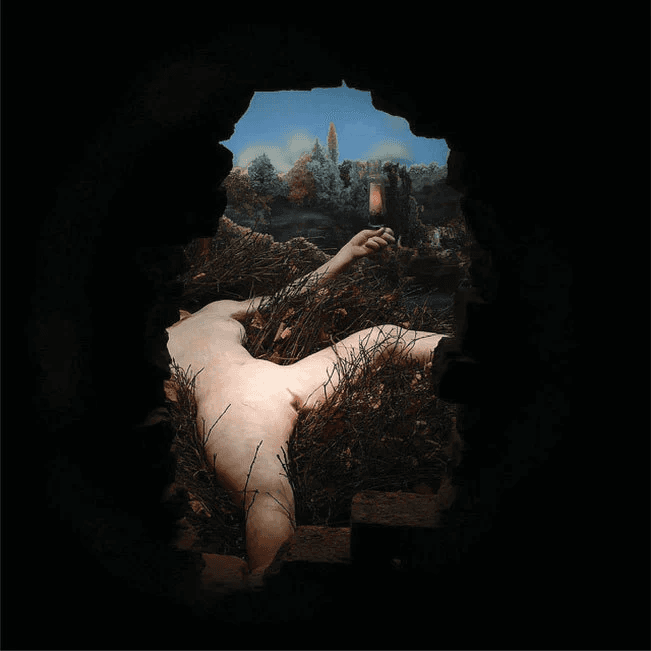
Marcel Duchamp, Interior view of Etant donnés: 1° la chute d'eau / 2° le gaz d'éclairage (Given: 1. The Waterfall /2. The Illuminating Gas), 1946-1966 © 2000 Succession Marcel Duchamp ARS, N.Y./ADAGP, Paris, Image via www.researchgate.net
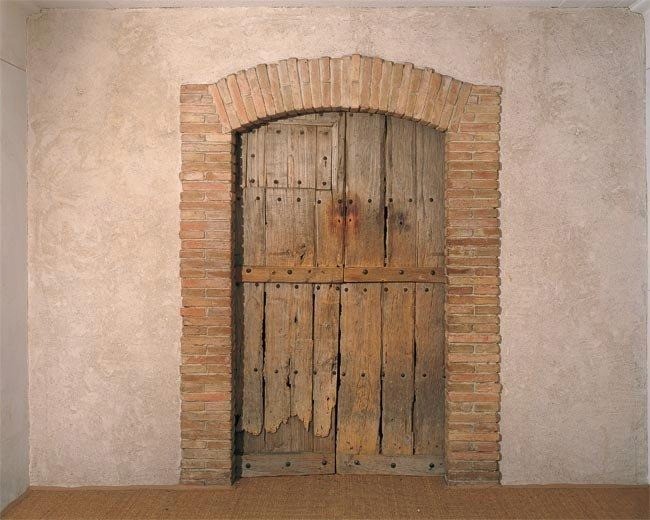
Marcel Duchamp Etant donnés 1946–66, Virtual Reproduction 2004. Courtesy Philadelphia Museum of Art © Succession Marcel Duchamp / ADAGP, Paris and DACS, London 2008, Image via www.tate.org.uk
“It’s just you, and the exposed vagina, and the absurd waterfall twinkling in the background”, says Journalist Morgan Meis in her article about Marcel Duchamp’s Étant donnés: 1° La chute d’eau, 2° Le gaz d’éclairage for SmartSet. A woman lies motionless on a heap of twigs, naked, her legs spread. She holds a gas lamp; a forest and hills fanned out behind her. This spectacle can be observed exclusively through two tiny peepholes in a pair of locked antique wooden doors, posted in a dead-end area of the Duchamp Gallery in the Philadelphia Museum of Art.
It is the artist’s last known work, created in secrecy in his apartment over the span of twenty years and published in 1966, before he finally dedicated his life to chess and cogitation. The artist was known to roam the art scene not only as himself, but as his female alter-ego Rrose Sélavy- a play on words on the sentence “Eros, c’est la vie”. First recorded through her signature on Francis Picabia’s L’oeil Cacodylate (1921), the living double entendre was one of Duchamp’s many ways to explore and question all aspects, desires and preconceptions of the Self.
The Étant donnés make the viewer comprehend the architecture of his gaze upon the subject by physically experiencing it. The artist forces the viewer to make a conscious decision to go up to the installation and peep through the little hole and leaves him confronted with his shame after the glimpse he has caught. Around the time of the artwork’s creation, Georges Bataille theorised that what we call ‘erotic’ comes from the transition from unashamed sexuality to sexuality with shame. As religion and societal norms imbued us with the impulse to regulate ourselves, we set up taboos to distinguish between shameful and unshameful. Bataille argues that eroticism exists in the realm of transgression. Duchamp has staged a scene to make us feel this in our bodies.
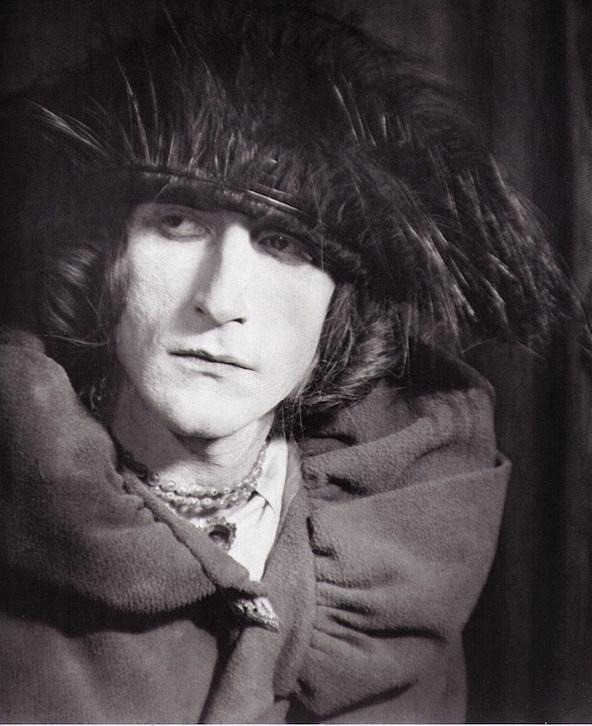
Portrait of Rrose Sélavy, 1921© Wiki Commons
Marcel Duchamp’s “Étant donnés” evoke a similar sensation to Bourdin’s work as he tries to extract Eros in its purest form. In their preoccupation with Freudian theory of the subconscious, the Surrealists’ emblematic methods commonly centered around automatism and were designed to bypass the ego and help dream imagery and free association arise from the unconscious. What surfaced, with striking consistency, were images of the female body, resulting in explorations of the female body, its cracks, crevices, limbs and sheer endless purposes to so far unseen extents.
A textbook example of such experiments is found in german artist Hans Bellmer’s series of “Poupées”, created in the 1930s. His dolls were life sized “organisms”, de- and reconstructed from doll’s limbs around a ball joint, wherein he explores the anatomy of desire. In his oeuvre, Bellmer employs every imaginable way of contorting the female body, reinventing its physiology to allow the invention of desires buried deep in the subconscious.
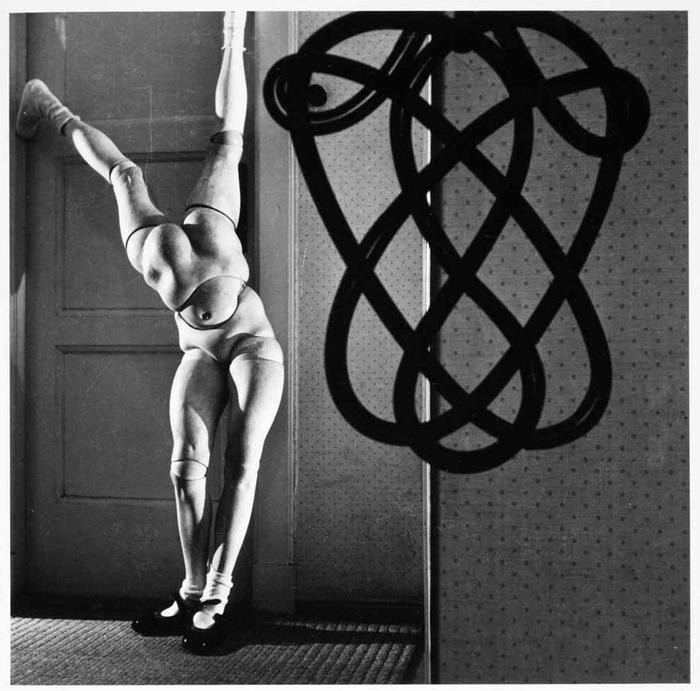
Die Puppe, Hans Bellmer 1935
The clusters of limbs in this approach to the body produce remarkable similarities with Guy Bourdin’s photographs. Specifically his work for Charles Jourdan often disregards the factual corporeality of his female customer in a way similar to Bellmer: a lonely pair of calves with a colorful pump parading around, a heap of legs clad in flashy hosiery and placed in a compromising situation- say tied to train tracks- fighting for the viewer’s attention.
In Freudian theory, Eros, the drive for life and pleasure, and Thanatos, the drive to death, coexist in ceaseless conflict. One is the shadow of the other. Whether sprawled out like after a tragic fall, reassembled from mere parts or awaiting catastrophe on the train tracks- awfully often, we are not entirely sure whether the women in Bourdin, Bellmer and Duchamp’s work are meant to be dead or desirable first. The answer is both.
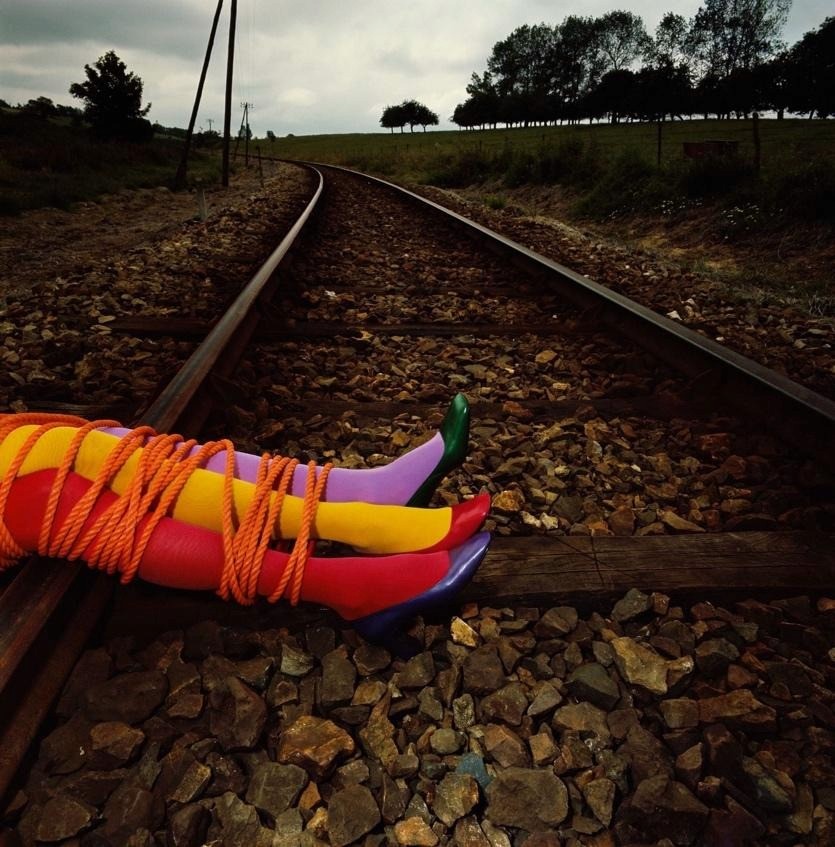
Charles Jourdan, Autumn 1970 © Guy Bourdin.
Bellmer is thought to have created his series of dolls in reaction to the Nazi regime’s authoritarian biopolitics, discarding any body that was not deemed useful, however also to have been inspired by E.T.A. Hoffmann’s Der Sandmann. In the popular german romantic tale, the hero, maddened by love for an uncanny lifelike automaton, commits suicide.
In Das Unheimliche (1919), Sigmund Freud analyses Hoffmann’s tale and identifies the uncanny as the feeling produced by something simultaneously familiar and strange, lifelike and not. The uncanny both serves as an uninhibited site for desire and is deeply disturbing for the same reason- because it suspends personhood, because it can be desired without the complication of reciprocity. You cannot be rejected by something that cannot refuse… because it does not have a face. Bellmer assembled this, Duchamp installed it, Bourdin photographed and sold it.
All three of the artists mostly omit the face of their muses from their art. Their limbs feel like a commodity, a prop, the connecting invocation being “desire-without-resistance”, the arrangement stylized and aestheticized for the onlooker. The gaze of the artist is one-sided and often unreciprocated.
In Freud's theory of the drive (Trieb), desire does not require a whole person but can attach to fragments. In these artist’s work, the face needed to be the first part to go because a human face reintroduces subjectivity. It is the one thing that can look back and reintroduce itself as a person, but to function as a screen for the pure material of the artist’s subconscious dreams, the woman must remain depersonalized and devoid of selfhood.
![René Magritte, Je ne vois
pas la [femme] cachée dans la forêt, 1929](https://framerusercontent.com/images/dkEO7uRMrRpzExEw65DLeWsf2M.jpg)
René Magritte, Je ne vois pas la [femme] cachée dans la forêt, 1929, Photomontage, in: La Révolution Surréaliste No. 12 (15. Dez. 1929)
The 12th cover of “La Révolution Surréaliste” bears a print of Magritte’s photomontage “I do not see the woman hidden in the forest”. It is framed by the portraits of sixteen male surrealists, their eyes pressed closed. In the center stands, in the dark, a female nude. The cover epitomizes the function of the female body to these artists: it may serve as a source of inspiration or a vessel for their ideas as long as its personhood remains unseen; a mere idea. The viewer of the resulting artworks remains excluded from the artist’s epiphany as they receive this divine inspiration (see also, Courbet’s L’origine du monde).
Involuntarily, we become witnesses of these artists’ experimentations with the female body. In “étant donnés”, in Bourdin’s photography, on Hans Bellmer’s “Poupée”, we do not get to look into the eyes of any of these women; their image is served to us for consumption. Their presence is reduced to the artistic instrument their bodies can serve as, opening, closing, being manipulated into oblivion, dismembered, re-membered, deprived of a head altogether. All we perceive through the little peepholes that allow us to observe them for an instant is a carefully fashioned image. We know its shock value and our shame and discomfort upon seeing it. The rest is speculation.
But we know that they have shoes- Charles Jourdan, naturally.
Doc/34 all rights reserved, sponsored by IFM.
" height="65.65946764590899px" id="biO_icj08" transform="translate(0 1.371)" width="59.174572953517554px"/><path d="M 63.167 33.692 C 63.167 54.377 50.565 68.088 31.544 68.088 C 12.524 68.088 0 54.69 0 33.927 C 0 13.163 12.371 0 31.626 0 C 50.882 0 63.17 13.163 63.17 33.692 Z M 46.89 33.848 C 46.89 21.155 41.097 13.477 31.626 13.477 C 22.155 13.477 16.206 21.234 16.206 33.848 C 16.206 46.463 22.077 54.533 31.626 54.533 C 41.176 54.533 46.89 46.698 46.89 33.848 Z" fill="rgb(0, 0, 0)" height="68.08839784893921px" id="A8_8V8D77" transform="translate(58.705 0.196)" width="63.17042207703656px"/><path d="M 43.755 24.133 C 42.268 17.003 38.119 13.477 31.388 13.477 C 21.838 13.477 16.281 20.998 16.281 33.927 C 16.281 46.855 22.073 54.455 31.779 54.455 C 36.084 54.455 39.763 52.653 42.033 49.519 C 43.363 47.638 43.911 46.071 44.381 42.781 L 60.662 45.209 C 59.175 51.869 57.453 55.709 54.165 59.548 C 49.312 65.111 41.72 68.088 32.249 68.088 C 22.778 68.088 14.637 65.111 9.08 59.47 C 3.287 53.593 0 44.426 0 33.927 C 0 23.427 3.287 14.26 9.471 8.149 C 14.872 2.899 22.778 0 31.935 0 C 42.033 0 49.938 3.448 55.026 10.264 C 57.531 13.477 58.861 16.376 59.879 20.998 Z M 100.346 1.41 L 72.246 77.804 L 58.235 77.804 L 86.414 1.41 Z" fill="rgb(0, 0, 0)" height="77.80411839929134px" id="v1AksvdEb" transform="translate(121.519 0.196)" width="100.34629996240147px"/><path d="M 16.594 46.933 C 17.064 49.519 17.533 50.616 18.786 51.948 C 20.899 54.142 24.03 55.317 27.787 55.317 C 33.892 55.317 37.728 52.261 37.728 47.482 C 37.728 44.269 36.162 41.762 33.501 40.743 C 31.701 40.117 29.274 39.725 26.222 39.725 C 23.169 39.725 19.647 39.881 16.594 40.195 L 16.594 26.718 C 19.255 27.032 21.838 27.188 24.891 27.188 C 32.327 27.188 36.006 24.681 36.006 19.666 C 36.006 15.435 33.031 13.007 27.865 13.007 C 22.308 13.007 19.49 15.2 18.316 20.215 L 1.409 17.786 C 2.896 12.928 4.148 10.578 6.653 7.835 C 11.428 2.664 18.629 0 28.178 0 C 36.71 0 43.755 2.351 48.216 6.66 C 51.112 9.559 52.6 13.32 52.6 17.786 C 52.6 26.091 48.138 31.263 39.137 33.378 C 43.911 34.083 46.494 35.18 49.234 37.531 C 52.521 40.508 54.4 44.583 54.4 49.127 C 54.4 53.123 53.304 56.806 51.269 59.548 C 49.547 61.899 46.807 64.092 43.911 65.424 C 39.841 67.305 33.501 68.48 27.63 68.48 C 20.586 68.48 13.541 66.835 9.393 64.092 C 5.792 61.742 3.053 58.294 1.331 53.985 C 0.861 52.888 0.548 51.869 0 49.832 Z" fill="rgb(19, 136, 8)" height="68.48016075605614px" id="UrmKxPWFQ" transform="translate(219.752 0)" width="54.399905030019454px"/><path d="M 0 37.844 C 2.348 35.233 4.853 32.36 7.514 29.226 L 24.5 9.324 C 28.257 5.015 29.744 3.056 31.779 0 L 47.825 0 C 47.355 4.623 47.199 7.757 47.199 13.007 L 47.199 38.471 L 49.469 38.471 C 51.895 38.471 54.478 38.236 57.218 37.844 L 57.218 52.104 C 54.87 51.791 51.973 51.634 49.547 51.634 L 47.199 51.634 L 47.199 55.552 C 47.199 59.94 47.355 62.212 47.825 65.189 L 31.701 65.189 C 32.092 62.525 32.327 59.235 32.327 55.395 L 32.327 51.556 L 10.176 51.556 C 5.088 51.556 2.896 51.634 0 51.869 Z M 32.405 29.539 C 32.405 26.013 32.562 21.704 32.875 18.256 C 31.309 20.45 30.135 22.017 28.022 24.681 L 16.594 38.628 L 32.405 38.628 Z" fill="rgb(19, 136, 8)" height="65.18935212489366px" id="nz3MAn0g5" transform="translate(272.782 1.567)" width="57.21774185674667px"/></g></svg>)