References
Bodies Out of Bounds
By Sofia Stagnitti
How Rei Kawakubo and Merce Cunningham Challenge Societal Canons of Beauty in Scenario (1997) & Today’s Relevance
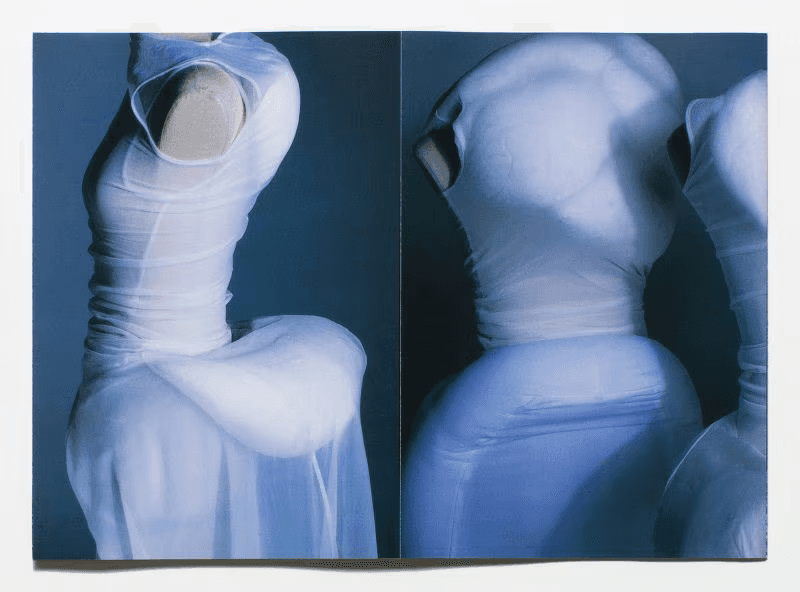
Merce Cunningham's (1997) Scenario, performed on the stage of the Théâtre du Châtelet during Paris's annual Festival d'Automne, remains a pivotal work in fashion and creative culture. Cunningham's avant-garde and mesmerizing choreography, performed in Rei Kawakubo's notorious Spring/Summer 1997 collection, together mark a new path forward in the realm of expressive movement and its relationship to fashion as a medium for storytelling. In an age dominated by the flattening pursuit of perfection, Scenario (1997) serves as a return to holism, where we, the audience, are permitted to exist in our organically complex state.
Rei Kawakubo collaborated closely with Takehisa Kosugi on the score and assumed complete creative control of the set design, ultimately resulting in an unorthodox and deeply immersive build that blurred the lines between where the stage began and where it ended.
Rei Kawakubo’s SS/1997 collection, wabi-sabi, & the grotesque as a form of rebellion.
Kawakubo’s Spring/Summer collection, which inspired the costuming of Scenario, was initially titled Body Meets Dress, Dress Meets Body, later coined as the “Lumps and Bumps collection” by fashion insiders. Kawakubo's design ethos throughout her brand Comme des
Garçons, as well as in Scenario’s costuming, reveal direct ties with Zen Buddhist philosophy, wabi-sabi, which celebrates imperfection, asymmetry, and the grotesque.
Wabi-sabi, a spiritual ethos rooted in Zen Buddhism, embodies the practice of “seeing beauty in imperfection and the impermanence of nature.” It emphasizes the transience of the universe and proposes that individuals can experience ephemerality as beautiful rather than painful. These principles are displayed in Kawakubo's Lumps and Bumps collection, in which models walk the runway adorned with padded lumps, building on malformed shapes as an extension of the model's natural form.
Kawakubo explains her motivation, stating that “Fashion design is not about revealing or accentuating the shape of a woman's body; its purpose is to allow a person to be what they are.” These bodily distortions challenge canonical definitions of beauty by critiquing the notion of an idealized female form through exaggeration, asymmetry, and subversion. We can therefore draw direct ties between the philosophy of wabi-sabi and the 1997 collection's embrace of beauty and honesty found in the body's transient states, which at times are inherently grotesque, yet nevertheless, worth turning and facing. The aging body, the body in decay, and the vulnerable body are all forms that remind us that the less polished or desirable aspects of humanity demand representation and celebration to welcome in wholeness.
An additional facet in Scenario’s costuming is the element of wearability. Like westernized beauty standards, which work to constrain self-comfort and practicality, the added lumps and bumps imposed physical limitations on the dancers' mobility. The Walker Art Centre noted in their press release that the garments severely altered the performers' proportions and “sense of their own bodies” including balance and special awareness in turn radically altering the performance.
In this way, Lumps and Bumps functions within Scenario not only as costuming but as a physical and material dance between imposed social structures and a rejection of ideals rooted in perfectionism.
Ballet’s historical pursuit of rigidity & perfection welcomes a contrast against Kawakubo’s avant-garde costuming.
Traditional ballet, born initially during the Italian Renaissance, spread throughout Europe and North America, undergoing widespread diffusion and profound transformation. The seventeenth century produced some of the great European schools of ballet, whose founding principles were rooted in en dehors, defined as the external rotation of the hips that directs movement away from the body, emphasizing toe extension. En dehors demands clean lines, symmetry, balance, and a devotion to codified forms. This precision marks a longstanding relationship between ballet and the pursuit of perfection, discipline, and refined physical control.
Costuming plays a profound role in enhancing the visual and technical precision of ballet theory. Traditional components such as the tutu, tights, and ballet shoe create streamlined silhouettes and sharp, clean lines. By the late nineteenth century, the classical tutu was remade into a shorter, stiffer structure, designed to reveal more of the dancer's legs, highlighting their technical precision and movement. Additionally, lighter colors emphasize slenderizing lines, revealing the body's geometry rather than distorting it.
Rei Kawakubo's costuming in Merce Cunningham's Scenario (1997) achieved nearly the opposite outcome.
One dancer noted they had to hike up their costume to move in accordance with the choreography. Kawakubo's distinct lumps and bumps altered the dancers' weight distribution, creating a new center of gravity and ultimately disrupting the body's clean lines. This disruption introduced an emotional dimension, as dancers were pushed to adapt intuitively to the garments imposed limitations on the body, showcasing a tension for the audience to experience and reckon with in real-time.
When imperfection, immobility, and physical barriers enter the stage, they invite a new tension for both the dancers and the audience. The contention displayed between body and costume exhibits a rawness, historically missing from traditional ballet performance.
The oddness, therefore, becomes the wholeness.
Cunninghams computer generated choreography & the organic limitations of the human form.
Merce Cunningham, choreographer of Scenario, first began using computer programming for choreography in 1989 through a platform called Life Forms (Dance Forms), initially developed at Simon Fraser University. The software allowed Cunningham to visualize human figures in 3D with the ability to engage in a variety of movements such as spins, jumps, leaps, and more. Cunningham would design his choreography digitally before testing it on dancers. At times, the movement sequences were impossible for humans to execute, forcing Cunningham and the performers to adapt in the moment. This interplay between computer engineered sequences and the physical limitations of the human body mirror a larger tension expressed throughout Scenario (1997).
Become a transparent reflection of our own humanity. Relief, therefore, follows from watching the performers humanness unfold throughout the dance.
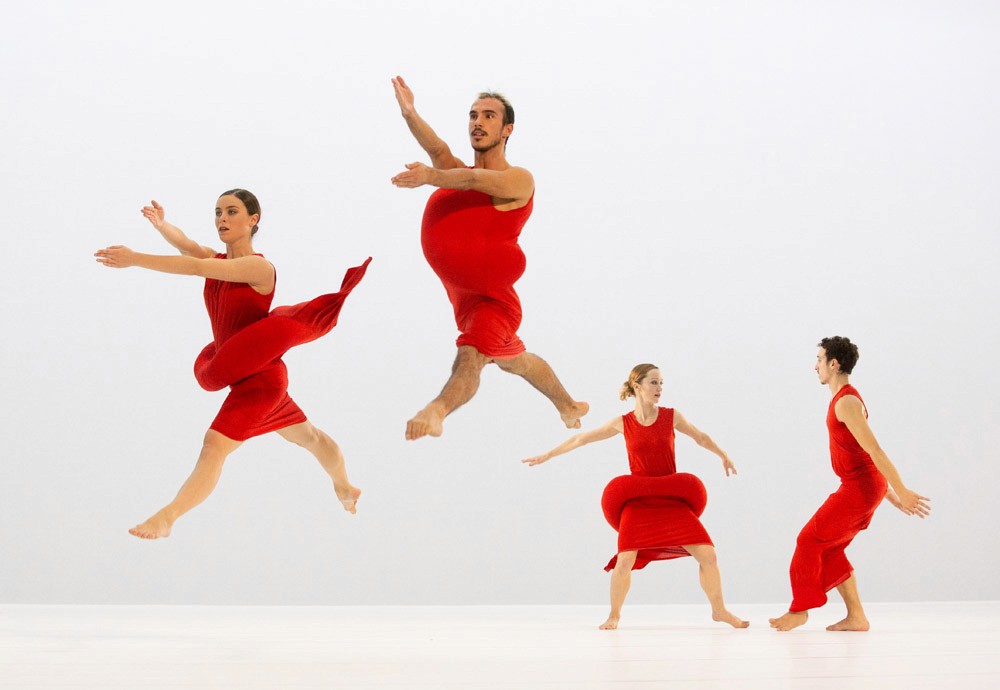
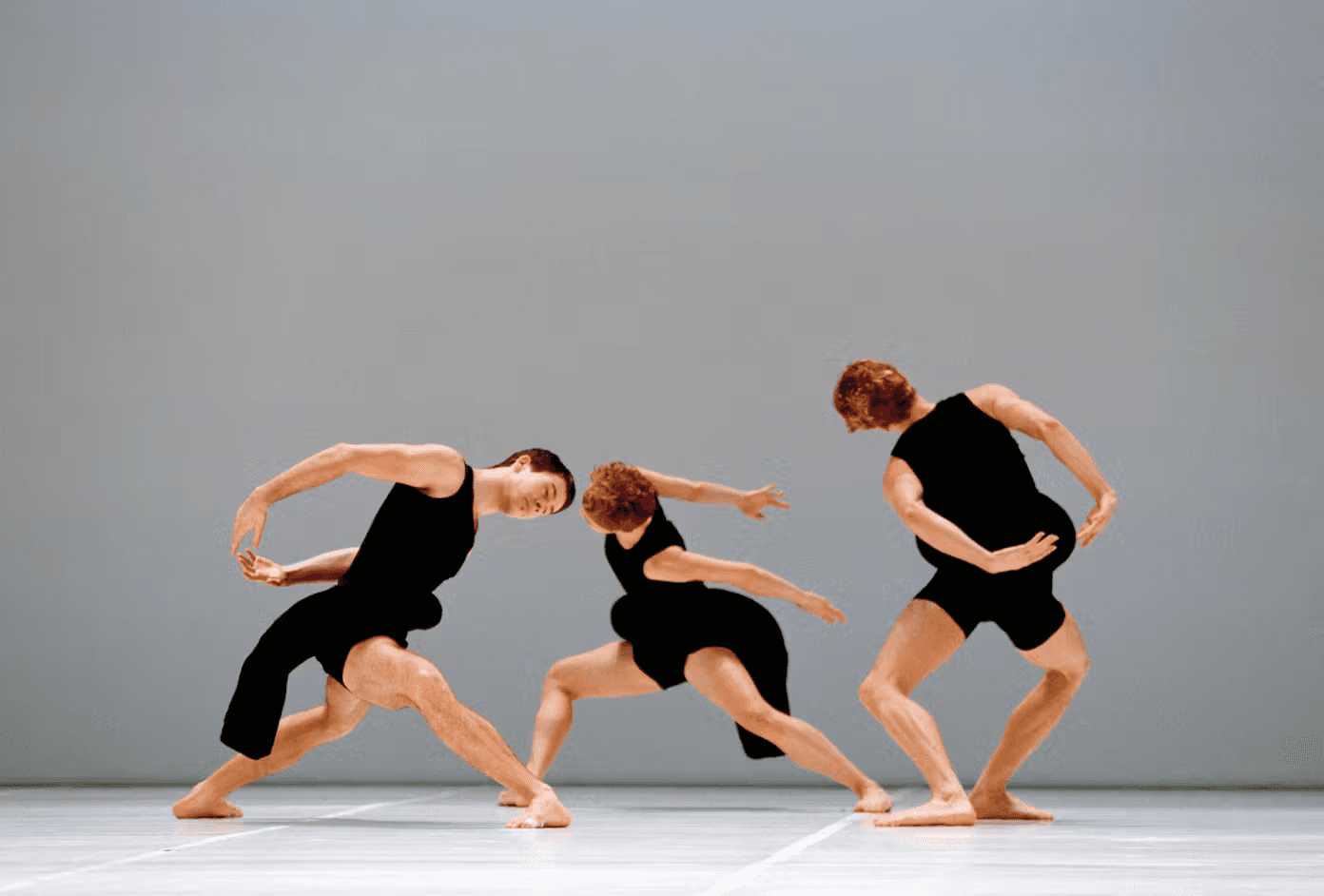
When the pursuit of perfection crumbles, a deep resonance emerges. In Scenario (1997), the dancers navigate both physical and psychological tensions, mirroring how capitalist and fascistic institutions work against our bodies through imposing rigid confines of what is acceptable, then monetizing pathways to achieving said standards.
When perfection dissolves through the movement and costuming, viewers are encouraged to identify with their own complexities. Juxtaposed against the modern landscape, Scenario succeeds as a new form of expressive dance, revealing the fullness of the human experience and all its inherent contradictions. Cunningham writes in a personal piece about making a space “in which anything can happen, imitating the way nature makes a space and puts lots of things in it, heavy and light, little and big, all related, yet affecting all the others”.
Scenario becomes an amalgamation of contradictions, resulting in a performance that takes the form of undeniable human truth.
I believe that it’s more difficult to find oneself in perfection, yet easy to identify with the grotesque.
Doc/34 all rights reserved, sponsored by IFM.
" height="65.65946764590899px" id="biO_icj08" transform="translate(0 1.371)" width="59.174572953517554px"/><path d="M 63.167 33.692 C 63.167 54.377 50.565 68.088 31.544 68.088 C 12.524 68.088 0 54.69 0 33.927 C 0 13.163 12.371 0 31.626 0 C 50.882 0 63.17 13.163 63.17 33.692 Z M 46.89 33.848 C 46.89 21.155 41.097 13.477 31.626 13.477 C 22.155 13.477 16.206 21.234 16.206 33.848 C 16.206 46.463 22.077 54.533 31.626 54.533 C 41.176 54.533 46.89 46.698 46.89 33.848 Z" fill="rgb(0, 0, 0)" height="68.08839784893921px" id="A8_8V8D77" transform="translate(58.705 0.196)" width="63.17042207703656px"/><path d="M 43.755 24.133 C 42.268 17.003 38.119 13.477 31.388 13.477 C 21.838 13.477 16.281 20.998 16.281 33.927 C 16.281 46.855 22.073 54.455 31.779 54.455 C 36.084 54.455 39.763 52.653 42.033 49.519 C 43.363 47.638 43.911 46.071 44.381 42.781 L 60.662 45.209 C 59.175 51.869 57.453 55.709 54.165 59.548 C 49.312 65.111 41.72 68.088 32.249 68.088 C 22.778 68.088 14.637 65.111 9.08 59.47 C 3.287 53.593 0 44.426 0 33.927 C 0 23.427 3.287 14.26 9.471 8.149 C 14.872 2.899 22.778 0 31.935 0 C 42.033 0 49.938 3.448 55.026 10.264 C 57.531 13.477 58.861 16.376 59.879 20.998 Z M 100.346 1.41 L 72.246 77.804 L 58.235 77.804 L 86.414 1.41 Z" fill="rgb(0, 0, 0)" height="77.80411839929134px" id="v1AksvdEb" transform="translate(121.519 0.196)" width="100.34629996240147px"/><path d="M 16.594 46.933 C 17.064 49.519 17.533 50.616 18.786 51.948 C 20.899 54.142 24.03 55.317 27.787 55.317 C 33.892 55.317 37.728 52.261 37.728 47.482 C 37.728 44.269 36.162 41.762 33.501 40.743 C 31.701 40.117 29.274 39.725 26.222 39.725 C 23.169 39.725 19.647 39.881 16.594 40.195 L 16.594 26.718 C 19.255 27.032 21.838 27.188 24.891 27.188 C 32.327 27.188 36.006 24.681 36.006 19.666 C 36.006 15.435 33.031 13.007 27.865 13.007 C 22.308 13.007 19.49 15.2 18.316 20.215 L 1.409 17.786 C 2.896 12.928 4.148 10.578 6.653 7.835 C 11.428 2.664 18.629 0 28.178 0 C 36.71 0 43.755 2.351 48.216 6.66 C 51.112 9.559 52.6 13.32 52.6 17.786 C 52.6 26.091 48.138 31.263 39.137 33.378 C 43.911 34.083 46.494 35.18 49.234 37.531 C 52.521 40.508 54.4 44.583 54.4 49.127 C 54.4 53.123 53.304 56.806 51.269 59.548 C 49.547 61.899 46.807 64.092 43.911 65.424 C 39.841 67.305 33.501 68.48 27.63 68.48 C 20.586 68.48 13.541 66.835 9.393 64.092 C 5.792 61.742 3.053 58.294 1.331 53.985 C 0.861 52.888 0.548 51.869 0 49.832 Z" fill="rgb(19, 136, 8)" height="68.48016075605614px" id="UrmKxPWFQ" transform="translate(219.752 0)" width="54.399905030019454px"/><path d="M 0 37.844 C 2.348 35.233 4.853 32.36 7.514 29.226 L 24.5 9.324 C 28.257 5.015 29.744 3.056 31.779 0 L 47.825 0 C 47.355 4.623 47.199 7.757 47.199 13.007 L 47.199 38.471 L 49.469 38.471 C 51.895 38.471 54.478 38.236 57.218 37.844 L 57.218 52.104 C 54.87 51.791 51.973 51.634 49.547 51.634 L 47.199 51.634 L 47.199 55.552 C 47.199 59.94 47.355 62.212 47.825 65.189 L 31.701 65.189 C 32.092 62.525 32.327 59.235 32.327 55.395 L 32.327 51.556 L 10.176 51.556 C 5.088 51.556 2.896 51.634 0 51.869 Z M 32.405 29.539 C 32.405 26.013 32.562 21.704 32.875 18.256 C 31.309 20.45 30.135 22.017 28.022 24.681 L 16.594 38.628 L 32.405 38.628 Z" fill="rgb(19, 136, 8)" height="65.18935212489366px" id="nz3MAn0g5" transform="translate(272.782 1.567)" width="57.21774185674667px"/></g></svg>)