Reflections
Are the Roadmen/Talahons/Maranza/Caillera the new Punks?
By Niclas Kauermann
The buzz surrounding Demna’s debut collection was huge, as was the financial pressure from Kering. In this debut collection for Gucci, he paid homage to the Tom Ford era. But alongside the hazy sexiness, Demna also showcased the archetype of a contemporary subculture: with underground rappers as models and others in the front row, he presented the ‘Roadman’. This subculture, despite its contemporary relevance, is often overlooked in current cultural discourse. Yet it is worth taking a closer look at it to understand how culture is lived and consumed today.
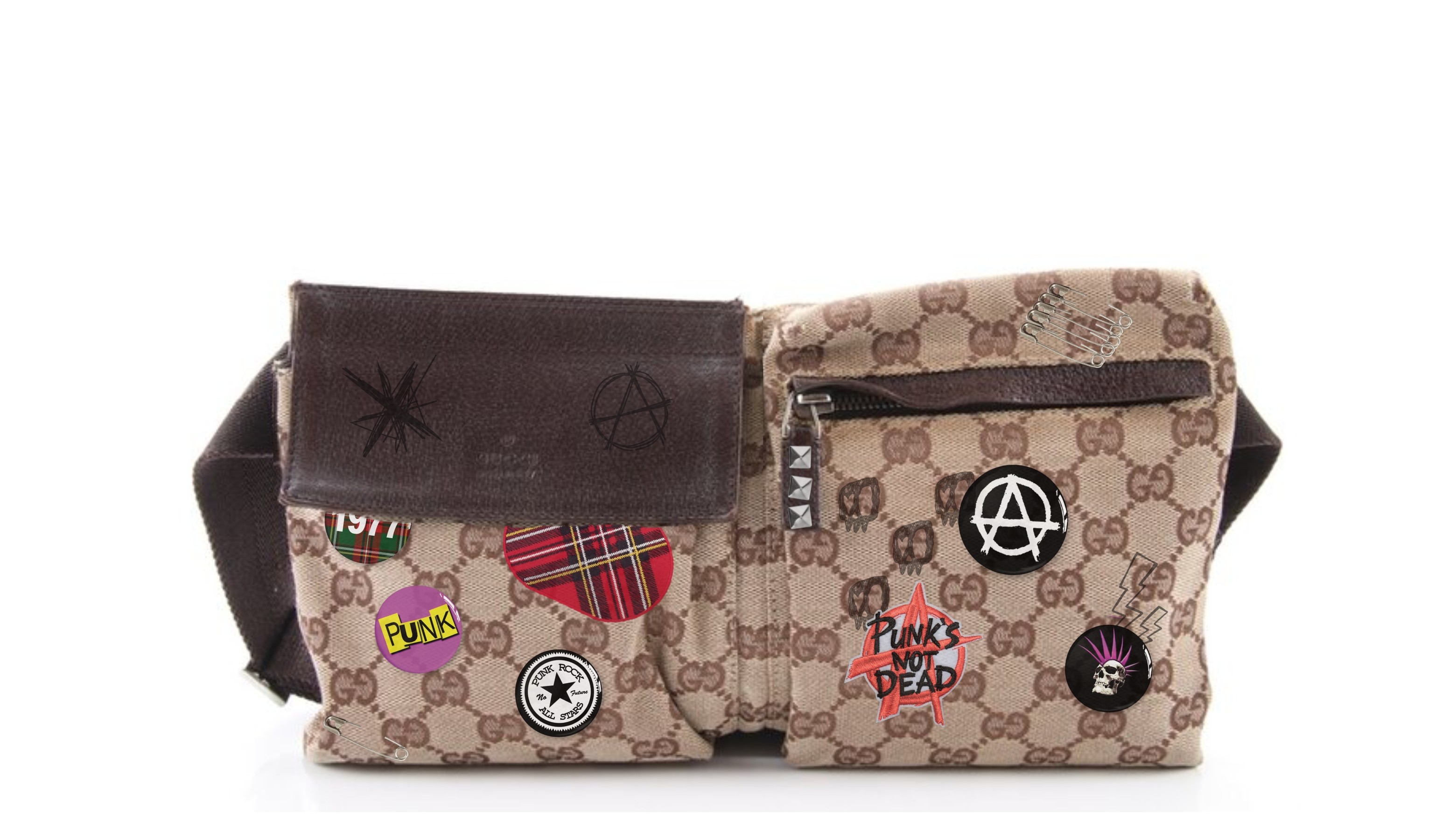
This year’s Autumn/Winter Fashion Week promised a similar outlook to previous years. As was already the case at the end of last year, it was set to be dominated by new faces at the helm of major fashion houses. Expectations surrounding the upcoming debut collections were correspondingly high: Meryll Rogge at Marni, Maria Grazia Chiuri at Fendi, Antonin Tron at Balmain, and Demna at Gucci. The anticipation was particularly high regarding the last name. Gucci, Kering’s most important cash cow, had suffered significant financial setbacks in recent years. Under the previous Creative Director, Sabato De Sarno, sales figures had plummeted. Now it was up to Demna to turn the ship around. And so, as the New York Times put it so strikingly, the big question hanging in the air in the run-up to the show was: “Can Demna Save Gucci?”
Even in the run-up to the show, Demna had presented two ‘pre-debut’ collections: a lookbook and a pre-fall collection. Both early releases drew heavily on Gucci’s history, specifically the Tom Ford era. Demna’s first full debut collection for Gucci, as shown now, also revealed the creative influence of that period. This was particularly evident in the diamond-encrusted logo G-string worn by Kate Moss, which was a direct nod to Tom Ford’s Spring/Summer 1997 collection. Yet this detail wasn’t the only nod to the past. The misty black-and-white backdrop, the unbuttoned shirts and the short patent leather jackets could have come straight from the archives of a Tumblr fashion forum.
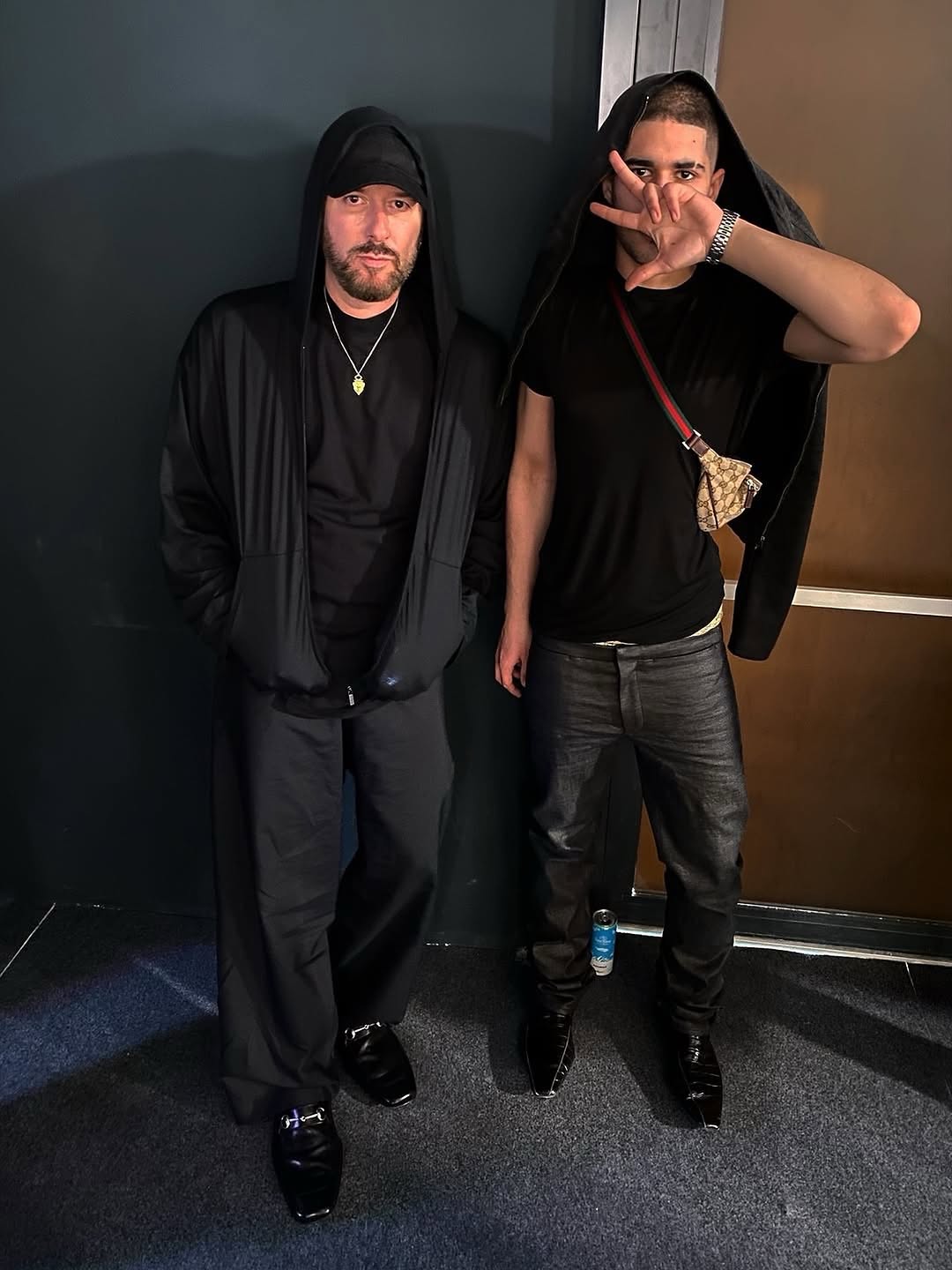
Demna and Fakemink after the Gucci FW26 show – Source: Instagram (@kaasvision)
Not only did Demna showcase Tom Ford’s sexiness, however. There is one thing that cannot be missing in a collection by Demna: the stereotypical portrayal of contemporary society. The designer is known for his archetypes, which depict social groups in the form of stereotypical images – sometimes critically, sometimes ironically, and sometimes both at once. At Balenciaga, the models repeatedly wore unusual accessories, such as bin bags or crisp packets. Previously, at Vetements, he presented an entire collection (Autumn/Winter 2017) consisting of different social types: punks, workers, or the fur-clad grandmother.
Therefore, it came as little surprise that the designer would continue this style of presentation at his new job. This time, two underground rappers walked the catwalk as models, styled in low-slung trousers and bum bags. Other rappers sat in the front row and performed at the after-show party shortly afterwards.
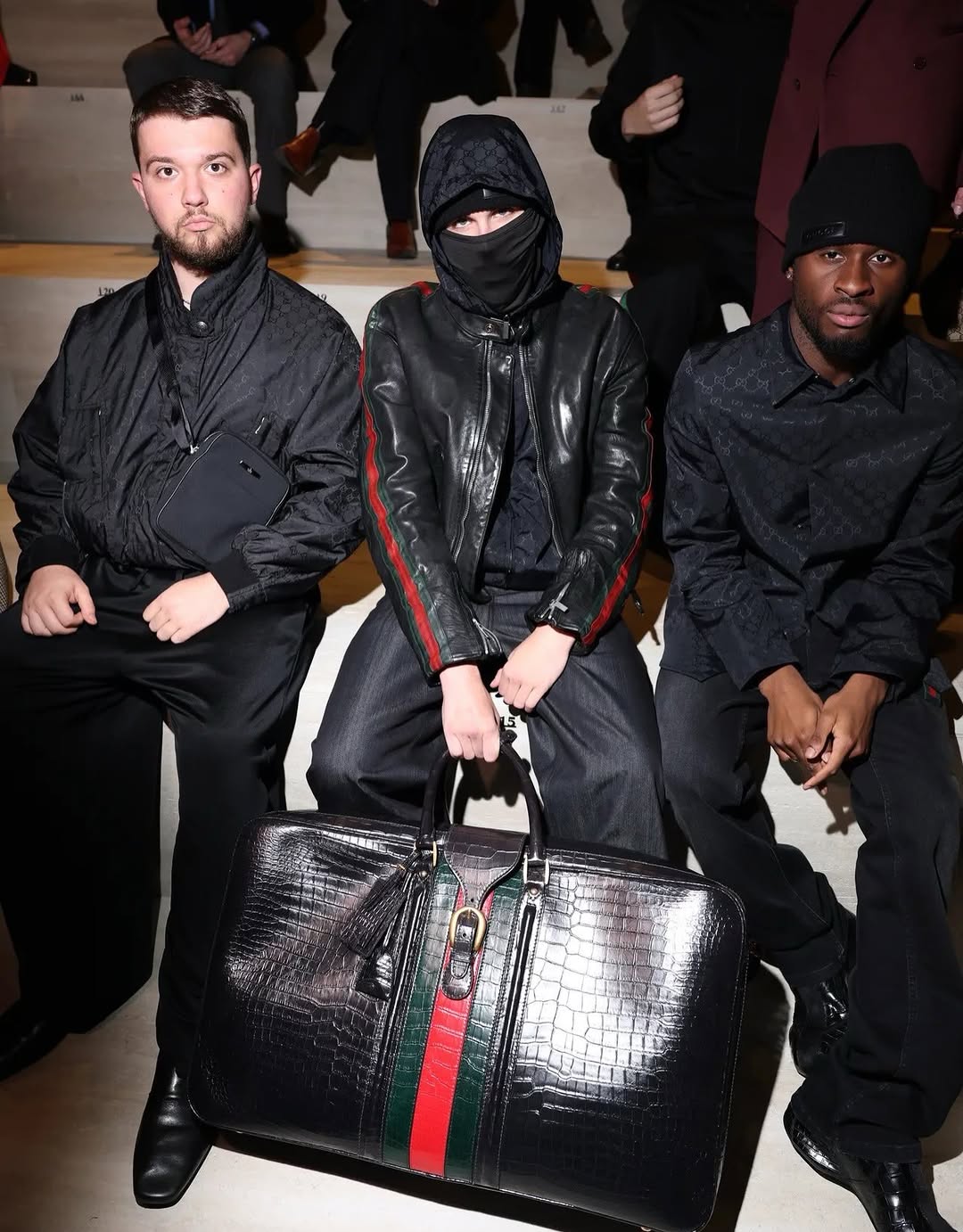
EsDeeKid sitting in the front row at the Gucci show – Source: Instagram (@archivedrunway)
Strangely enough, there was hardly any mention of this archetype in the subsequent reviews of the show. Tim Blanks ignored it almost entirely in his BoF article, Luisa Zargani (WWD) simply described it as ‘Gen Z’, and Markus Ebner (Achtung Mode) briefly mentioned the term ‘swagger’.” This clearly reveals a difference in perception of the show between fashion journalists and social media, where the conversation centred almost exclusively on underground rappers and the archetype presented here. Perhaps this is due to a generational gap, a failure on the part of journalists to contextualise it, or the difficulty of precisely describing the stereotype presented by Demna.
Demna had already showcased a similar stereotypical dress code before. For instance, in his Balenciaga Autumn/Winter 2025 show, where some models wore tight-fitting jogging bottoms paired with slim-fit puffer jackets or tech fleece jackets. Or in his Vetements Autumn/Winter 2019 show, where this youthful style was evident in the form of bum bags and puffer jackets.
It might therefore be worth taking a closer look at this youthful aesthetic that Demna keeps returning to. Which subculture is actually being portrayed here? And what role does it play in today’s society?
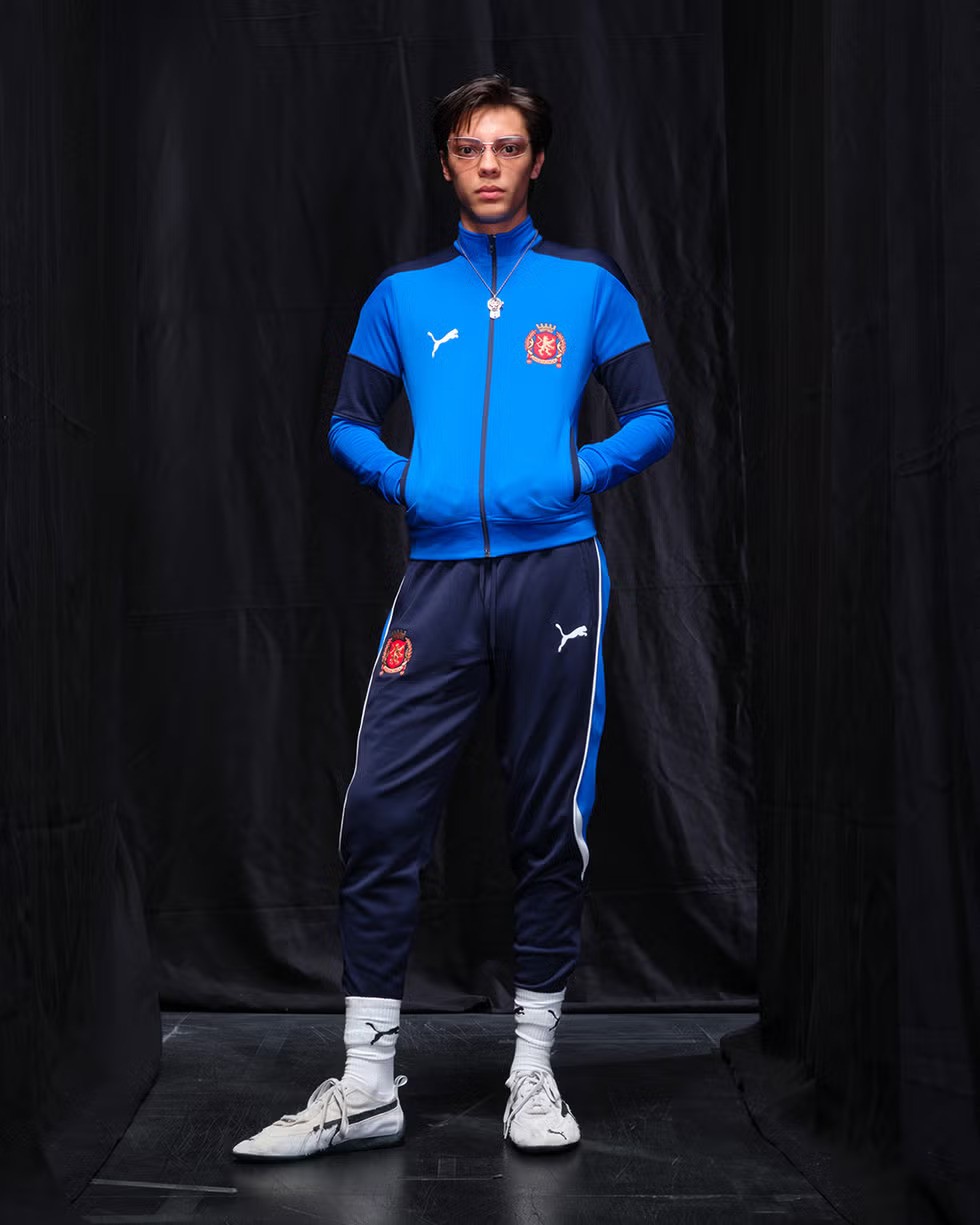 | 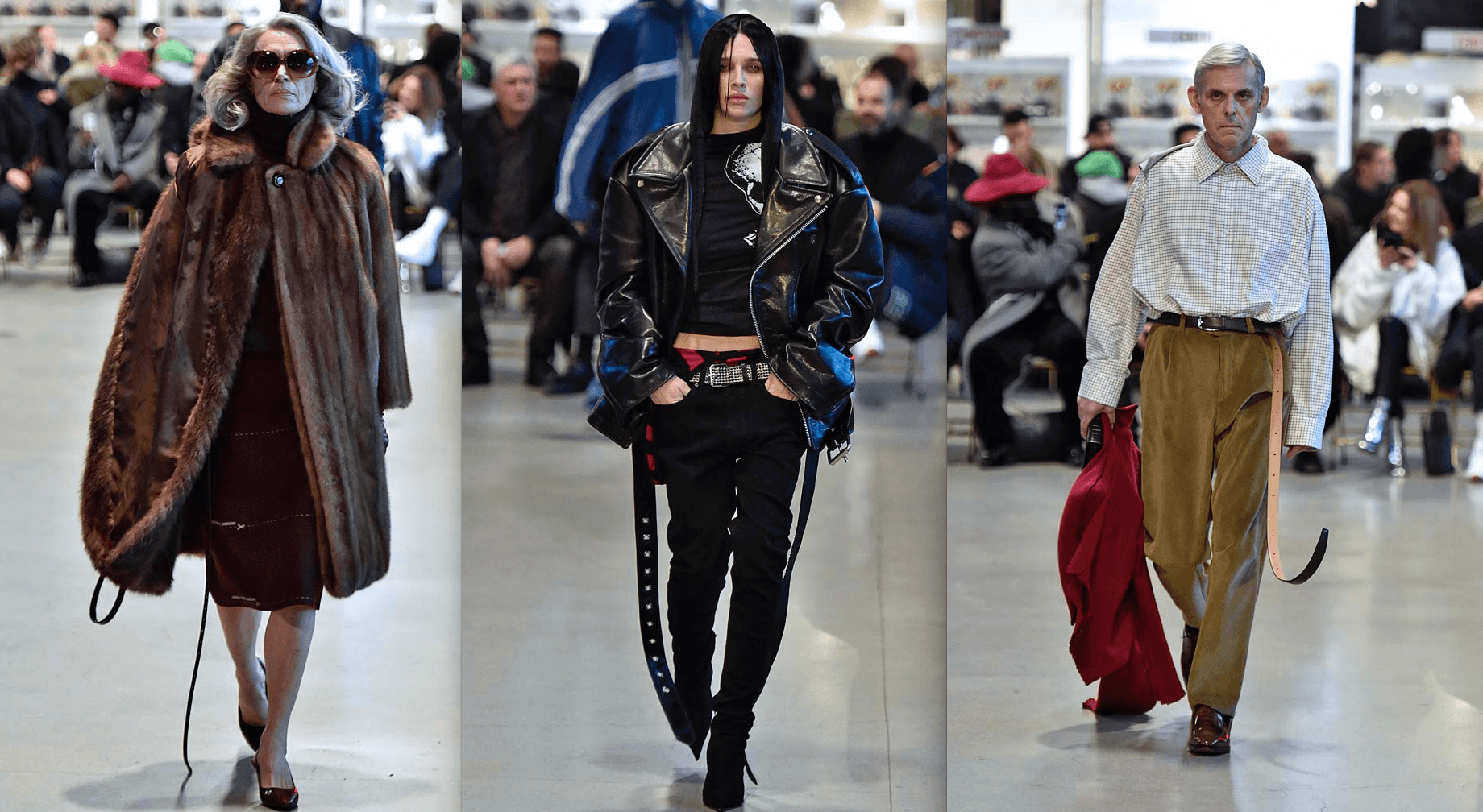 |
Right: Balenciaga Fall/Winter 2025 - Source: Courtesy of Balenciaga
Left: VETEMENTS Fall/Winter 2017 – Source: fashionweekdaily.com
First, it must be acknowledged that contemporary youth cultures are difficult to describe in an academic and fact-based manner. Consequently, individual observations in this article may be influenced by subjective perceptions. Furthermore, generalisations about youth groups are limited. Any description is inevitably a stereotypical portrayal that often loses sight of the individual and focuses instead on a supposedly homogeneous mass.
It is therefore possible, and indeed likely, that the aspects mentioned in the following context will not apply to all individuals within these groups. Nevertheless, an analysis of such cultural phenomena is important in order to understand how the current cultural landscape is evolving.
The archetype of a person depicted by Demna – wearing Nike Tech Fleece jackets, jeans that hang low over the bum, and listening to rap music – is probably familiar to many. In Germany, the group of people associated with this style is colloquially referred to as ‘Talahons’. In English, similar figures are described as ‘roadmen’ or ‘chavs’, in Italian as ‘maranza’, in Spanish as ‘cani’ and in French as ‘caillera’.
Although, according to Dylan Clark, ‘classical subcultures have died out’, the question arises as to whether these groups of people can still be understood as a form of subculture, and how such a modern subculture differs from classical subcultures.

YouTube Video „How To Get Girls Like A ROADMAN In 30 Seconds” – Source: YouTube (@Jtubeyt)
In the UK, the ‘Roadman’ youth culture first emerged in the early 2000s. Its roots, however, can be traced back to the ‘Rudeboys’. In the 1960s and 1970s, this youth culture developed in the suburbs of London following the wave of immigration from Jamaica. The young people were easily recognisable, particularly by their Jamaican-inspired sharp suits and pork pie hats. They listened to rocksteady music and watched gangster films.
Linked to the hip-hop music culture that emerged later, the figure of the ‘Roadman’ eventually took shape. It is primarily young people from the second or third generation of migrants who identify with this scene. Their outlook on life can be defined primarily as a kind of existential or identity crisis. They find themselves caught between two worlds, from both of which they feel equally alienated: the national majority culture and their parents’ culture of origin. This tension gives rise to a sense of not belonging, a state of alienation and social isolation.
As Mark Fisher describes in his book Capitalist Realism, this means that, unlike in earlier subcultures, among the ‘Roadmen’, “any ‘naive’ hope that youth culture could change anything [is] replaced by the hard-headed embrace of a brutally reductive version of ‘reality’.”
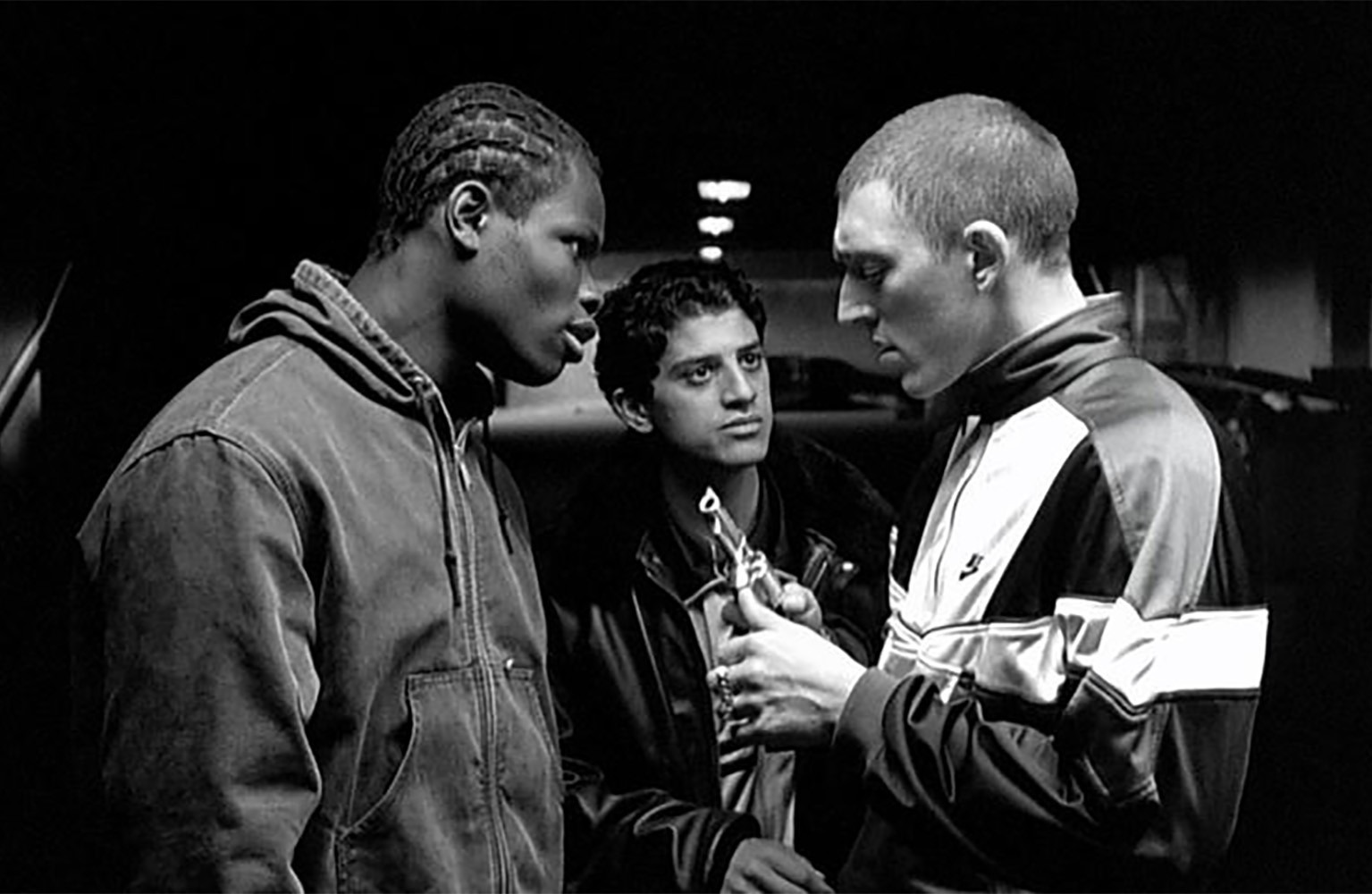
Scene from the film “La Haine” – Source: YouTube (@TheOncomingStorm)
A rather nihilistic and pessimistic worldview emerges. As members of the working class, the ‘Roadmen’ are not concerned with fighting class struggles, but rather with celebrating their own class. The seemingly harsh reality of life is thus effectively staged and celebrated. According to Fisher, this reality constructed by the ‘Roadmen’ is characterised by “economic instability, institutionalised racism, and harassment of young people by the police”. Films such as La Haine become icons of this culture, as they address everyday brutality. Similarly, young people consume music videos in which drug dealing and illegal weapons are omnipresent.
As Virgil Abloh’s earlier brand name Pyrex 23 illustrates, for young people in the suburbs there appear to be only two possible ways out of poverty: through drug dealing (Pyrex refers to the bowls used to cook crack) or through sport (the 23 stands for basketball player Michael Jordan). Sport plays a central role here: alongside sportswear, sports grounds and betting shops serve as social meeting places and cultural hubs within the Roadman scene.

Faron Paul (left), who runs his own knife return scheme, photographed for a BBC article – Source: BBC.com
The ‘Roadmen’s’ political stance also reflects their rejection of mainstream society – much like the punk subculture. In this, a kind of apolitical-political attitude can be discerned. Although the ‘Roadmen’ themselves do not engage directly in politics (through protests or public debates), they nevertheless position themselves between two political camps. On the one hand, they reject the conservative right-wing stance, which frequently stigmatises them as criminals and labels them a ‘migration problem’.
At the same time, however, a distinct, conservative political stance is evident. The street thug embodies values such as ignorance, parochialism and superficial machismo. They often strive to be perceived as the ‘villain’, under the notion that ‘villainy’ expresses masculinity and that one becomes ‘somebody’ by harming others. This attitude frequently leads to violence and destruction within communities.
Crime and urban violence have become a game for young men, who are also the main victims: in 2024, 83 per cent of young people murdered in the UK were killed in stabbings; young men aged 18 to 24 were eight times more likely to be affected than young women.
On the other hand, this also entails a rejection of left-liberal political views. Women’s roles are predominantly interpreted in line with religious-conservative views, and homosexuality is looked down upon. This gives rise to a direct anti-mainstream attitude that rejects both right-wing and left-wing political ideologies.

The TikToker Mahmoud in what he describes as a typical ‘Talahon’ outfit – Source: WRD
The fashion of the ‘Roadmen’ also shows parallels with historical subcultures such as the punks. They, too, make use of the concept of so-called bricolage, as described by Dick Hebdige in his analysis of punk style. This principle is based on placing existing garments in a new context, thereby detaching them from their original function or meaning. Everyday clothing or accessories are taken and transformed into a personal dress code through the new way they are worn.
As Demna has demonstrated, repurposed bum bags, worn in an unconventional manner, play just as crucial a role as tight-fitting tracksuits and puffer jackets or oversized trainers. What is noticeable here is the sporting heritage of the adopted garments. This may well be a type of new workwear, comparable to the denim of the punk era. Unlike in the past, workers in today's primarily service-oriented society no longer rely on robust protective clothing, but on comfortable clothing that enables them to get through their nine-hour shifts as comfortably as possible.
And then there’s the dress code that Demna showcased with his Monogram bum bags. The ‘Roadman’ subculture is teeming with flashy luxury goods: large logos on clothing, fast cars and glittering watches. Figures like Al Pacino in Scarface become heroic role models.
Yet despite the money and the visible consumer goods, it is less about the traditional promise of luxury or the attempt to climb the social ladder. Rather, this style embodies a particular attitude to life. Fisher describes it as the aspiration towards a promise of ‘freedom and excitement’. It is, therefore, more of a performative response to exclusion, shaped by the harsh reality of everyday life.
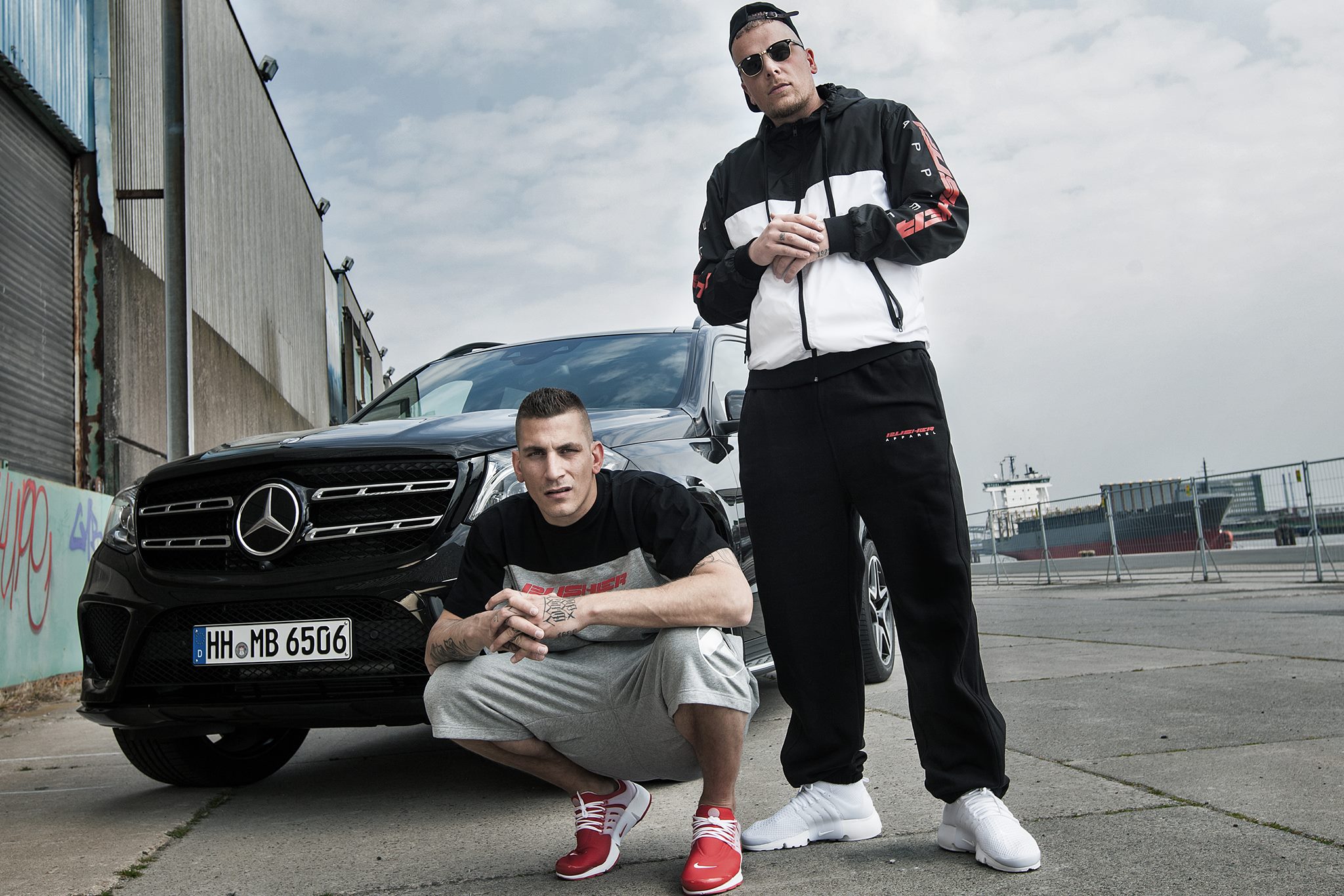
German Rap-Gang “187 Streetgang” -- Source: Elvir Omerbegovic - Elvir Omerbegovic, CC BY-SA 2.0, https://commons.wikimedia.org/w/index.php?curid=52208213
Hence, the open consumption and wearing of counterfeit designer clothing in these circles comes as no surprise. Cheaply produced luxury knock-offs are purchased from online shops such as Pandabuy or local bazaars in the suburbs. The attitude towards these fakes is open: tips are shared on which websites offer the cheapest knock-offs, or hauls of mountains of fake luxury clothing are posted. According to Fisher, this is clearly not about social distinction, but rather the pursuit of freedom in consumption – regardless of price or availability.
The ‘Roadmen’ represent a subculture that is strongly influenced by nihilism. Their worldview is pessimistic and does not look towards a better future. They may seek fulfilment in flashy luxury goods. Yet even fast cars or expensive watches offer no escape from their harsh surroundings: the music videos of rappers, who through their success would actually have the opportunity to escape this milieu, are not set in grand mansions or opera houses, but still in the grey suburbs where their careers began.
Therefore, it is a subculture that faces significant challenges from within. Additionally, it is also under attack from outside. Subcultures of the past, such as the Punks or Emos, had to deal with ironic portrayals in pop culture media. For instance, satirical cartoons such as those in South Park denied the Emos the legitimacy of their pessimistic worldview. Due to the exaggerated portrayal in the media - which mocked their attitude - the emo subculture lost its significance and, ultimately, its social relevance.
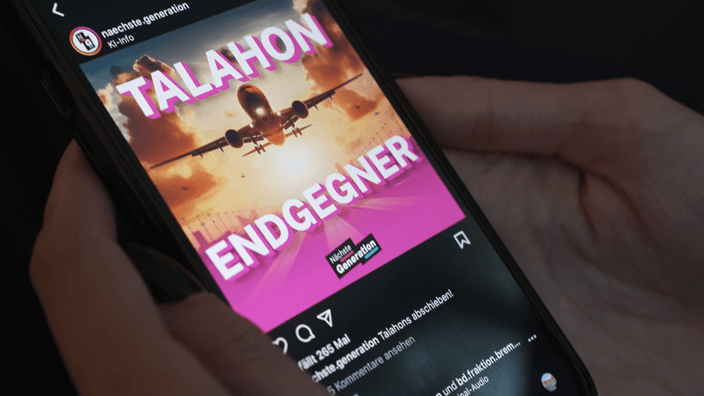
“Talahon enemy” appears in a post by the conservative Instagram account “Next Generation” – calling for ‘Talahons’ to be deported – Source: WRD
In the case of the ‘Roadmen’, this external influence goes even further. On the one hand, there is also an ironic portrayal in the media here, which seeks to question the legitimacy of their hard lifestyle. Furthermore, a strongly racist image is projected onto this subculture. They are held up as a symbol of societal problems and exploited by right-wing parties. For example, they are repeatedly portrayed by the partly far-right German party AfD as the antithesis of ‘German society’. The terms used to label this subculture are also often highly charged: whether ‘Roadman’ in English, ‘Talahons’ in German or ‘Maranza’ in Italian – the names frequently carry racist connotations, and their use is therefore a subject of repeated controversy.
It is not without reason that Demna repeatedly presents the image of a young person in tracksuit bottoms and a bum bag. The ‘Roadmen’ represent a significant youth culture of our time. Much like the Punks, they see themselves as children of the working class who are alienated from society. And just like the punks, they consciously adopt this isolated stance. What sets them apart from the Punks is the absence of active social engagement. The admission that, despite repeated efforts, nothing will ever change. Among the ‘Roadmen’, there is neither an attempt to instigate a class struggle nor any direct political articulation. Rather, they live in isolation in their own world.
Perhaps this is precisely why they receive so little attention in academic and cultural circles, such as among leading fashion journalists. The only public attention they receive comes from racist populists. Yet it is the Roadmen who embody today’s punk spirit. So maybe we should pay them a bit more attention and acknowledge them as an interesting subculture. It is only through recognition that they can be protected from racist accusations, whilst at the same time helping us to understand young people’s worldviews better.
Doc/34 all rights reserved, sponsored by IFM.
" height="65.65946764590899px" id="biO_icj08" transform="translate(0 1.371)" width="59.174572953517554px"/><path d="M 63.167 33.692 C 63.167 54.377 50.565 68.088 31.544 68.088 C 12.524 68.088 0 54.69 0 33.927 C 0 13.163 12.371 0 31.626 0 C 50.882 0 63.17 13.163 63.17 33.692 Z M 46.89 33.848 C 46.89 21.155 41.097 13.477 31.626 13.477 C 22.155 13.477 16.206 21.234 16.206 33.848 C 16.206 46.463 22.077 54.533 31.626 54.533 C 41.176 54.533 46.89 46.698 46.89 33.848 Z" fill="rgb(0, 0, 0)" height="68.08839784893921px" id="A8_8V8D77" transform="translate(58.705 0.196)" width="63.17042207703656px"/><path d="M 43.755 24.133 C 42.268 17.003 38.119 13.477 31.388 13.477 C 21.838 13.477 16.281 20.998 16.281 33.927 C 16.281 46.855 22.073 54.455 31.779 54.455 C 36.084 54.455 39.763 52.653 42.033 49.519 C 43.363 47.638 43.911 46.071 44.381 42.781 L 60.662 45.209 C 59.175 51.869 57.453 55.709 54.165 59.548 C 49.312 65.111 41.72 68.088 32.249 68.088 C 22.778 68.088 14.637 65.111 9.08 59.47 C 3.287 53.593 0 44.426 0 33.927 C 0 23.427 3.287 14.26 9.471 8.149 C 14.872 2.899 22.778 0 31.935 0 C 42.033 0 49.938 3.448 55.026 10.264 C 57.531 13.477 58.861 16.376 59.879 20.998 Z M 100.346 1.41 L 72.246 77.804 L 58.235 77.804 L 86.414 1.41 Z" fill="rgb(0, 0, 0)" height="77.80411839929134px" id="v1AksvdEb" transform="translate(121.519 0.196)" width="100.34629996240147px"/><path d="M 16.594 46.933 C 17.064 49.519 17.533 50.616 18.786 51.948 C 20.899 54.142 24.03 55.317 27.787 55.317 C 33.892 55.317 37.728 52.261 37.728 47.482 C 37.728 44.269 36.162 41.762 33.501 40.743 C 31.701 40.117 29.274 39.725 26.222 39.725 C 23.169 39.725 19.647 39.881 16.594 40.195 L 16.594 26.718 C 19.255 27.032 21.838 27.188 24.891 27.188 C 32.327 27.188 36.006 24.681 36.006 19.666 C 36.006 15.435 33.031 13.007 27.865 13.007 C 22.308 13.007 19.49 15.2 18.316 20.215 L 1.409 17.786 C 2.896 12.928 4.148 10.578 6.653 7.835 C 11.428 2.664 18.629 0 28.178 0 C 36.71 0 43.755 2.351 48.216 6.66 C 51.112 9.559 52.6 13.32 52.6 17.786 C 52.6 26.091 48.138 31.263 39.137 33.378 C 43.911 34.083 46.494 35.18 49.234 37.531 C 52.521 40.508 54.4 44.583 54.4 49.127 C 54.4 53.123 53.304 56.806 51.269 59.548 C 49.547 61.899 46.807 64.092 43.911 65.424 C 39.841 67.305 33.501 68.48 27.63 68.48 C 20.586 68.48 13.541 66.835 9.393 64.092 C 5.792 61.742 3.053 58.294 1.331 53.985 C 0.861 52.888 0.548 51.869 0 49.832 Z" fill="rgb(19, 136, 8)" height="68.48016075605614px" id="UrmKxPWFQ" transform="translate(219.752 0)" width="54.399905030019454px"/><path d="M 0 37.844 C 2.348 35.233 4.853 32.36 7.514 29.226 L 24.5 9.324 C 28.257 5.015 29.744 3.056 31.779 0 L 47.825 0 C 47.355 4.623 47.199 7.757 47.199 13.007 L 47.199 38.471 L 49.469 38.471 C 51.895 38.471 54.478 38.236 57.218 37.844 L 57.218 52.104 C 54.87 51.791 51.973 51.634 49.547 51.634 L 47.199 51.634 L 47.199 55.552 C 47.199 59.94 47.355 62.212 47.825 65.189 L 31.701 65.189 C 32.092 62.525 32.327 59.235 32.327 55.395 L 32.327 51.556 L 10.176 51.556 C 5.088 51.556 2.896 51.634 0 51.869 Z M 32.405 29.539 C 32.405 26.013 32.562 21.704 32.875 18.256 C 31.309 20.45 30.135 22.017 28.022 24.681 L 16.594 38.628 L 32.405 38.628 Z" fill="rgb(19, 136, 8)" height="65.18935212489366px" id="nz3MAn0g5" transform="translate(272.782 1.567)" width="57.21774185674667px"/></g></svg>)