References
Alexander McQueen’s Voss- Gesamtkunstwerk or spectacle of commodification?
By Leyla Boudieb
“The audience sat around a mirrored cube, which, when lit from inside, revealed itself to be a mental-hospital holding cell. Demented girls, wearing hospital headbands and everything from extraordinary mussel-shell skirts to impossibly chic pearl-colored cocktail dresses, slithered and strutted while uselessly attempting to fly over the cuckoo's nest.”
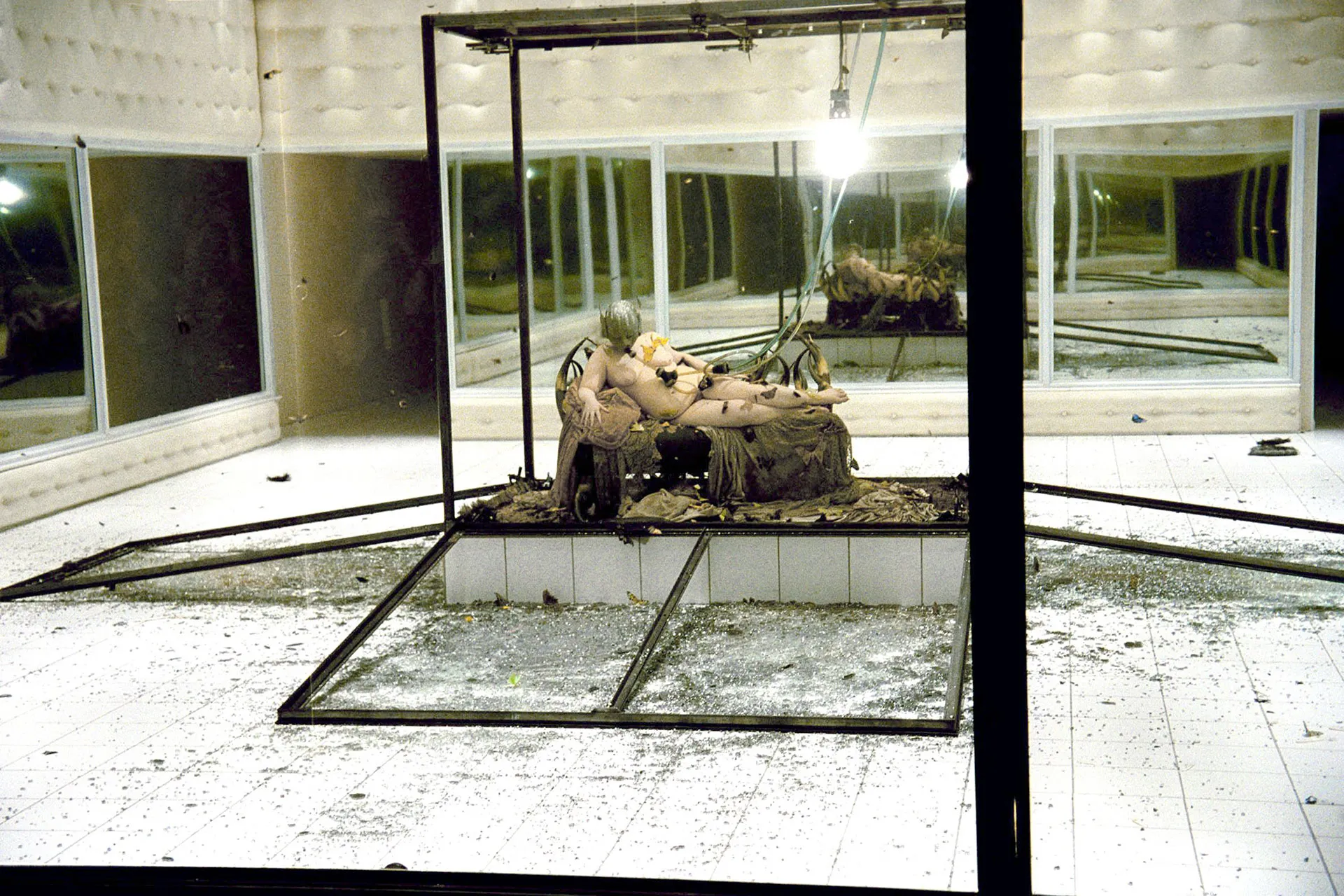
Like few others, Lee Alexander McQueen’s S/S2001 show Voss sits at the critical intersection between the fashion show as a noble Gesamtkunstwerk- a total work of art combining clothing, music, set design, and performance into a single spectacle- and the spectacle of commodification.
Context- the spectacle of the fashion show
The 1980s brought with them the corporatization of the fashion industry through an increasing consolidation of craftsmanship-forward heritage luxury houses under the umbrella of the LVMH and Kering conglomerates. In the aim to build strong brands with high intangible value, they championed new marketing strategies characterised by artistic creation as a key resource. Their model relied on artful spectacles staged around brands to promote the product they sold, the mass production and global distribution of luxury goods, as well as globalized advertising campaigns maintaining the brands’ notoriety.
The fashion show, from then on, came to act as a public statement of the brand and designer’s values, where aesthetics and spectacle increased brand equity by attracting attention. It helped generate a relationship with the global audience of a brand, as well as making it a part of the present moment, ultimately eternalizing its presence on the internet by publishing a video of the event.
The two designers who pioneered the fashion show as a core part of a brand’s ‘spectacle’ were British and both brought from London to Paris by Bernard Arnault--John Galliano and Alexander McQueen, employed as Creative Directors of the houses of Givenchy and Dior. Claiming the status of an artistic performance, their runway presentations took the fashion show to spheres of unprecedented extravagance and opulence. By the time of the 1990s, as Caroline Evans argues in Fashion at the Edge: Spectacle, Modernity and Deathliness, the fashion show had amounted to nothing more than a symptom of Guy Debord’s ‘Society of Spectacle’: a manifestation of a social relation between brand and customer, mediated by images and representations. When understanding the ‘Society of Spectacle’ as one where sensation is used to hide the domination of consumerism, the fashion show serves precisely this purpose. It is a self-absorbed, or narcissistic ‘spectacle onto itself’, locked in its own world and self-regarding. It remains sealed in the show space of the runway since, were entry granted to everyone instead of a select few, it would no longer be a spectacle but merely life unfolding.
Surveillance, Spectacle and Power in Voss
Debord further develops on how proximity to the spectacular image defines ones value in a Society of Spectacle, implying a vertical hierarchy among the attendants of a fashion show: the influential figures in the front row, validating the legitimacy and relevance of the created image through their presence; the more junior attendants in the middle rows, bearing little authority over the image but only witnessing it, and ultimately the back of the room, not captured by the cameras documenting the event, but enhancing its magnitude by enlarging the number of witnesses.
In the opening sequence of Voss, McQueen plays with this hierarchy as well as the tacit attendant protocols of a fashion show. He seats his audience in front of a two-way mirrored glass cube for an hour, to the unnerving sound of a heartbeat and heavy breathing, left to look at themselves and each other. The seating being arranged in tiered rows, those higher in the ‘hierarchy of attendants’ therefore sit closest to their own and each other’s reflections.
This first sequence is widely seen as a commentary on the vanity and narcissism of the fashion world itself- McQueen is quoted in The Fashion, speaking of this idea, stating that he wished to turn the gaze of the prominent figures present at the event upon themselves, making them the objects of scrutiny instead of the judges of beauty. Tim Blanks recalls the moment as follows: “When we took our seats, we were confronted again - by our own reflections. So we sat for an hour or so staring at ourselves, while a heartbeat pulsed on the soundtrack. In a subsequent interview, he posed the question he obviously wanted everyone to be asking themselves that night: “Am I actually as good as what I’m looking at?””
He therefore creates a sort of Panopticon- an architectural concept consisting of a circular building with a "tower" in the center and individual cells around the perimeter. As the cells are backlit by windows, the guard in the center can see into every cell, yet the prisoners are unable to see into the tower. On a psychological level, Foucault understands the Panopticon as the state of not knowing when one is observed, and therefore feeling the need to permanently regulate oneself as though someone were watching. McQueen, with Voss’s two-way mirrored glass box, replicates this precise state of internalized surveillance, making it apparent to the attendants of his show. He recalls looking at the show on a monitor backstage and observing everyone trying not to look at themselves.
Once the audience was suitably unnerved, the cube lit up, revealing its interior. Constructed to resemble a padded cell in a psychiatric hospital, with white tiled floors and walls formed from surveillance mirrors, the models were trapped in the cube, unable to see the audience and looking at their own reflections. Made up to look like injured patients, with gauze wrapped around their heads, the models engaged in displays of ‘madness’- scratching at the glass, waving in repetitive, tick-like motions, examining their own image in the mirror, trying to break out, looking behind them as if someone were following them.
Commodity fetishism and the fashion image
As the fashion image grows to be an increasingly central element of a brand’s value creation, it becomes a commodity of its own. In Capital I, Karl Marx defines the commodity as a good or service produced by human labor and offered for exchange on the market. It must have both a use-value and an exchange-value. Since the fashion image in itself does not have a quantifiable exchange-value, its exchange-value is ultimately the premium consumers are willing to pay for a product surrounded by the spectacular marketing efforts of Voss’s time.
The traditional Marxist view of the commodity only allows physical properties of an object as sources of use-value. Emotional relationships with a product, feelings such as aspiration towards it or self-fulfillment by means of it, are considered ‘fetishes’ designed to make you look beyond the labour that went into the product. ‘Commodity fetishism’ is therefore the attribution of social power and an intrinsic value, beyond that of the labour put into its making, to a certain commodity. In the case of the fashion image, its value and allure go far beyond its production- the mere association of a product with such an image makes the consumer feel that a thing is of superior value than a comparable one (think a generic hoodie from The Gap versus one from a Demna collection for Balenciaga).
In Guy Debord’s Society of the Spectacle, the image as a commodity becomes valuable purely by inspiring emotions such as aspiration and satisfying emotional needs, such as a longing for the admiration of others or self-fulfillment, sought after to obtain validation from an indefinite “other” potentially passing judgement on ones every move. The worth of the fashion image can then be considered as its glamour, the aesthetic value it holds and the aspiration to superhuman perfection which follows from it- an understanding of value which Voss inevitably challenges with its displays of illness, of a condition considered unsightly or shameful.
Voss further serves as an analogy for the alienation of the model. Alienation, according to Marx, refers to man’s separation from the products of his labour. The model lends their physicality and appearance to their work to make a living, their looks being turned into a commodity by means of an image, a fashion show or a video. Ultimately, however, the model has no association with the final product whose value its image increases; in many cases, it will not even be aware of all the products promoted using its image. Furthermore, especially after the advent of the digital diffusion of images, it is no longer able to perceive its audience: as its image is diffused globally, the social relationship between model and audience is largely mediated by an artificial image circulating among consumers, creating an artificial value for a thing the model had no part in making. In Voss, this relationship is made apparent as the models look at themselves in a mirror, aware that they are being observed, and yet unable to perceive the audience watching their performance from outside the glass cube.
Refusing commodity fetishism- the McQueen woman
Voss not only points out this commodification of the image and the human body posing to produce it, it questions the ideals which determine the value of an image or a fashionable spectacle. McQueen aims to liberate the model’s body from canonical beauty: he displays it in states which, traditionally, had been deemed ‘of lesser worth or dignity’, yet sublimates it by dressing it in exquisitely and artfully made (not to mention very expensive) clothing. By showing models, made up to no longer look sexualised, displaying signs of mental illness usually hidden away, he tests the limits of which depictions of women generate monetary value and which do not.
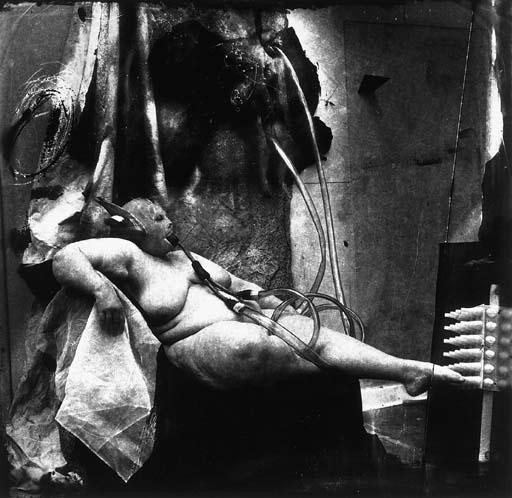
This denunciation of the fashion industry’s restrictive ideas of beauty and worth culminates in the finale of the show. The mirrored glass walls of a smaller cube in the middle of the set crash down, the bare figure of fetish writer Michelle Olley being revealed, reclining on a lace-covered sofa made from huge cow horns. Based on Joel-Peter Witkin’s photograph “Sanitarium” of a middle-aged woman, connected via a breathing tube to a stuffed monkey, Olley’s bandaged head is covered in a pig-mask of ghostly grey, a breathing pipe apparently protruding from her mouth, while her body is covered in large, fragile moths. Some were attached to her, others fluttered loose in the box.
Caroline Evans discussed the image of the McQueen woman as a contemporary femme fatale, citing Angela Carter in her book The Sadeian Woman: An Exercise in Cultural History. “A free woman in an unfree society will be a monster” - an image which Olley’s appearance, an apparent opposition to the fashion industry’s prevalent beauty standards, may have evoked to many of the spectators. By other writers, the moment has been described as “Fashion distilled into its most basic elements, being all the intangibles of perception and desire”; Tim Blanks recalls it as “one of McQueen’s more memorable fuck-you’s”.
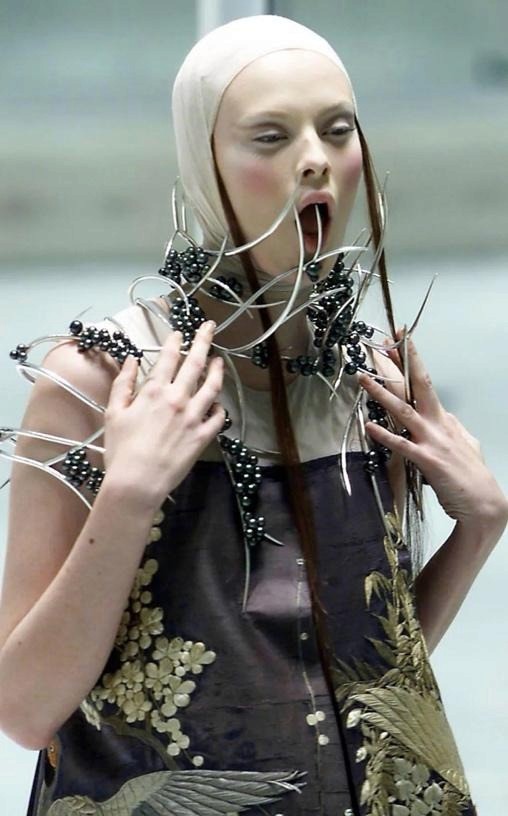
Overtime, McQueen has frequently been criticised for the precarious situations his shows would put models in, making audiences wonder about his intentions towards women. An example of this is look 65 of Voss- Karen Elson, who wore the look adorned with a silver thorned neckpiece, fell during the show and cut her neck, describing the experience as “terrifyingly dangerous” to Nick Knight in a 2015 interview, however also recalling “laughing it off in two minutes” and how caring McQueen was after the fall, holding her hand tenderly for the final run-through.
In another interview of Erin O’Connor with Nick Knight, she recalled her experience of walking in Voss, saying, “I had worried that it would look like, in some way, I was victimised, or a victim of being in that mindset. But it ended up being the opposite- it was stripping away the pain and the armour and just going “Here I am”.
Rather than merely caging women in unnatural and uncomfortable conditions, Voss challenged the prejudices and limitations of the audience’s aesthetic judgements. Ultimately, the show was widely well-received- perhaps McQueen was able to capture a sentiment many of his contemporaries shared by mirroring the condition of their industry to them. Perhaps the shock value of the resulting images constituted a ‘fetishisable’ value in themselves.
In conclusion, Voss can be seen as a paradoxical landmark in fashion history, with McQueen’s creative output functioning simultaneously as a critique of the industry and a driver of its spectacular growth. While McQueen was a central creative force for luxury conglomerates, his work suggests a profound torment regarding these very systems. Throughout various other seasons, among them What a Merry Go-Round (A/W2001), he proceeded to portray the fashion industry as a madhouse and circus, a site of relics and crushed dreams. At this point, it is worth quoting Jürgen Habermas’ description of ‘fashion as the displayed stylisation of one’s own experience’.
His intent to turn the audience's faces upon themselves and transform judges of beauty into objects of scrutiny indicates a desire to subvert the “Society of Spectacle" from within its own walls. As he exposes the violence, alienation, and surveillance underpinning the fashion system, he employs the same mechanisms of image-based commodity fetishism he seeks to critique through his spectacular staging. In this sense, while critical, Voss functions less as a rejection of the fashion system than as a diagnosis of it.
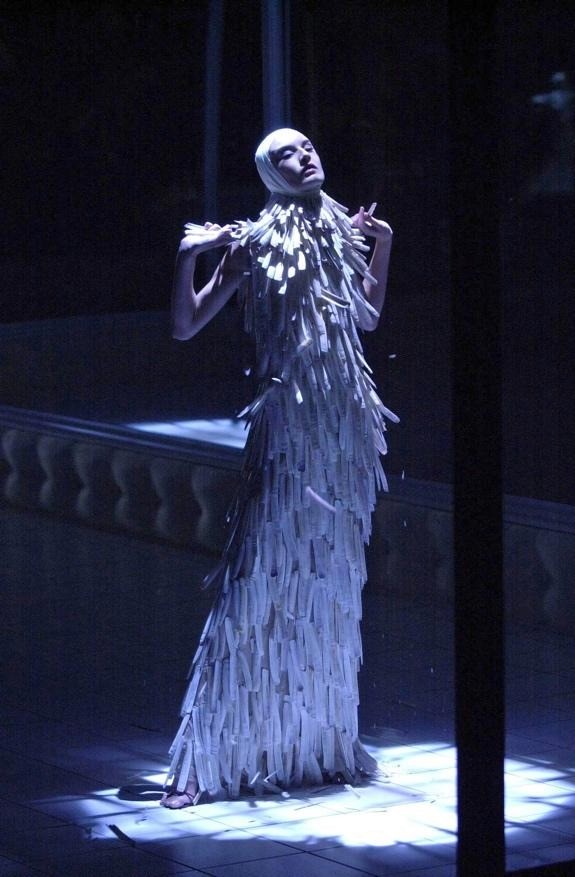
The show effectively denounces traditional commodity fetishism by stripping away the "glamour" typically hiding human suffering within the industry, most notably through models who performed states of "madness" and dresses, such as the razor clam shell dress, that were destroyed on the runway to highlight their ephemerality. However, the dissemination of images from the show through global media make the critique itself contribute to the brand’s value. The fashion image therefore remains a commodity even when aiming to denounce commodification.
It underscores the paradox of agency within the fashion system: models, designers, and audiences are inevitably entangled in structures that constrain and harm them in the pursuit of financial means to enable their creative expression. Lastly, the show’s production cost, allegedly McQueen’s most expensive at £70,000, and the brand's acquisition by Kering just months after the show illustrate the inescapable reality of the fashion system. Rather than resolving the contradiction between the fashion show as a Gesamtkunstwerk or a commodity spectacle, Voss is a prime example of the inevitable duality inherent to it.
Whether it is remembered as a Gesamtkunstwerk that presented the unsightly damage of the fashion industry on a public scale or as a manifestation of the very commodification it aimed to denounce, its historical significance lies in McQueen’s refusal to offer a comfortable experience to the viewer, in opposition to the usual effortless glamour of the industry. Instead, he offered a moment for the system to turn its gaze upon itself.
Doc/34 all rights reserved, sponsored by IFM.
" height="65.65946764590899px" id="biO_icj08" transform="translate(0 1.371)" width="59.174572953517554px"/><path d="M 63.167 33.692 C 63.167 54.377 50.565 68.088 31.544 68.088 C 12.524 68.088 0 54.69 0 33.927 C 0 13.163 12.371 0 31.626 0 C 50.882 0 63.17 13.163 63.17 33.692 Z M 46.89 33.848 C 46.89 21.155 41.097 13.477 31.626 13.477 C 22.155 13.477 16.206 21.234 16.206 33.848 C 16.206 46.463 22.077 54.533 31.626 54.533 C 41.176 54.533 46.89 46.698 46.89 33.848 Z" fill="rgb(0, 0, 0)" height="68.08839784893921px" id="A8_8V8D77" transform="translate(58.705 0.196)" width="63.17042207703656px"/><path d="M 43.755 24.133 C 42.268 17.003 38.119 13.477 31.388 13.477 C 21.838 13.477 16.281 20.998 16.281 33.927 C 16.281 46.855 22.073 54.455 31.779 54.455 C 36.084 54.455 39.763 52.653 42.033 49.519 C 43.363 47.638 43.911 46.071 44.381 42.781 L 60.662 45.209 C 59.175 51.869 57.453 55.709 54.165 59.548 C 49.312 65.111 41.72 68.088 32.249 68.088 C 22.778 68.088 14.637 65.111 9.08 59.47 C 3.287 53.593 0 44.426 0 33.927 C 0 23.427 3.287 14.26 9.471 8.149 C 14.872 2.899 22.778 0 31.935 0 C 42.033 0 49.938 3.448 55.026 10.264 C 57.531 13.477 58.861 16.376 59.879 20.998 Z M 100.346 1.41 L 72.246 77.804 L 58.235 77.804 L 86.414 1.41 Z" fill="rgb(0, 0, 0)" height="77.80411839929134px" id="v1AksvdEb" transform="translate(121.519 0.196)" width="100.34629996240147px"/><path d="M 16.594 46.933 C 17.064 49.519 17.533 50.616 18.786 51.948 C 20.899 54.142 24.03 55.317 27.787 55.317 C 33.892 55.317 37.728 52.261 37.728 47.482 C 37.728 44.269 36.162 41.762 33.501 40.743 C 31.701 40.117 29.274 39.725 26.222 39.725 C 23.169 39.725 19.647 39.881 16.594 40.195 L 16.594 26.718 C 19.255 27.032 21.838 27.188 24.891 27.188 C 32.327 27.188 36.006 24.681 36.006 19.666 C 36.006 15.435 33.031 13.007 27.865 13.007 C 22.308 13.007 19.49 15.2 18.316 20.215 L 1.409 17.786 C 2.896 12.928 4.148 10.578 6.653 7.835 C 11.428 2.664 18.629 0 28.178 0 C 36.71 0 43.755 2.351 48.216 6.66 C 51.112 9.559 52.6 13.32 52.6 17.786 C 52.6 26.091 48.138 31.263 39.137 33.378 C 43.911 34.083 46.494 35.18 49.234 37.531 C 52.521 40.508 54.4 44.583 54.4 49.127 C 54.4 53.123 53.304 56.806 51.269 59.548 C 49.547 61.899 46.807 64.092 43.911 65.424 C 39.841 67.305 33.501 68.48 27.63 68.48 C 20.586 68.48 13.541 66.835 9.393 64.092 C 5.792 61.742 3.053 58.294 1.331 53.985 C 0.861 52.888 0.548 51.869 0 49.832 Z" fill="rgb(19, 136, 8)" height="68.48016075605614px" id="UrmKxPWFQ" transform="translate(219.752 0)" width="54.399905030019454px"/><path d="M 0 37.844 C 2.348 35.233 4.853 32.36 7.514 29.226 L 24.5 9.324 C 28.257 5.015 29.744 3.056 31.779 0 L 47.825 0 C 47.355 4.623 47.199 7.757 47.199 13.007 L 47.199 38.471 L 49.469 38.471 C 51.895 38.471 54.478 38.236 57.218 37.844 L 57.218 52.104 C 54.87 51.791 51.973 51.634 49.547 51.634 L 47.199 51.634 L 47.199 55.552 C 47.199 59.94 47.355 62.212 47.825 65.189 L 31.701 65.189 C 32.092 62.525 32.327 59.235 32.327 55.395 L 32.327 51.556 L 10.176 51.556 C 5.088 51.556 2.896 51.634 0 51.869 Z M 32.405 29.539 C 32.405 26.013 32.562 21.704 32.875 18.256 C 31.309 20.45 30.135 22.017 28.022 24.681 L 16.594 38.628 L 32.405 38.628 Z" fill="rgb(19, 136, 8)" height="65.18935212489366px" id="nz3MAn0g5" transform="translate(272.782 1.567)" width="57.21774185674667px"/></g></svg>)